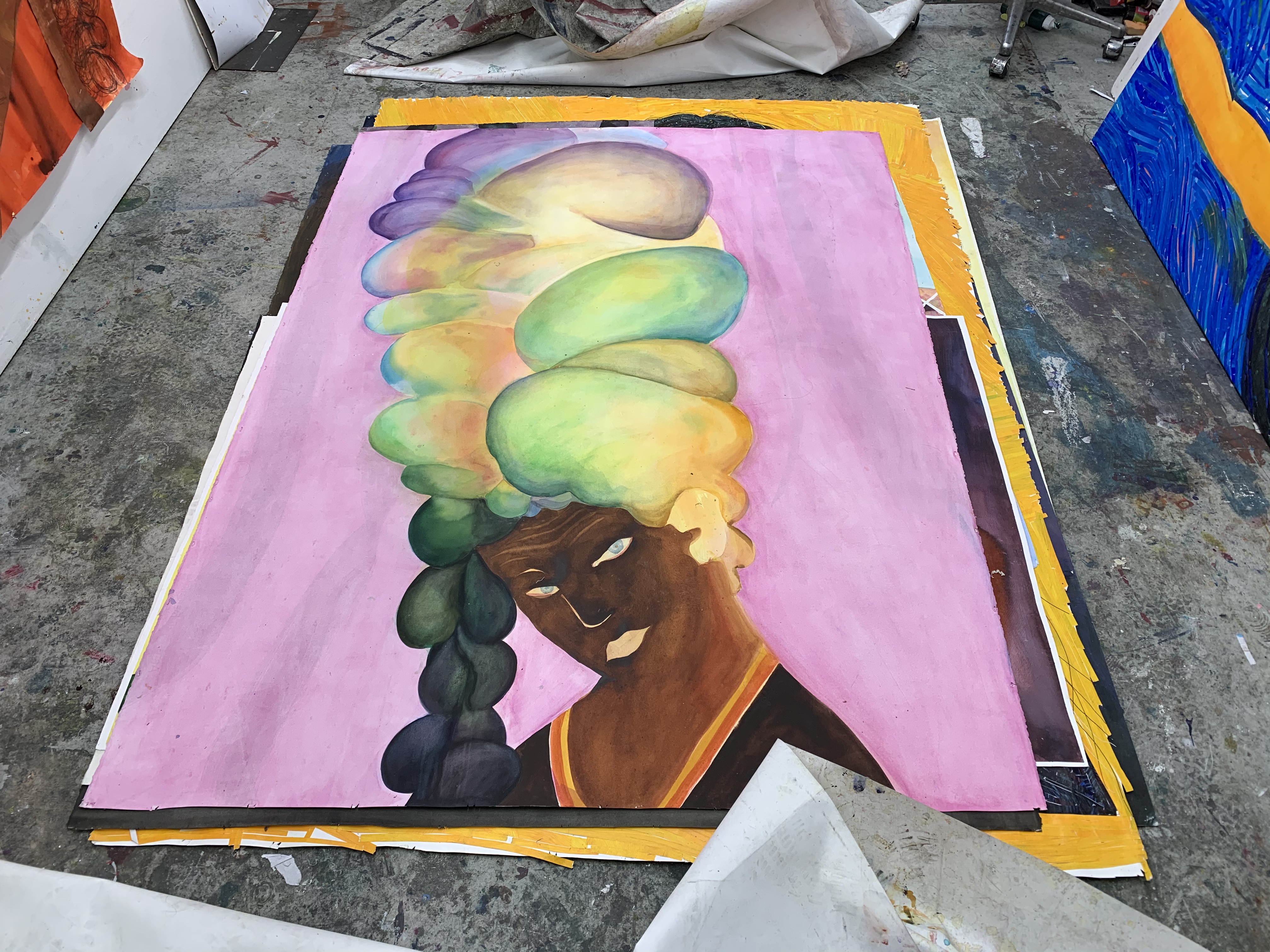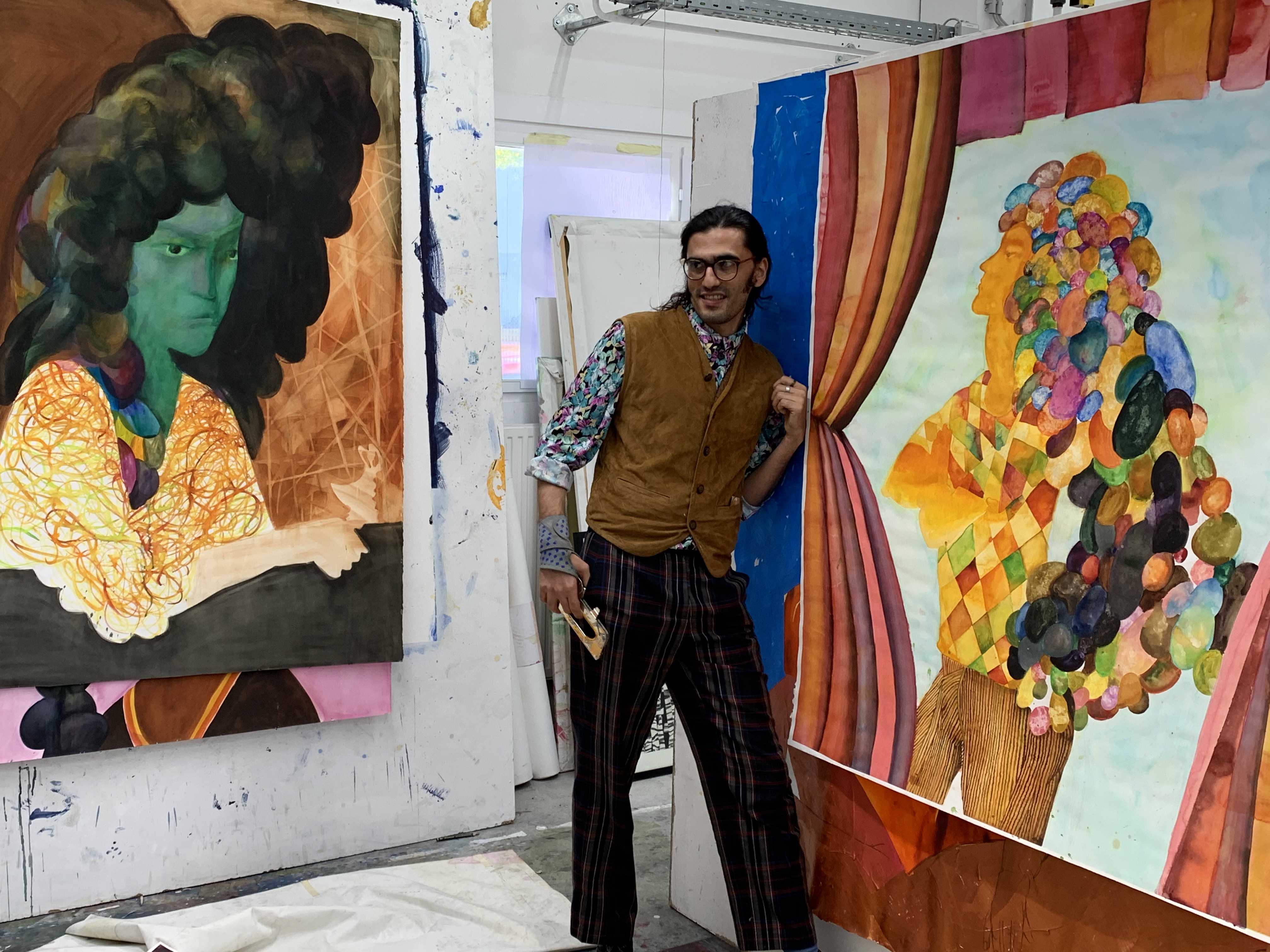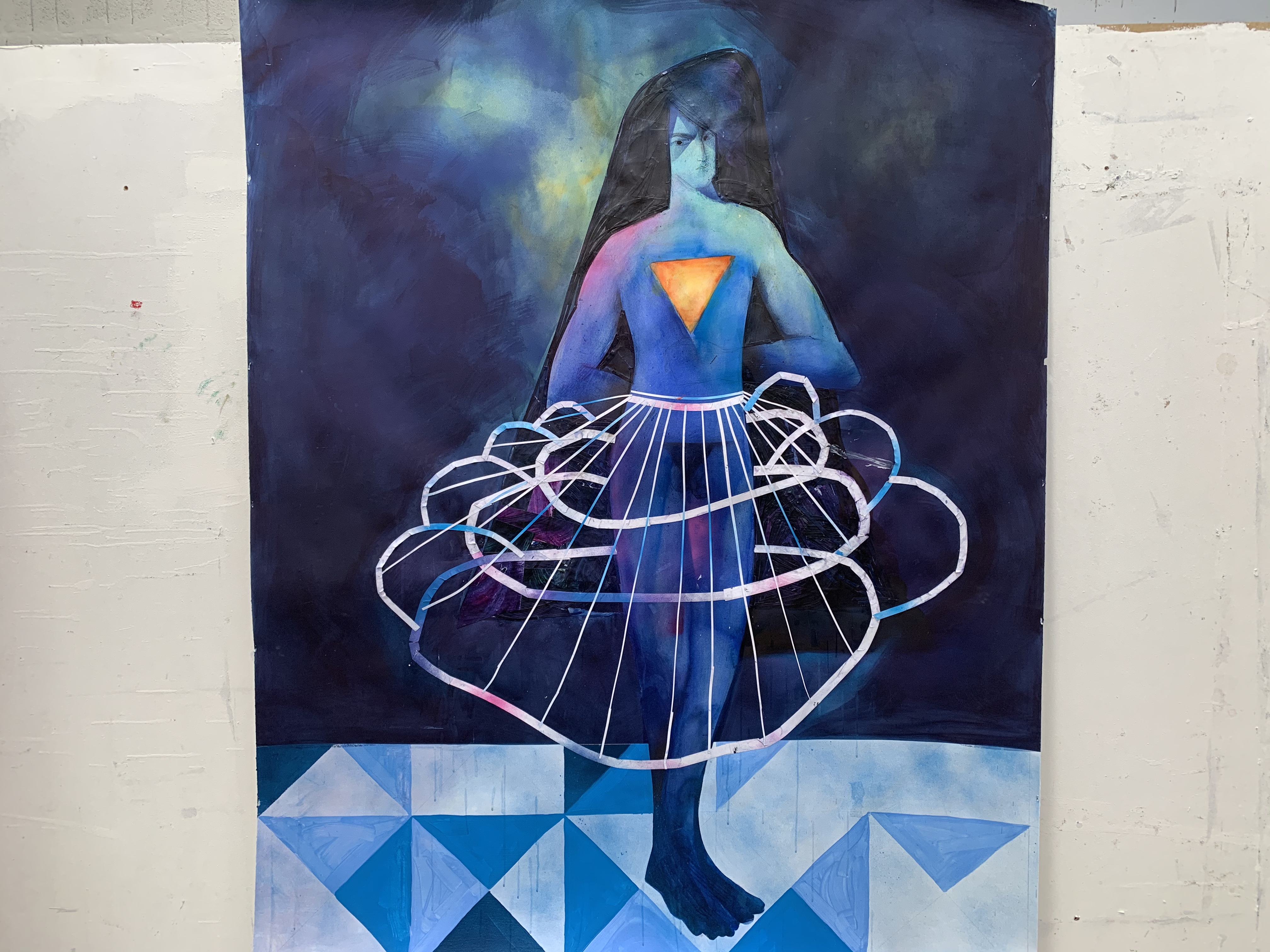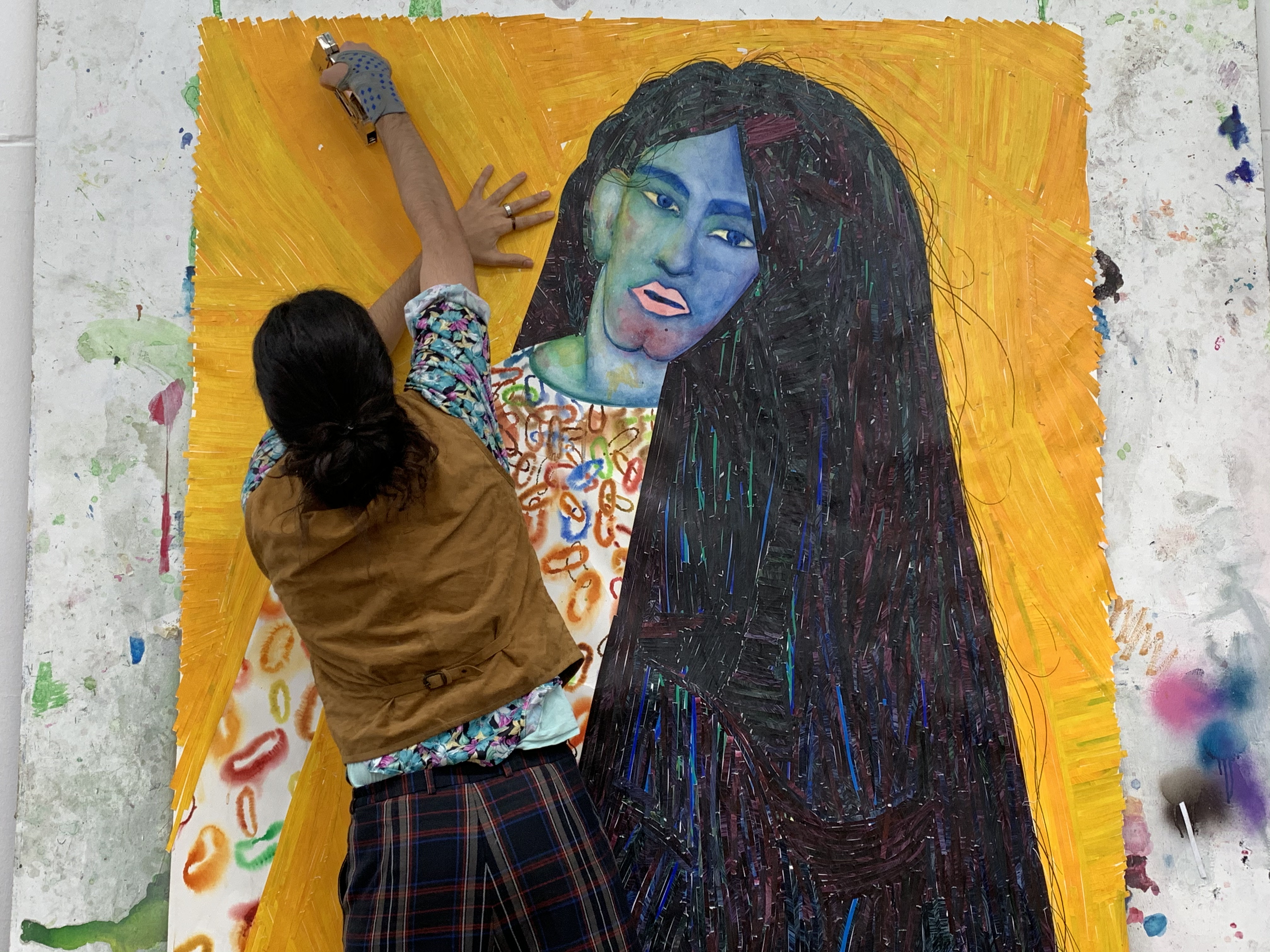
Contemporary art in Iran

Contemporary art in Iran

We’re in Tadjrish, in the very hype northern part of Tehran where the chic people of the city meet.

After getting out of the car, I need to stop for a second and enjoy just one more time the view that I love the most of Tehran, the snow-covered Elburz Mountains watching over the city imperturbably. I enter this old building from the 30s and even though it’s quite run down it reveals still at certain spots its beauty from the past. A slight breeze of nostalgia is blowing through the staircase. While walking up the stairs, the sound of electronic music brings my attention back to the present and guides me to the studio of the artist Mimi Maryam Amini.

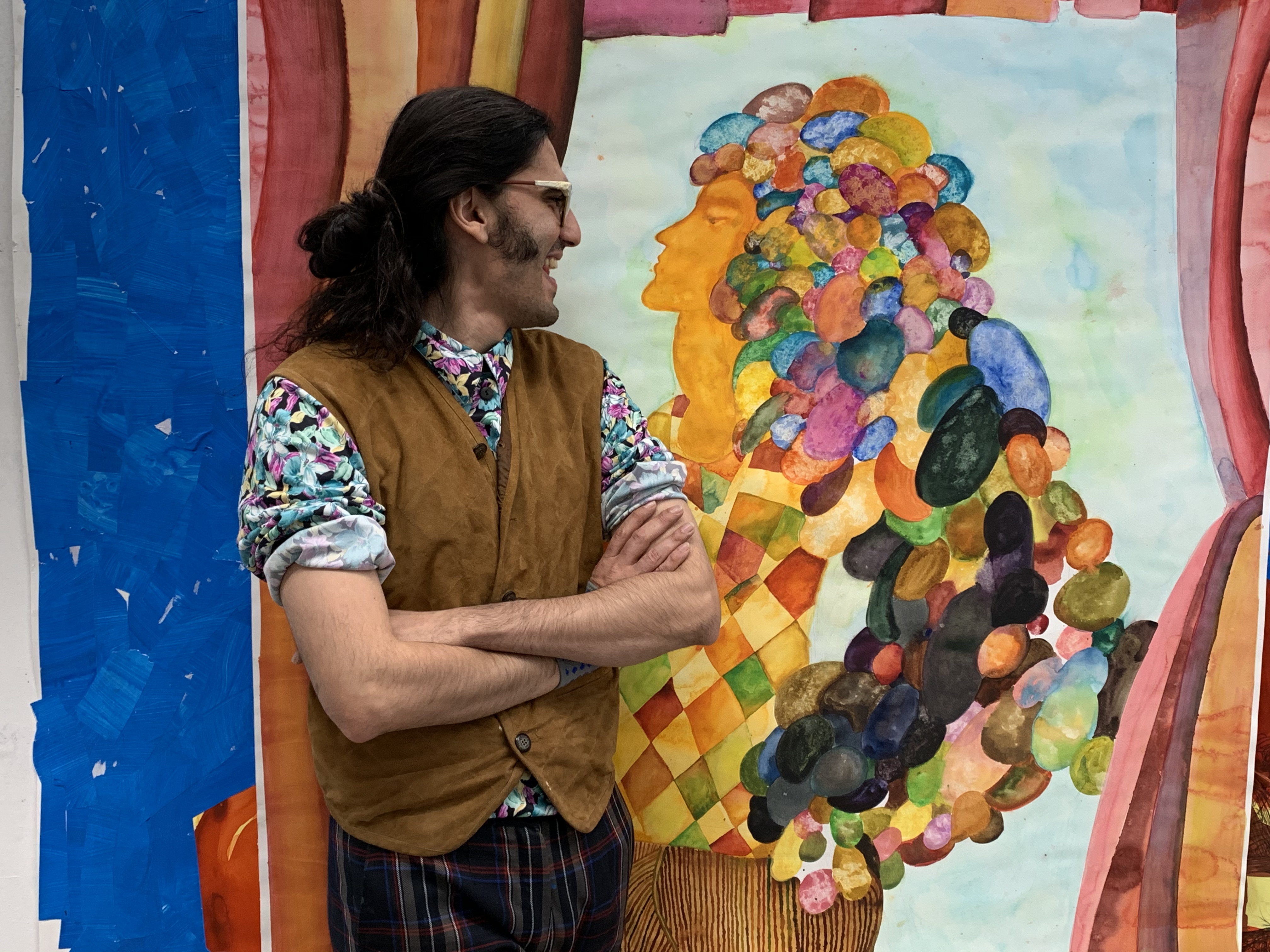
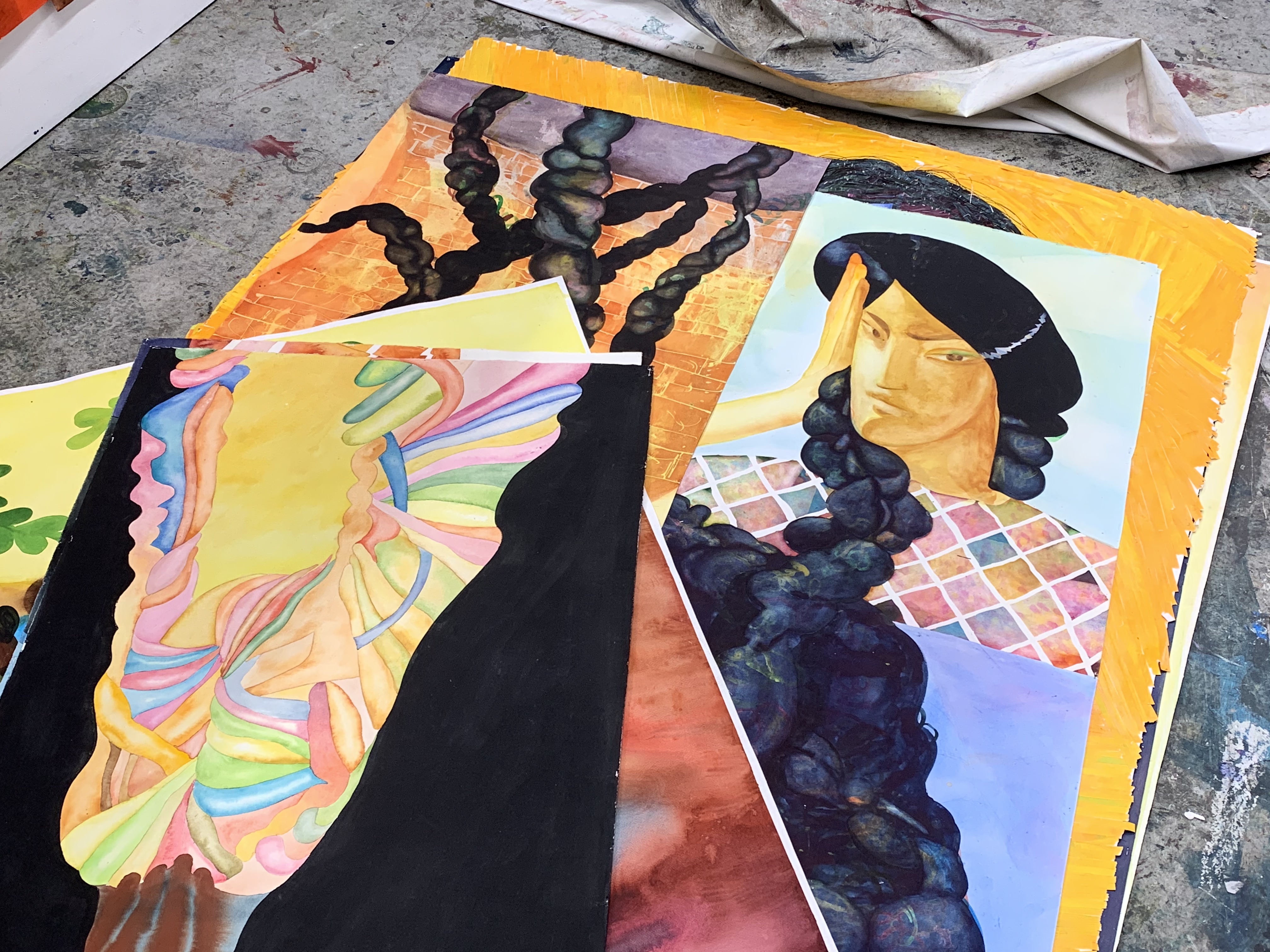
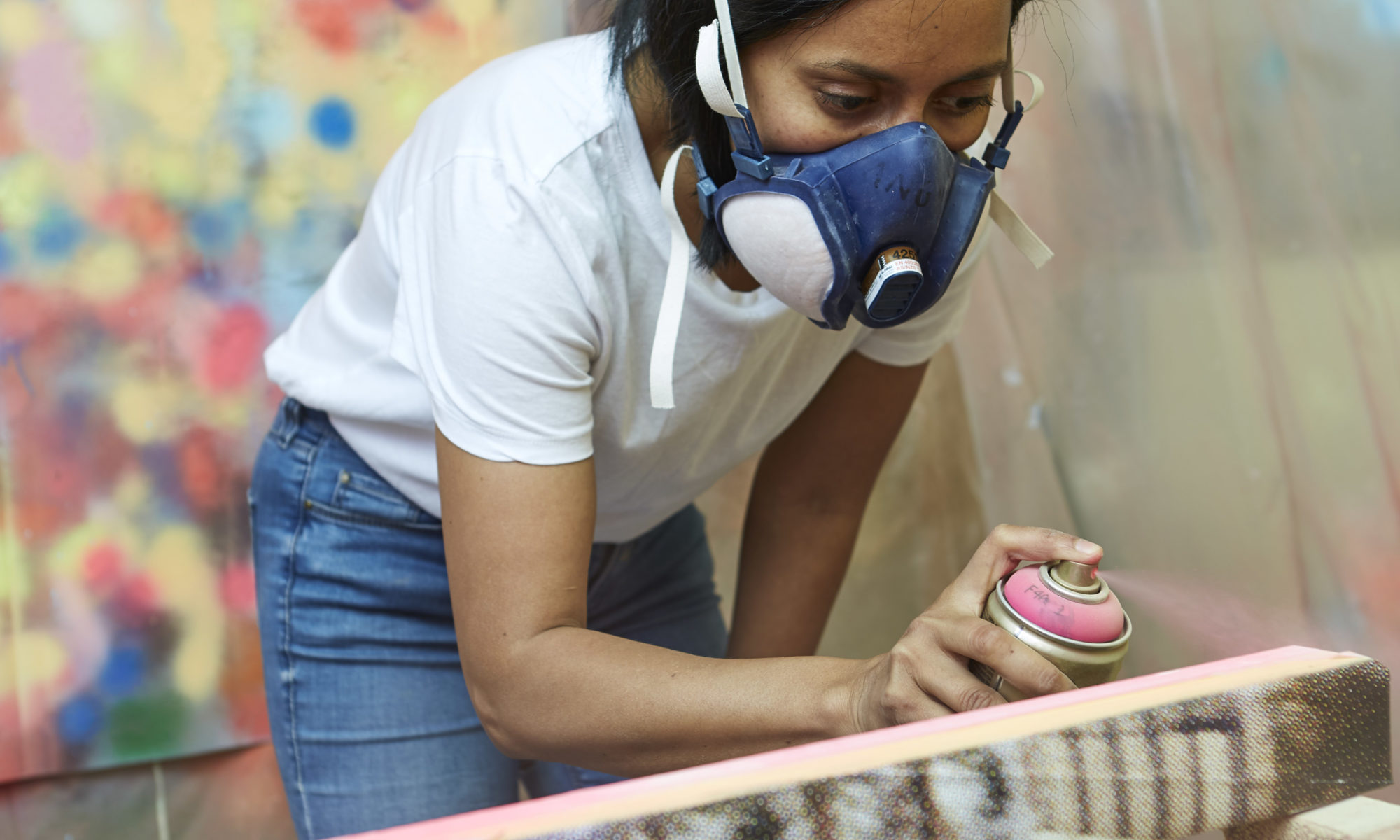
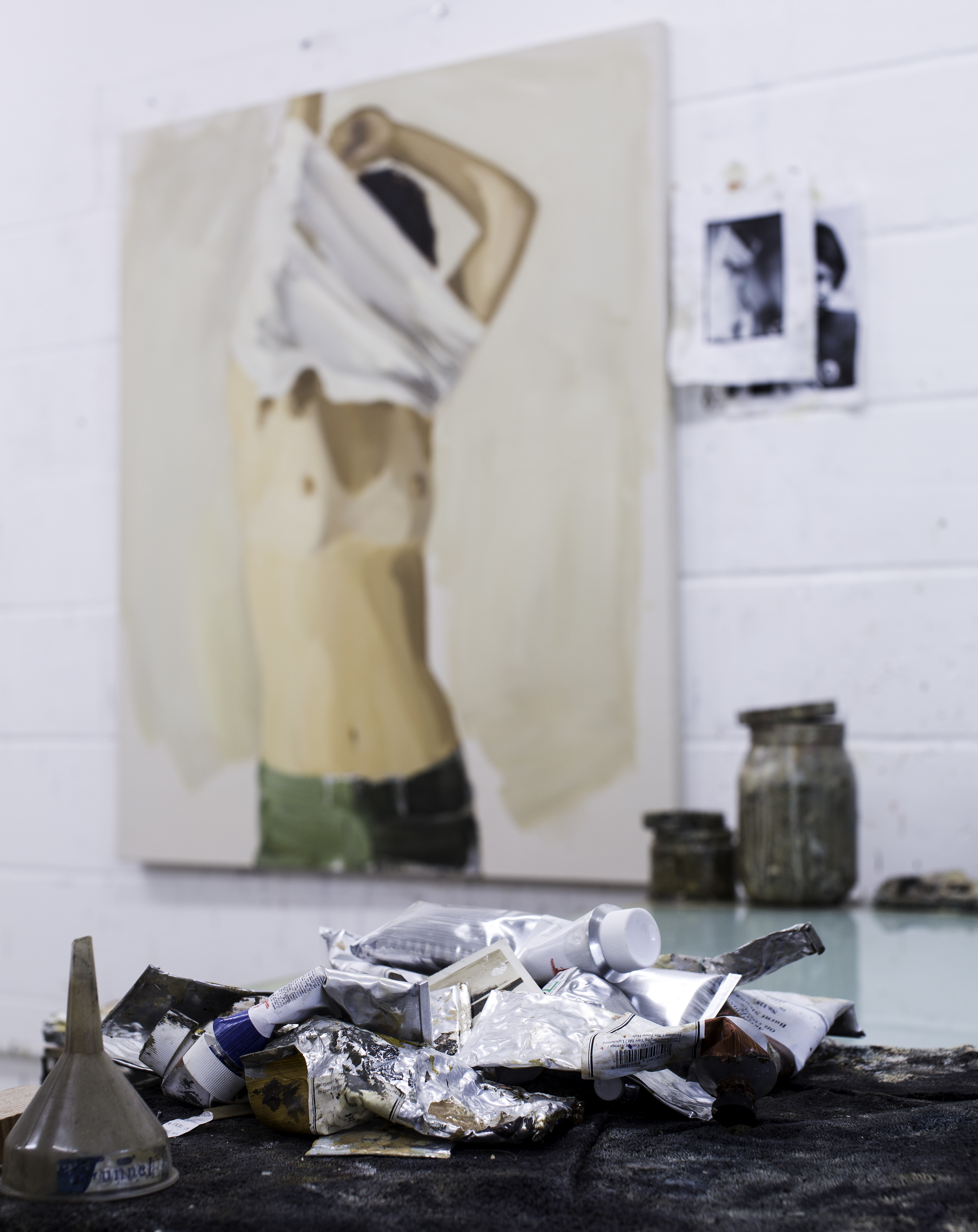
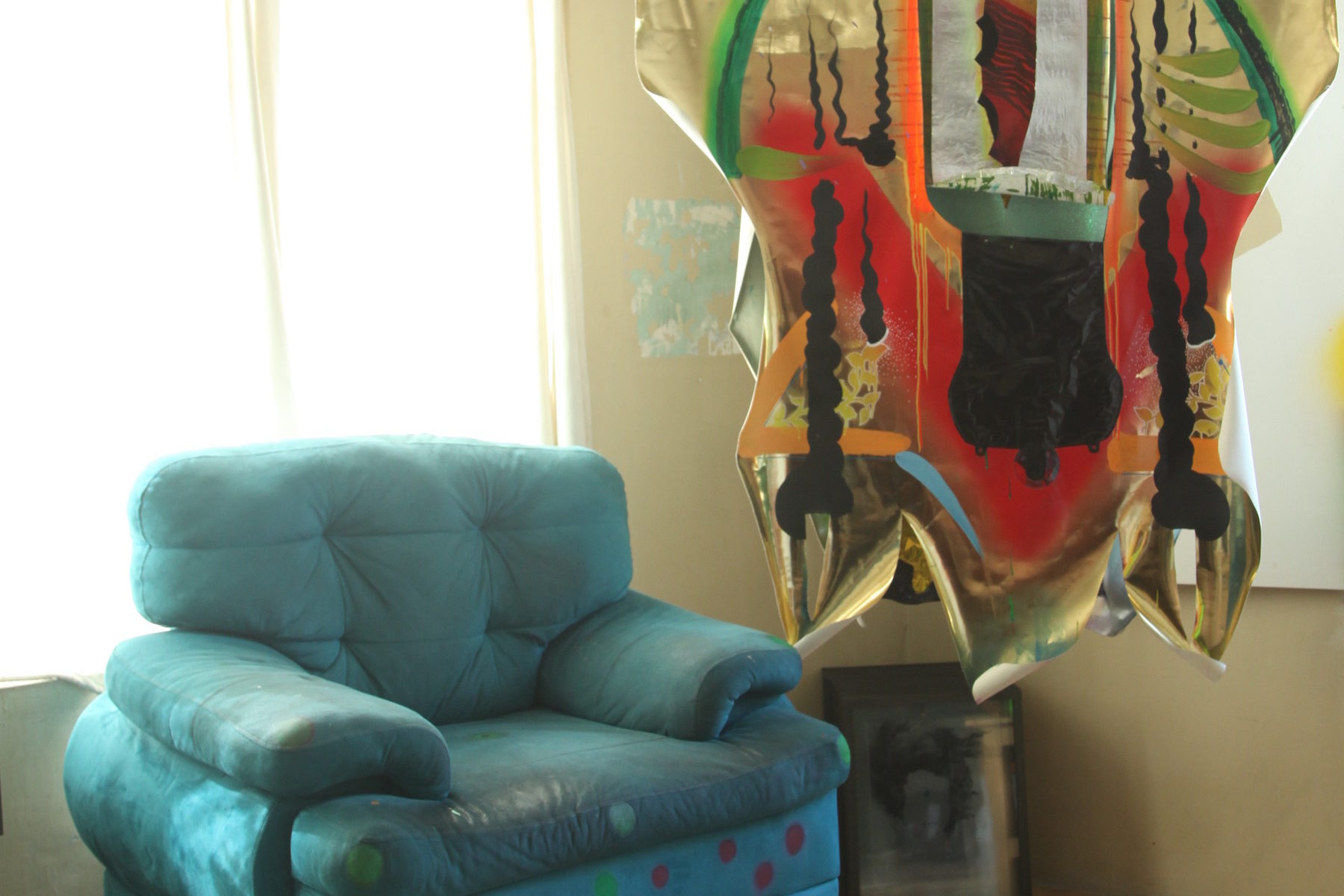
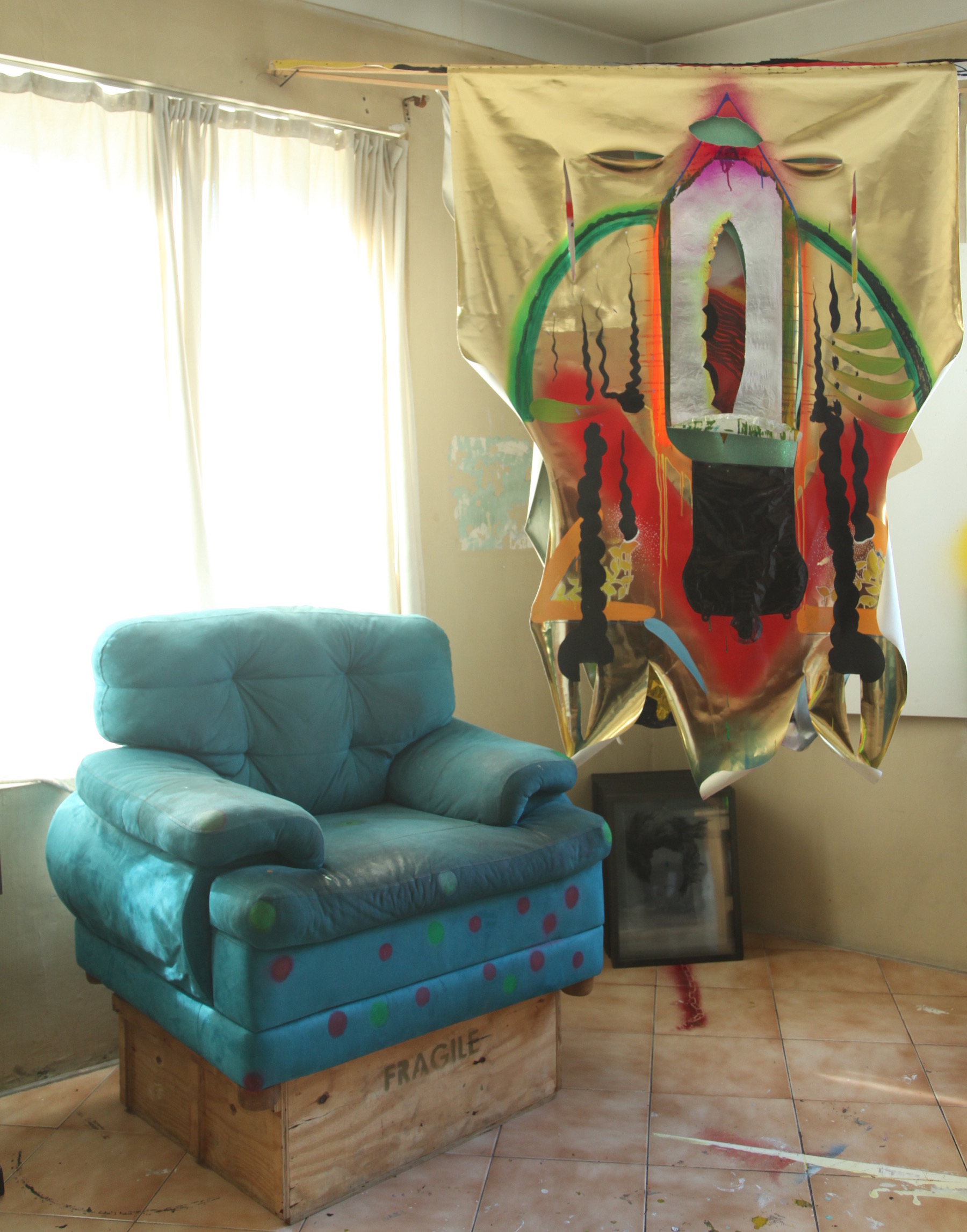
Everything here is art, Ready Made or her own creation, from the fridge to the armchair in the living room and the large panels of colored leather lying everywhere recovered with graffitis in fluorescent colours. I’m struck by this creative energy, it’s fresh, dynamic, experimental, spontaneous, almost quite punk. I can see these young people, in their coolest hipster outfits, art lovers, designers, curators, all around this apartment discussing intensely, and there is Mimi, the artist with these sparkling eyes and smile,  standing in front of her artwork and swaying to the music. For one moment I forget that I’m in Tehran until my gaze falls on Khomeini’s portray outside the window on the house wall just opposite of Mimi’s studio. I pinch myself. I realize that I’m in the capital of the Islamic Republic of Iran…
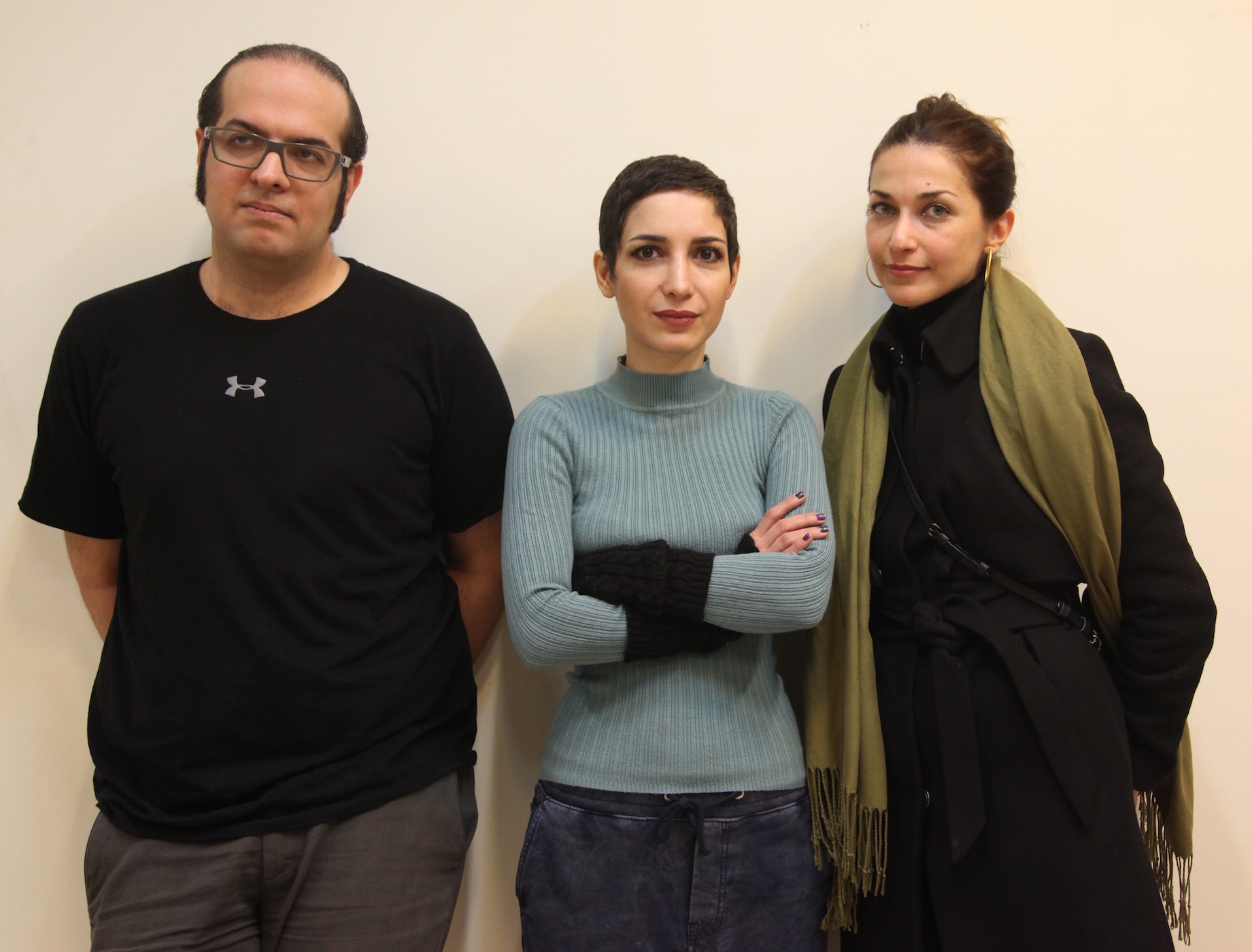
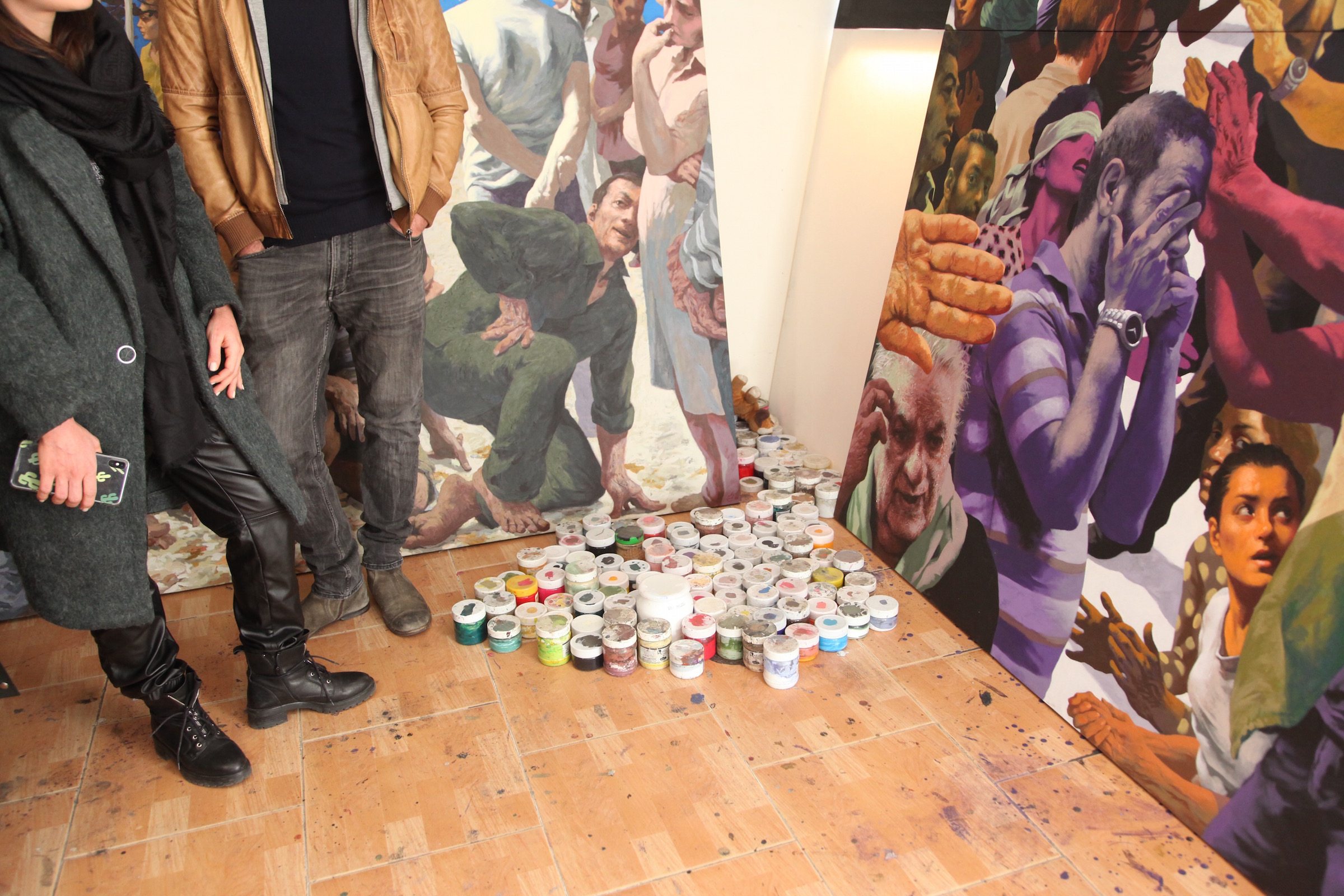
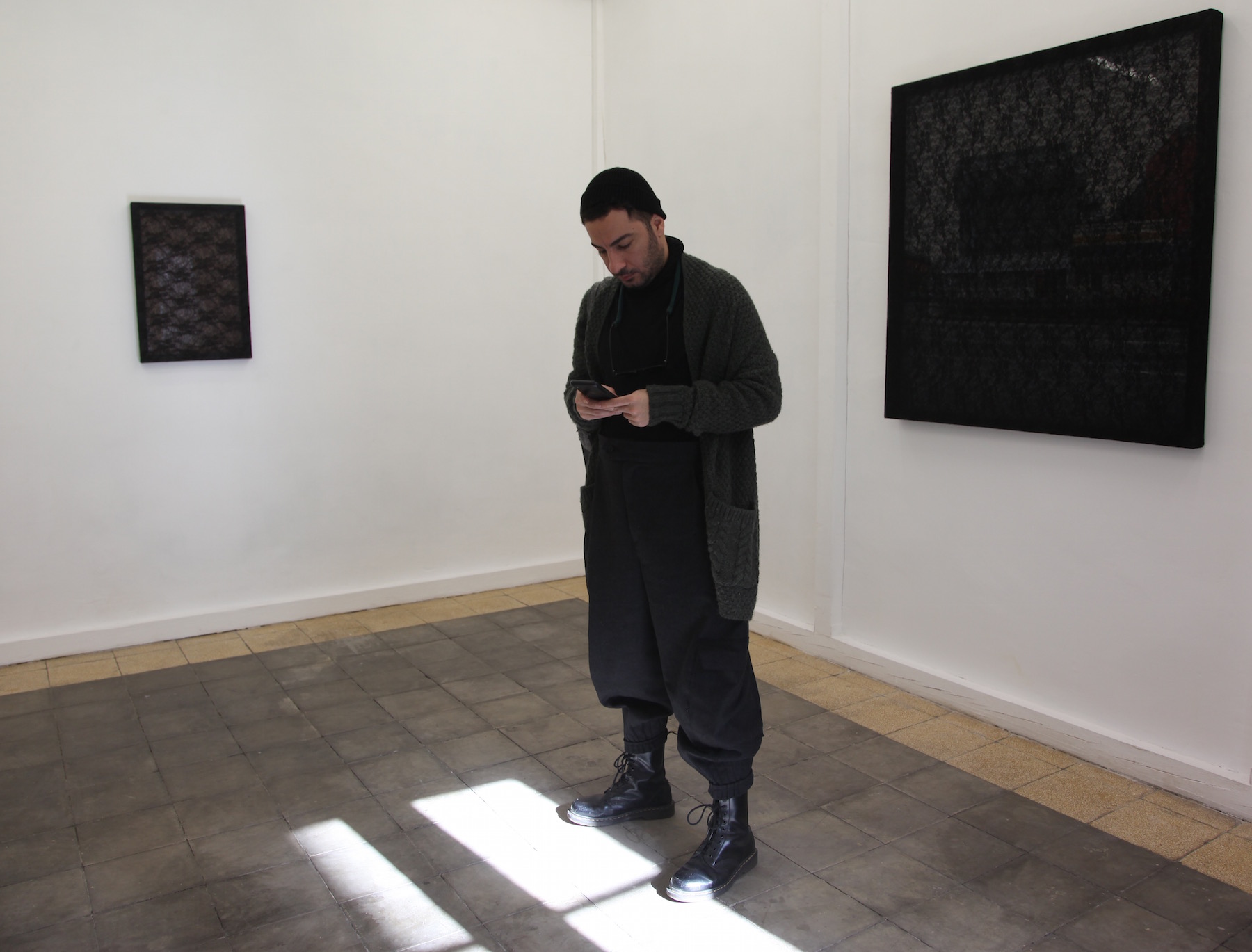
It’s January and I’m in Tehran to participate at Teer Art Week, organized by Hormoz Hematian, founder of the influential Dastan gallery, and by Maryam Majd of Assar Art Gallery. Dedicated to contemporary Iranian art this event takes place at the same time as the Tehran Auction that breaks all the records in the last years in Iran even though the country’s economy is squeezed by the US sanctions.

Teer Art Week is an extraordinary and unique art experience among international art events: It’s a great invitation to discover galleries in Tehran and meet Iranian artists at their studio.
It focuses on this unknown art scene that I’d like to bring to light. 
Since the Trump administration hit Iran with sanctions in May 2018, the Iranian currency has lost 60% of its value, and inflation reaches almost 35%. The country is economically and politically isolated, all the exchange offices are closed. However in this difficult context art becomes and investment of the rich of this country. But mainly established artist benefit from this evolution, most of them are even already dead.

Young artists, for their part, are rather victims of this political and economical situation: Extremely increasing prices concern also their work tools such as paint, canvas, painting brushes, paper, film rolls and the development of photos, etc. that are mainly imported from abroad. In addition to that rising housing prices force them to live at their parents’ house or leave the city.
“The Iranian art scenes, from the most confidential artist to the more mainstream, is extremely interesting and exciting and breaks all the rules and boundaries.”

Jean Marc Decrop
Expert in contemporary Chinese art and collector of contemporary Iranian art
“The contemporary art scene in Iran has extremely evolved in the past years. It’s very creative and has definitely an international level and credibility.
However, the artists are confronted with limits that they need to subvert every day. It’ll be important to reinforce the international relations in order to gain recognition and conquer new markets outside the country.
That’s the goal of Teer Art Week and the German Embassy likes to support this project.”

Justus M. Kemper
Head of Cultural Section at the German Embassy in Tehran
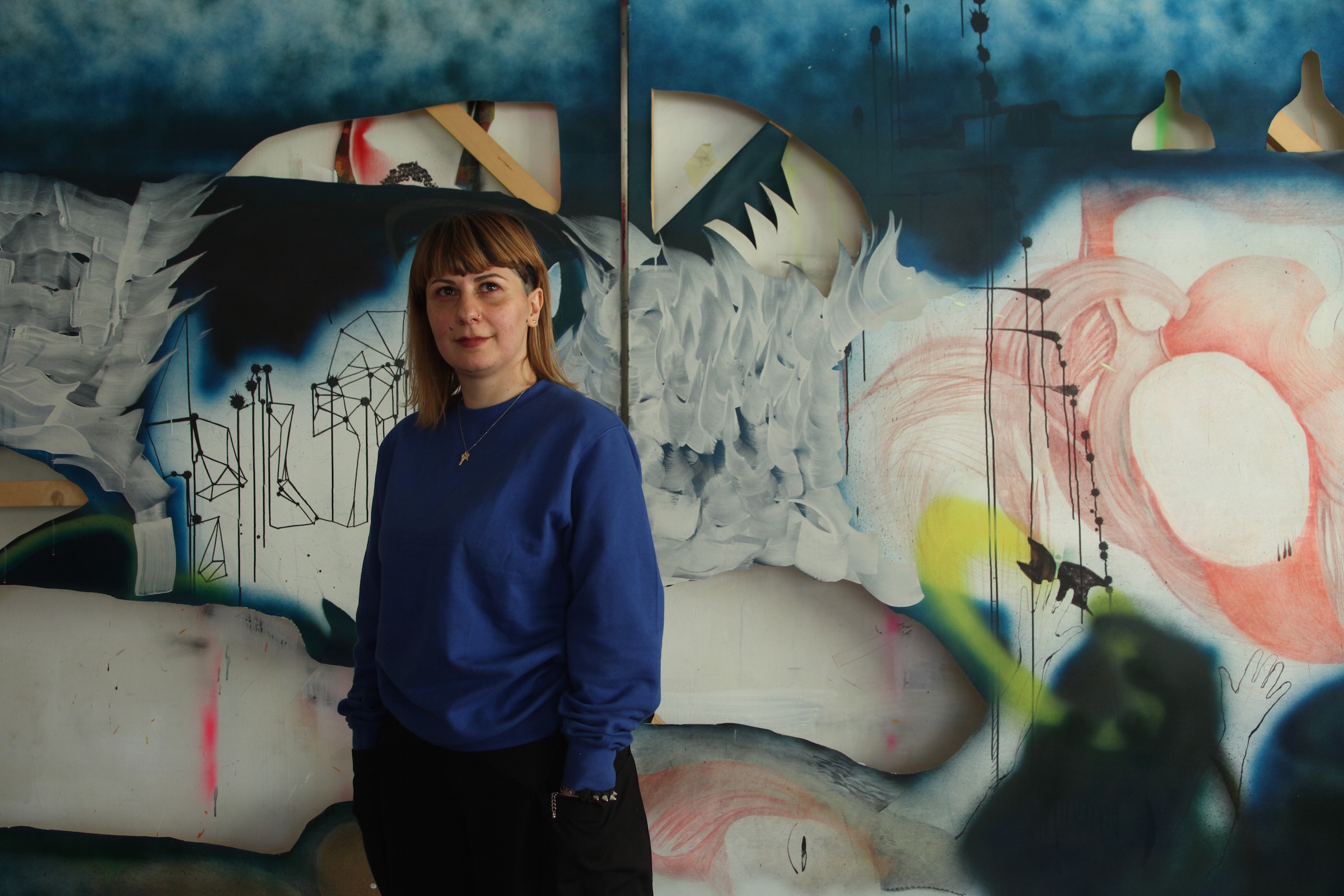
“I believe that one day Iran will be the center of Art in the Middle East, but currently the contemporary art scene here is like the rest of Iran, a mixture of many narratives. Even though a few galleries are attempting to give more attention to contemporary art, happenings and events still concentrate mostly on modern art.
Fortunately there are many contemporary artists and there is a huge potential for growth in this area.
Teer Art can be very helpful, especially in educating art patrons and push collectors more towards contemporary art.”

Maryam « Mimi » Amini
Contemporary female artist who lives and works in Tehran
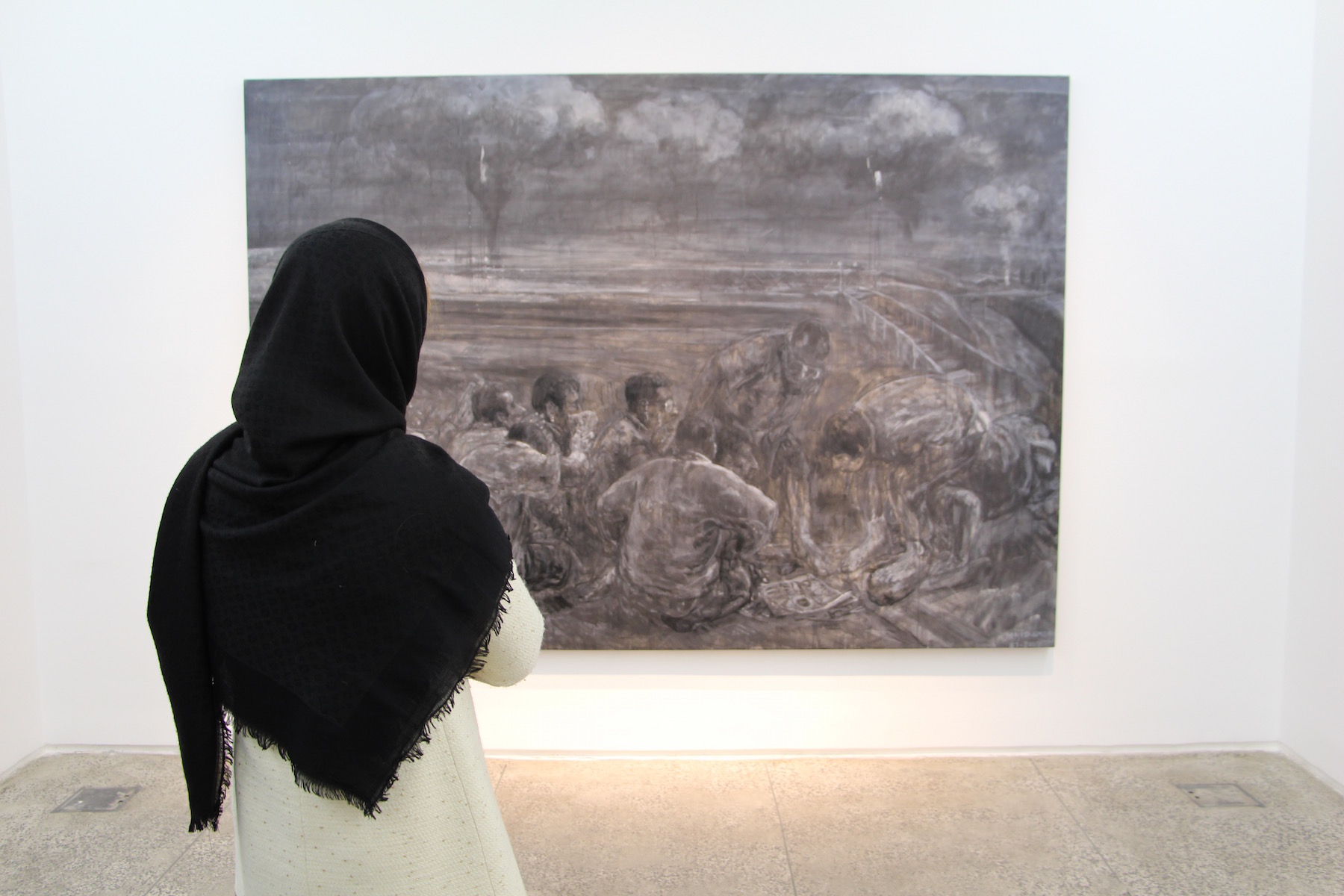
“As the number of galleries has increased a lot in the last years, the art scene in Iran has become more mature, more divers, with more interest from top international collectors as well as top institutions. This confirms that the contemporary art scene in Iran will be the next scene to keep an eye on.”

Arian Etebarian
Founder of the platform of Iranian art www.darz.ir
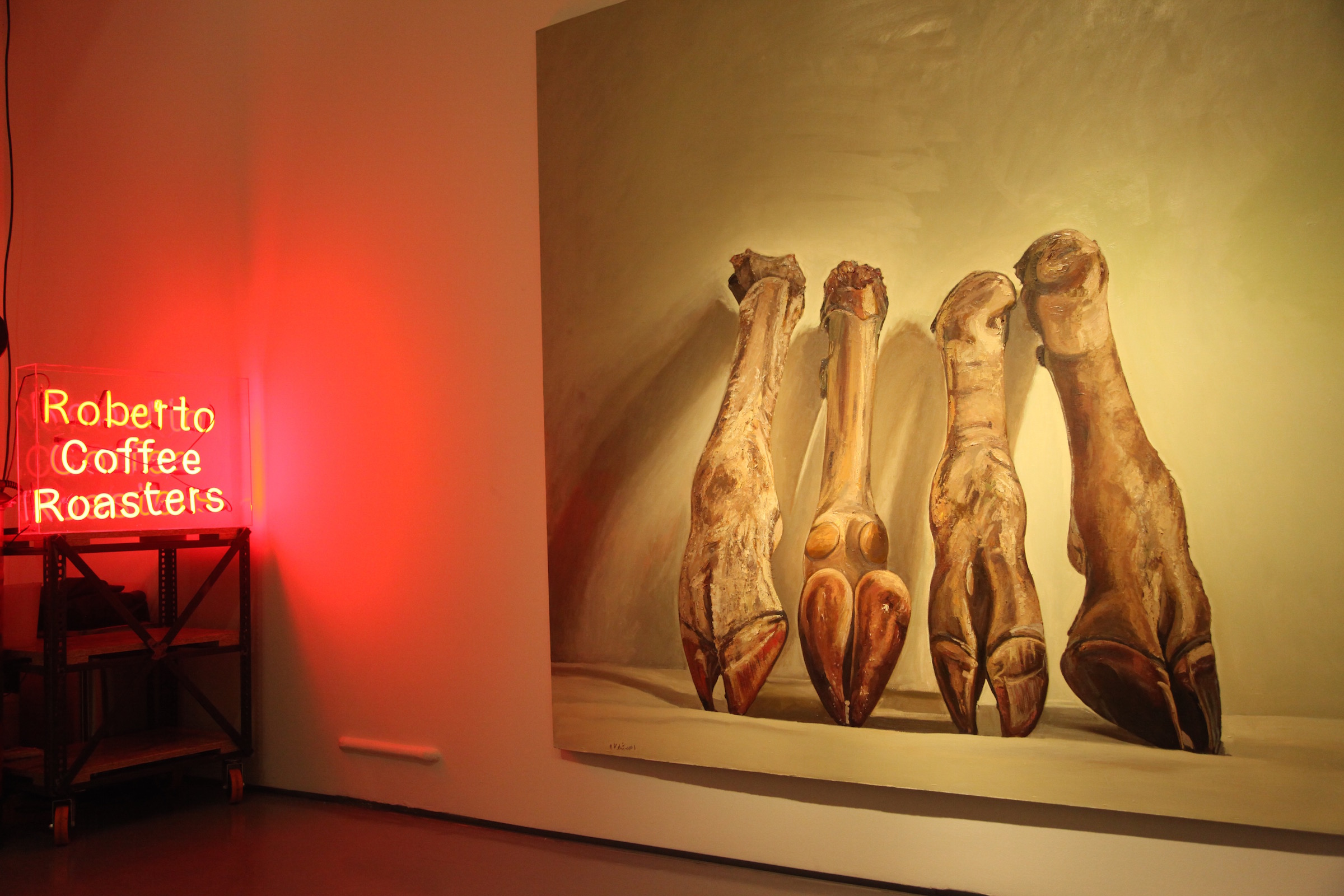
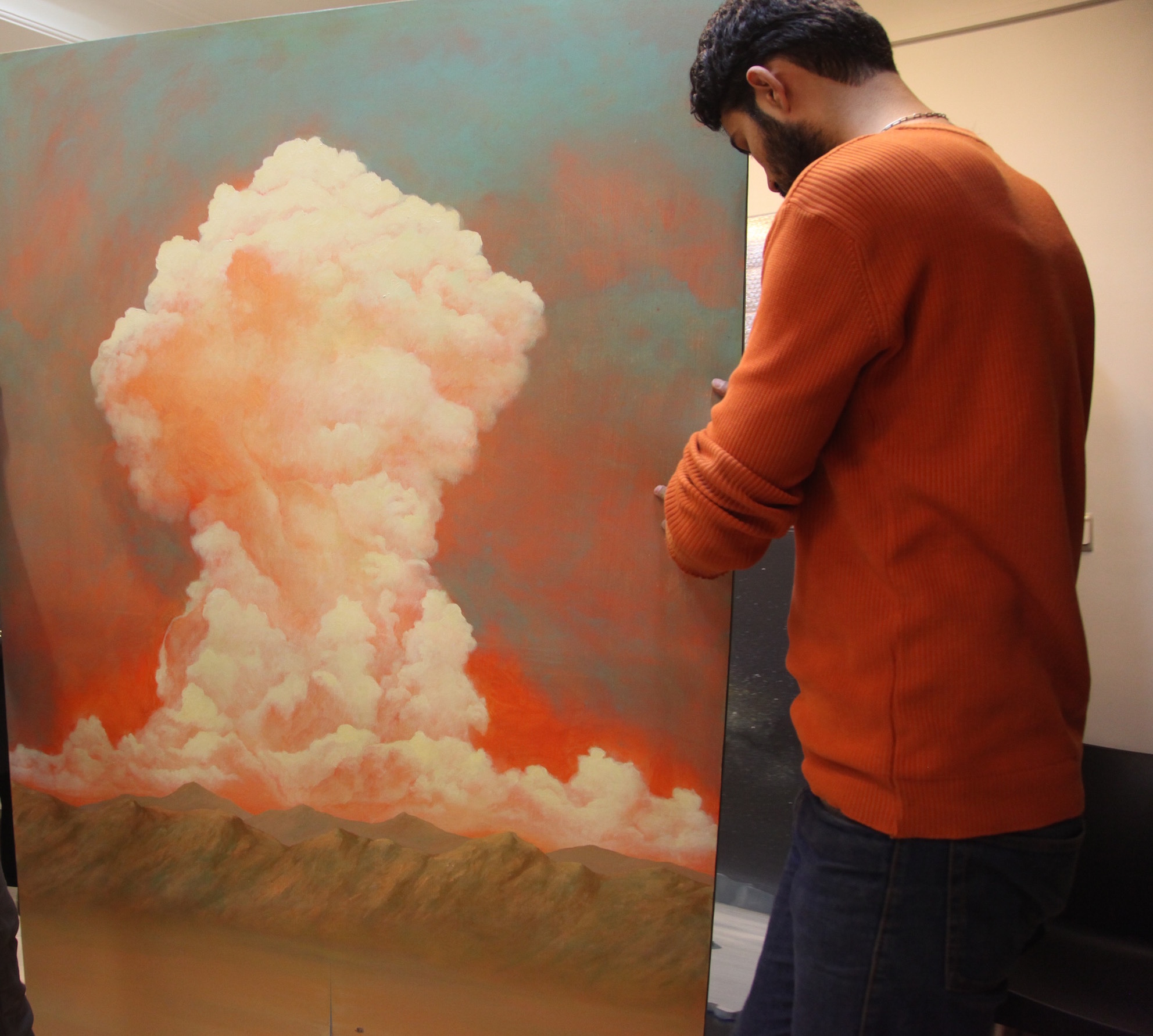
Credits:
Photos by Anahita Vessier and Roxana Fazeli
Text: Anahita Vessier and Nada Rihani Teissier du Cros
Translation: Anahita Vessier
https://teerart.com
Share this post
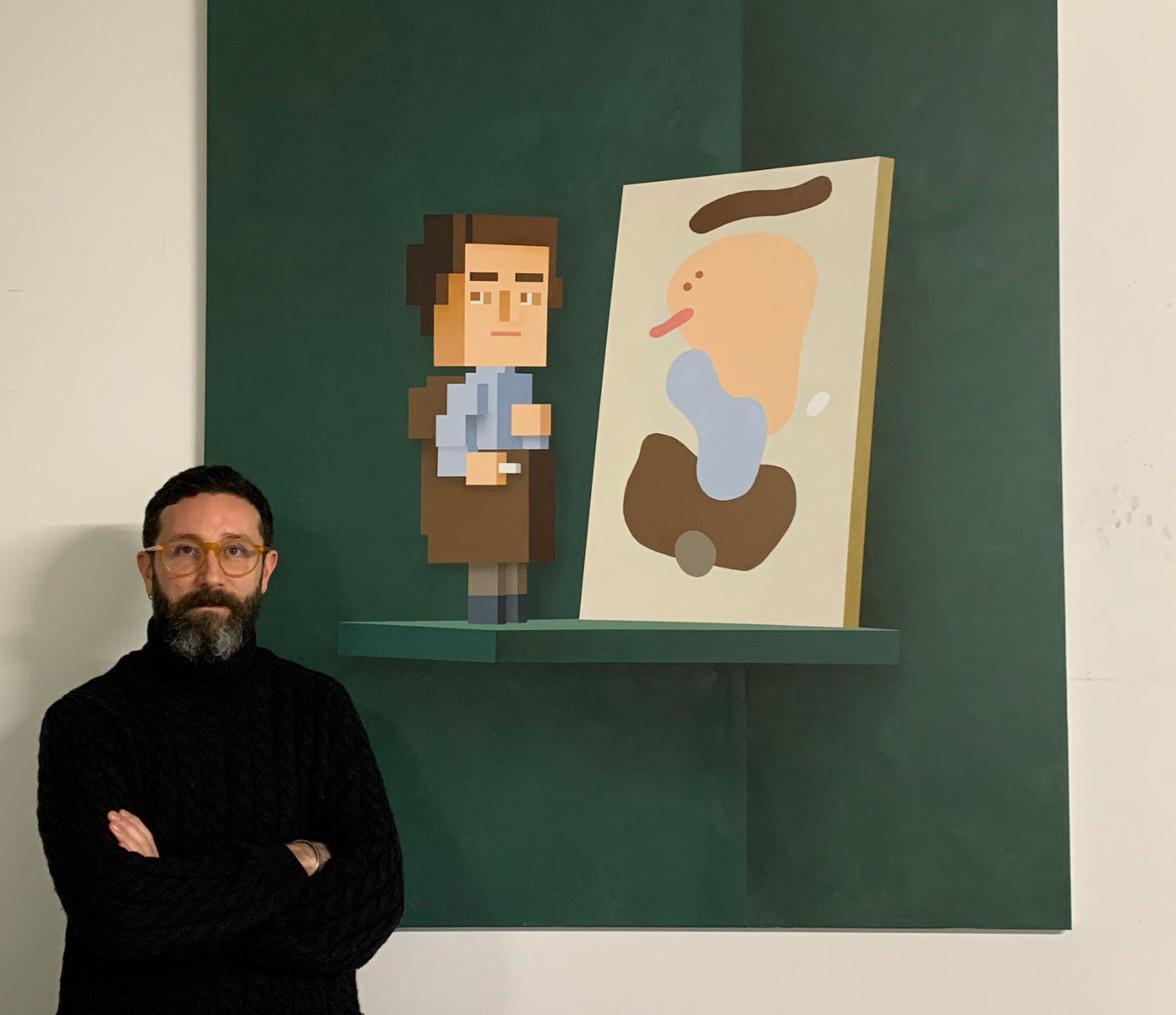
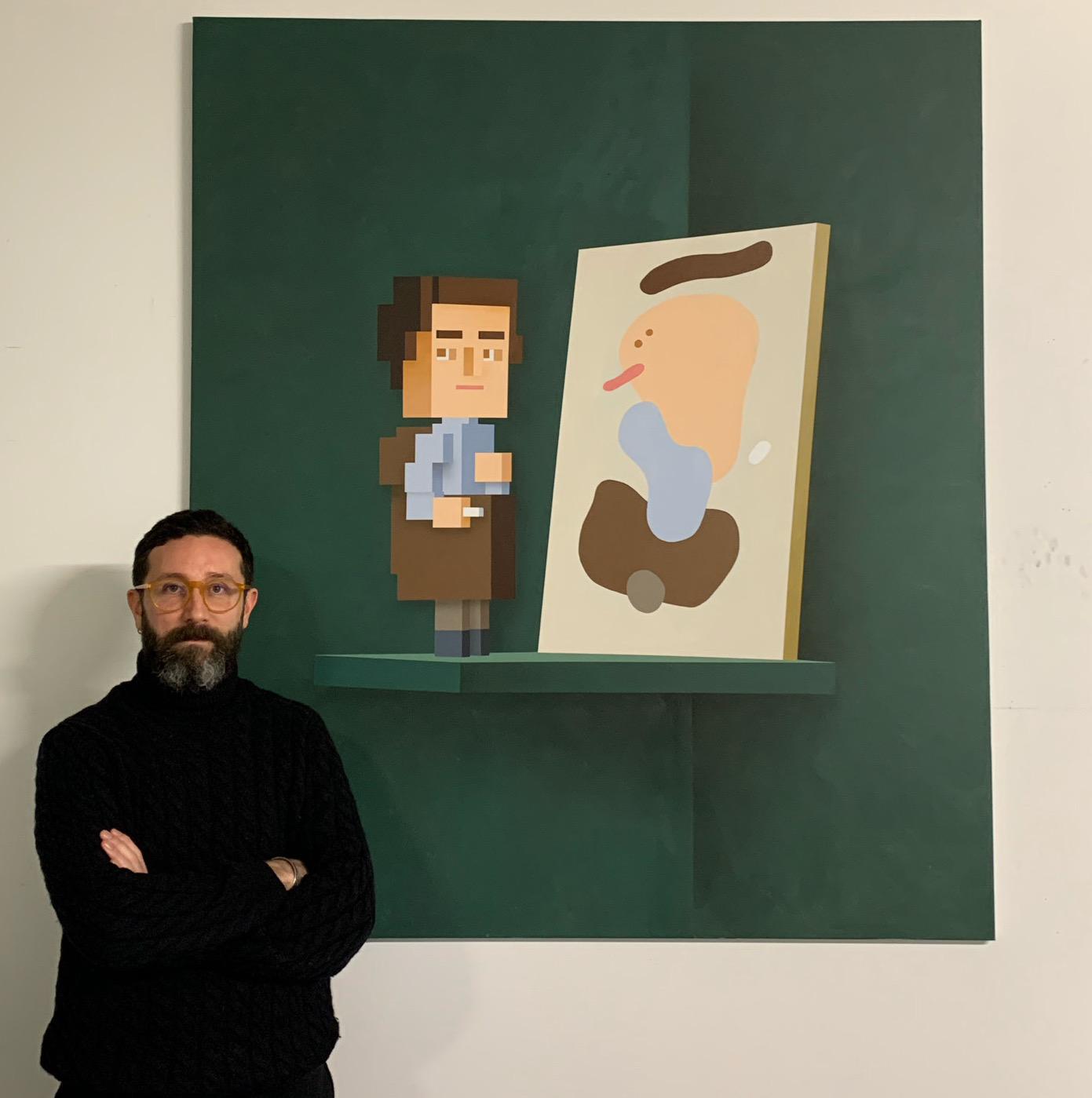
SEPAND DANESH, Art is a corner of creation

SEPAND DANESH, Art is a corner of creation

Persisting, almost obsessive, eager for knowledge and attached to the art of painting the French-Iranian artist Sepand Danesh nourishes his artistic mind with literature and history. Fascinated by the corner, this hollow space often filled with melancholy and nostalgia, has become the main theme in his work.

With an intense desire to understand and to discover and inspired by the hyper-connected space of a hub, he has launched his latest project Hubtopia, a research program with the goal to create a bridge between art and science.

The creative universe of Sépànd Danesh is rich and lively where imagination and memory merge perfectly well.

You have a very eventful life, moving from Iran to the US and then to France. What was the reason why you’ve started to draw?

I was around 13 years old when I moved to France with my family. I didn’t speak any French, so I’ve started to draw. My art teacher noticed my talent and supported me. Drawing became an opportunity to advance in life, and so I decided to go to art school.

And you have managed to enter the Beaux Arts in Paris which is one of the most prestigious art schools in the world. How was it to be an art student there ?

After studying product design at the ENSAAMA Olivier de Serres in Paris, I was really lucky to get a scholarship to this prestigious art school and to have teachers such as Giuseppe Penne or Philippe Cognée. The entire ambiance, being far from the Parisian microcosm, the huge and exceptional library, being close to Louvre Museum, Musée d’Orsay and Centre Pompidou allowed me to concentrate on my studies and to discover my passion for art during those five years of study.

Looking at your work, it reminds me of Emile Zola words « Art is a corner of creation seen through a temperament ». Does this correspond to your work where corners are the main subject ?

Marcel Proust once said,

“A painting is like the appearance of a corner of a mysterious world. We know fragments of this world by looking at other paintings of the same artist. You can also have this kind of sensation when you’re talking to people in a salon, and all of a sudden you look up and your eyes are drawn to a painting that you don’t know but that evokes something so familiar in you, like a memory from the past.”

You’re by the way a huge fan of Marcel Proust and you observe for a very long time almost obsessively the way people express their thoughts. The encyclopedia of imagination, a special grid system that needs to be filled with drawings, has been the result of your observation, which allows you to break language barriers and apprehend the world without using any words.

I’ve often felt stuck, stuck in a culture, in a language, in a country, in a relationship, in a thought, in a body, on a planet.

The only solution that I’ve found to get out of this, is to change immediately my way of thinking, to switch quickly from one thought to another, to renew and update the flow of ideas that are going through my mind.

When I was younger, I had this constant urge to escape. This has pushed me to invent this grid system in order distract myself constantly from my thoughts. But I wanted to find the perfect grid and so my research has been divided into three concepts: domestication, connection and dispersion.

That’s how I started to paint corners. I wanted to draw attention to this vertical and hollow space, without neither a floor nor a ceiling, that blocks you and obliges you to escape.

The question of how to get away from the human condition keeps being the center of my obsession.

You’ve pushed this almost obsessive observation of the corner, or as we call it nowadays « of the hub »,  even further by creating « Hubtopia », a multi-disciplinary platform inviting people of very different professional backgrounds in order to show in a more scientific way the different perspectives of a hub.
Could you define a little bit more your concept of « Hubtopia »? 

Hubtopia is a neologism that I’ve invented by connecting the word « hub » (the effective center of an activity, region or network) and « topos » the classical greek word for space or a method for developing arguments.

Hubtopia is a research program split into three platforms: web (www.hubtopia.org), events and publishing always based on the studies of the « hub ».

You organize a lot of conferences around Hubtopia and educational workshops which creates an interesting access to your creative universe.
Is it important for you that your art is easily accessible?

Schools, hospitals and prisons are places where people feel stuck more than anywhere else. I felt the urge to share this feeling of being blocked with other people. That’s why I have organized these art workshops where I give other people (around 900 people until now) the opportunity to draw by using my grid system.

Art has always helped me and still helps me to break out of my human condition. Why not creating this easy access to my art if it can  have the same positive impact on other people.

I’ve been also contacted by a stage director to transform my workshops into performances. To be continued…

You’re playing the oud, the arbic lute. Is music another loophole in your constant urge to break-out? 

If I was on an isolated island in the middle of the ocean, music would be like the parrots in Chateaubriand’s book « Memoirs From Beyond the Tomb ». In this novel they continue repeating the dead language of the aborigines who have been exterminated by the invaders.

You’re work is regularly shown in Tehran at the Dastan Gallery. What’s your opinion about the contemporary art scene and the young artists in Iran today ? 

Virginia Woolf once said,

“The big achievements among women novelists came with a change of attitude. They’re not angry any more, no claiming, no recrimination in their writing any more. We get closer, or have even already arrived, to the point where female authors aren’t affected or influenced anymore  by exterior elements. They can entirely concentrate on their vision without being diverted from their goal. That’s why today the work of women novelists is so much more authentic and interesting than hundred or even fifty years ago.”

I think that the Iranian art scene, in and outside of Iran, is waiting for a big change. But changes can only be achieved when you look for it. This means also breaking out of traditionalism and avoiding fantasizing about the West.

Is there a quote that guides you through life ? 

My father often used to repeat Berthold Brecht’s words,

“We often talk about the violence of the rivers that carries away everything, but we never talk about the violence on the riverbanks.”

Credits:
Portrait by Anahita Vessier
All other images by Sepand Danesh
Text: Anahita Vessier
Translation: Anahita Vessier
http://sepanddanesh.com
http://hubtopia.org

Share this post

SARAÏ DELFENDAHL, Chimaerae mirabiles

SARAÏ DELFENDAHL, Chimaerae mirabiles

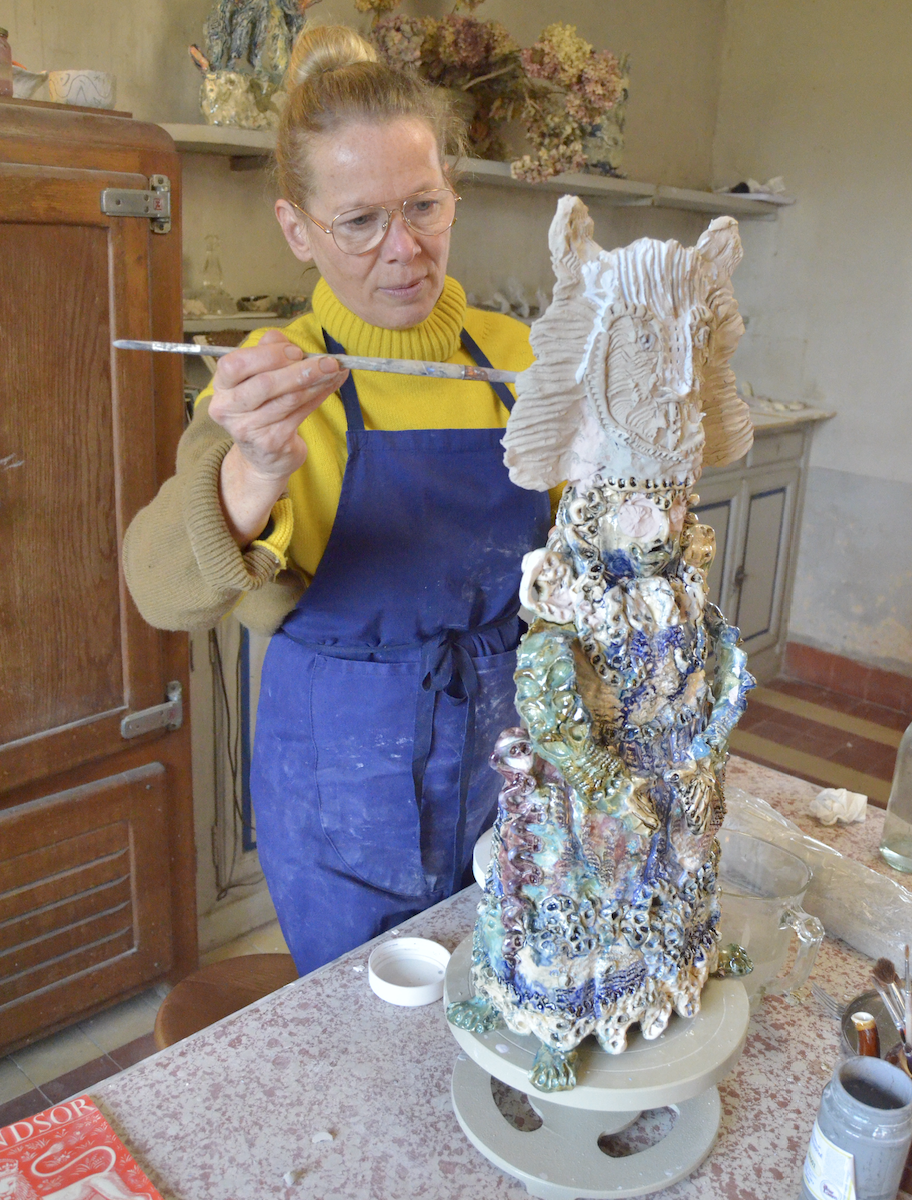
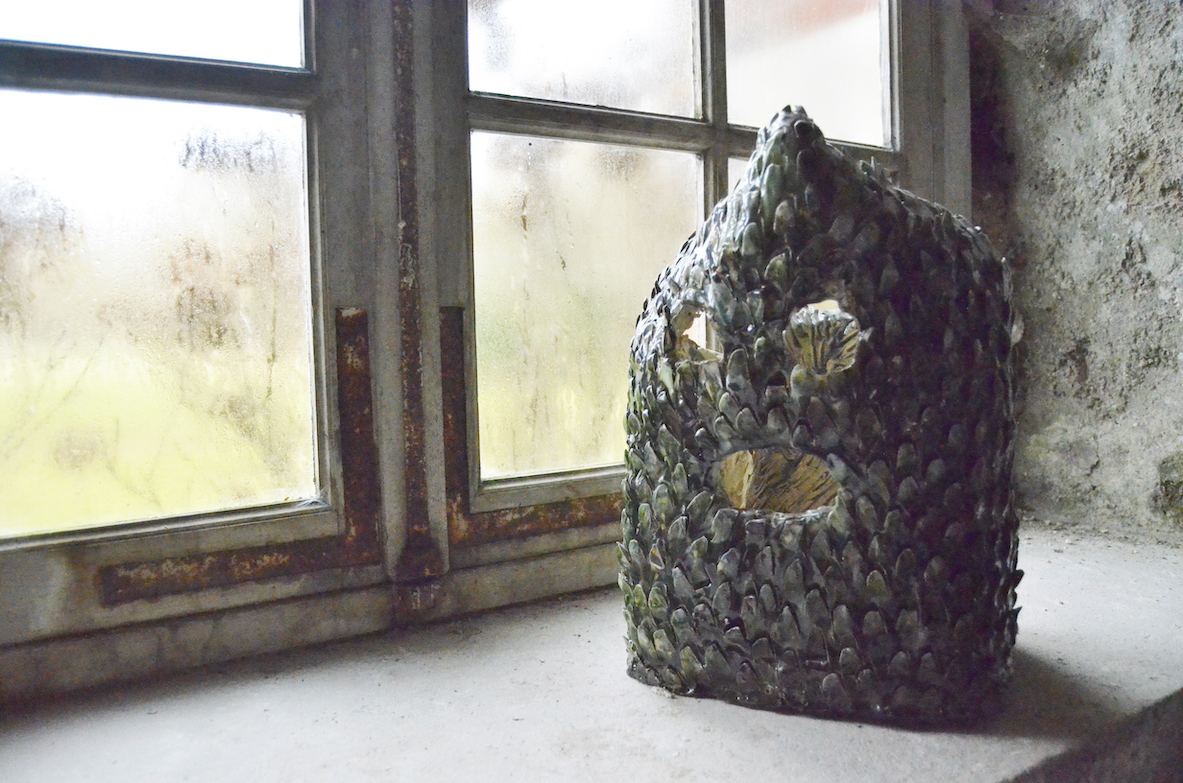
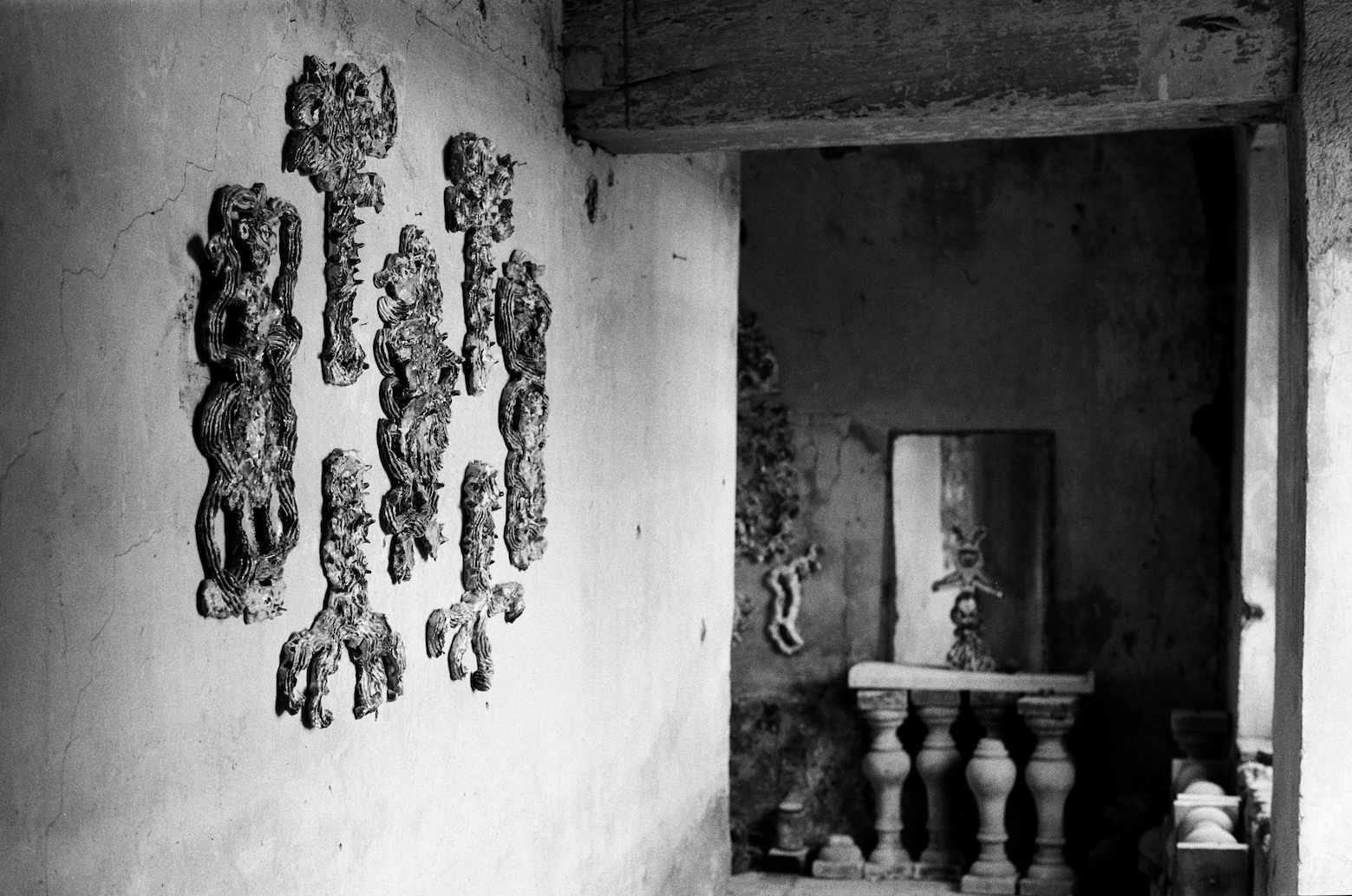
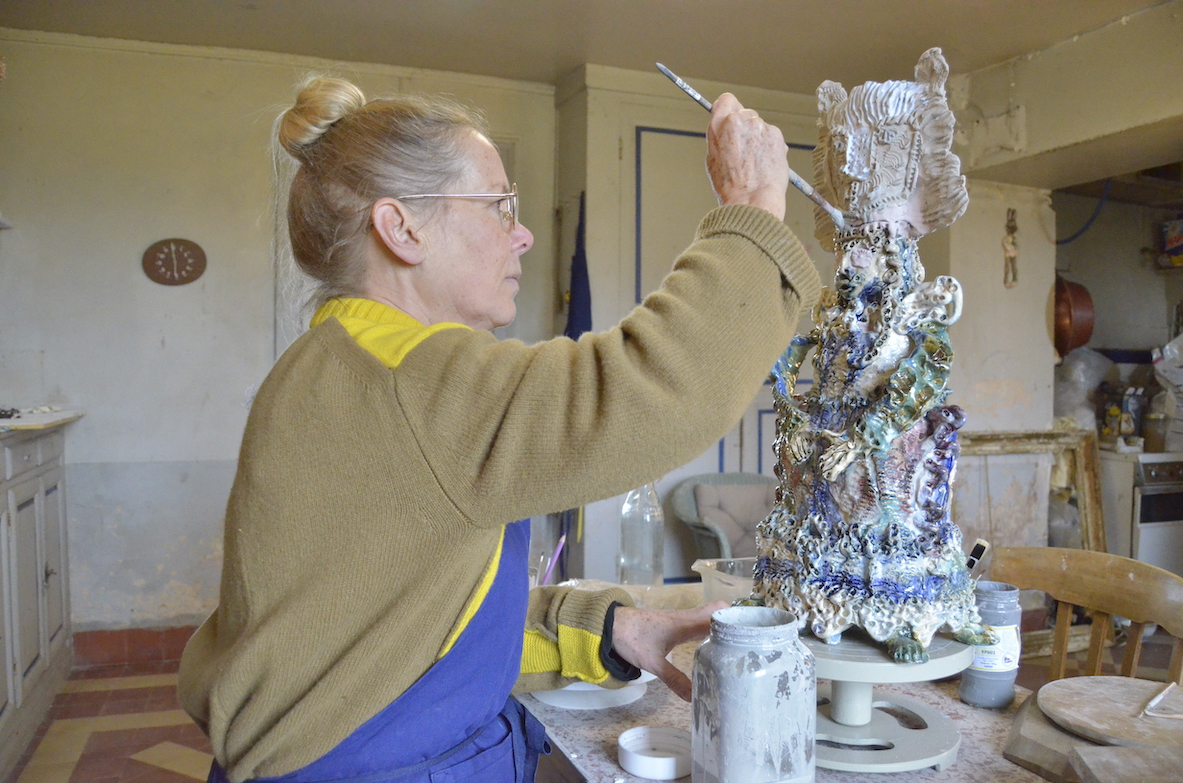
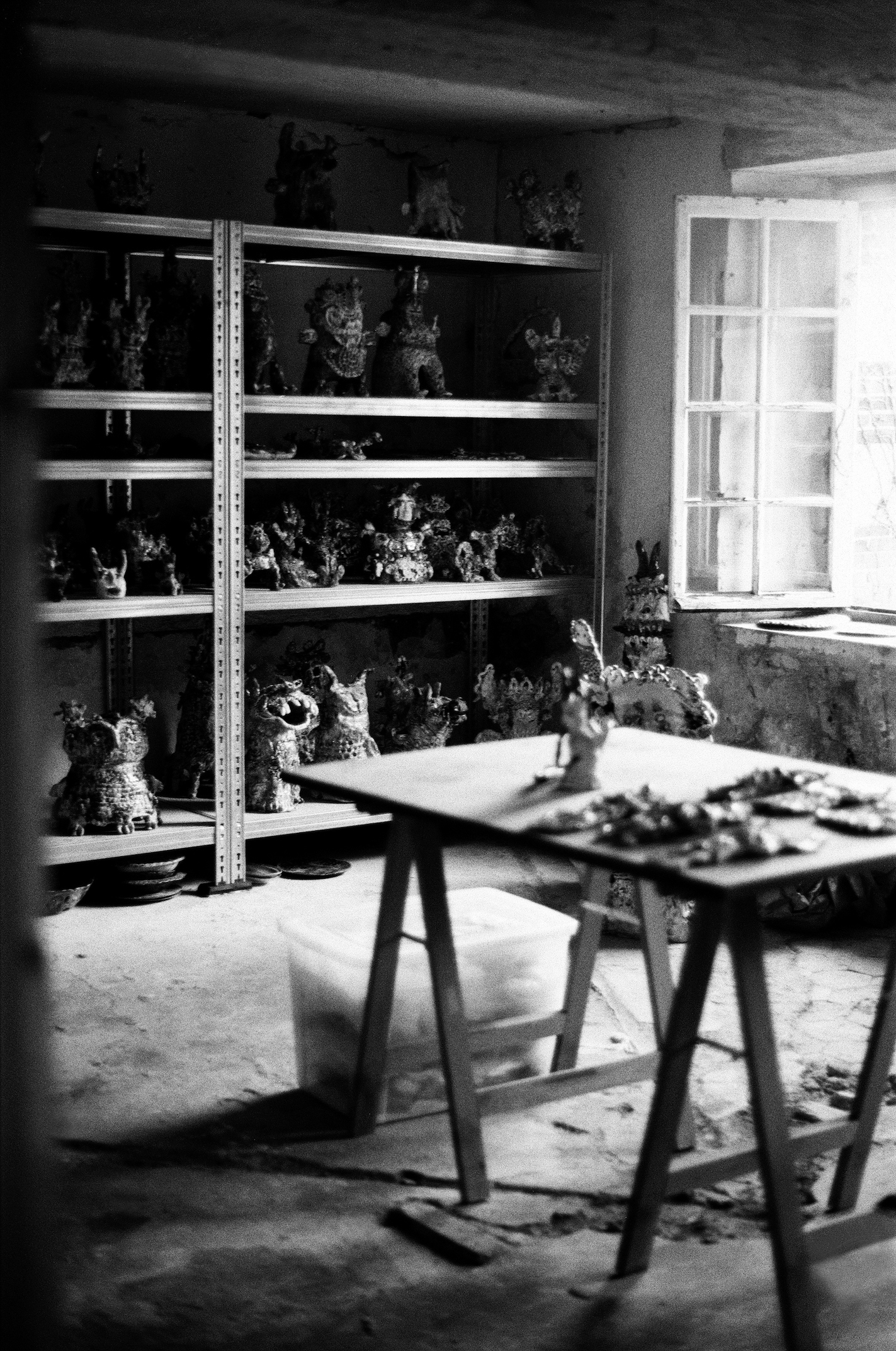
For Saraï Delfendahl there is no difference between animal, human, plant and matter. Living in harmony with nature and art, she creates, shapes, and paints with her agile hands wondrous mythical creatures between animals and humans made of ceramic. Intoxicated by this creative energy, she could work on her creations day and night and likes to compare herself to a “cement mixer” who continuously mixes influences, memories, obsessions and ideas.

Your imaginary creatures seem to come out of dreams, nightmares… What are you dreaming of right now?

For me, there is no difference between dreaming, daydreaming and everyday life. There is also no fundamental difference between animal, human, plant, material and symbolic. My creatures seem quite “normal” to me.

So where does this very deep connection in you between humans, animals and plants come from?

What I’ve experienced as a child with my parents, undoubtedly has a big impact on my work. Indeed, my father was an ethnologist and he often took us to the Musée de l’Homme in Paris where I was impressed by the art of different civilizations. In these cultures the links are very close between humans, animals, plants, and finally the universe …

Talking about art from other civilizations, your work is often compared with art brut.

Art brut is a term that seems to me to be able to define my work.

I am also fascinated by the works of these self-taught women and men, but it seems more correct to speak of singular art…

My way of working is indeed quite “singular” and I do not subscribe to any artistic movement.

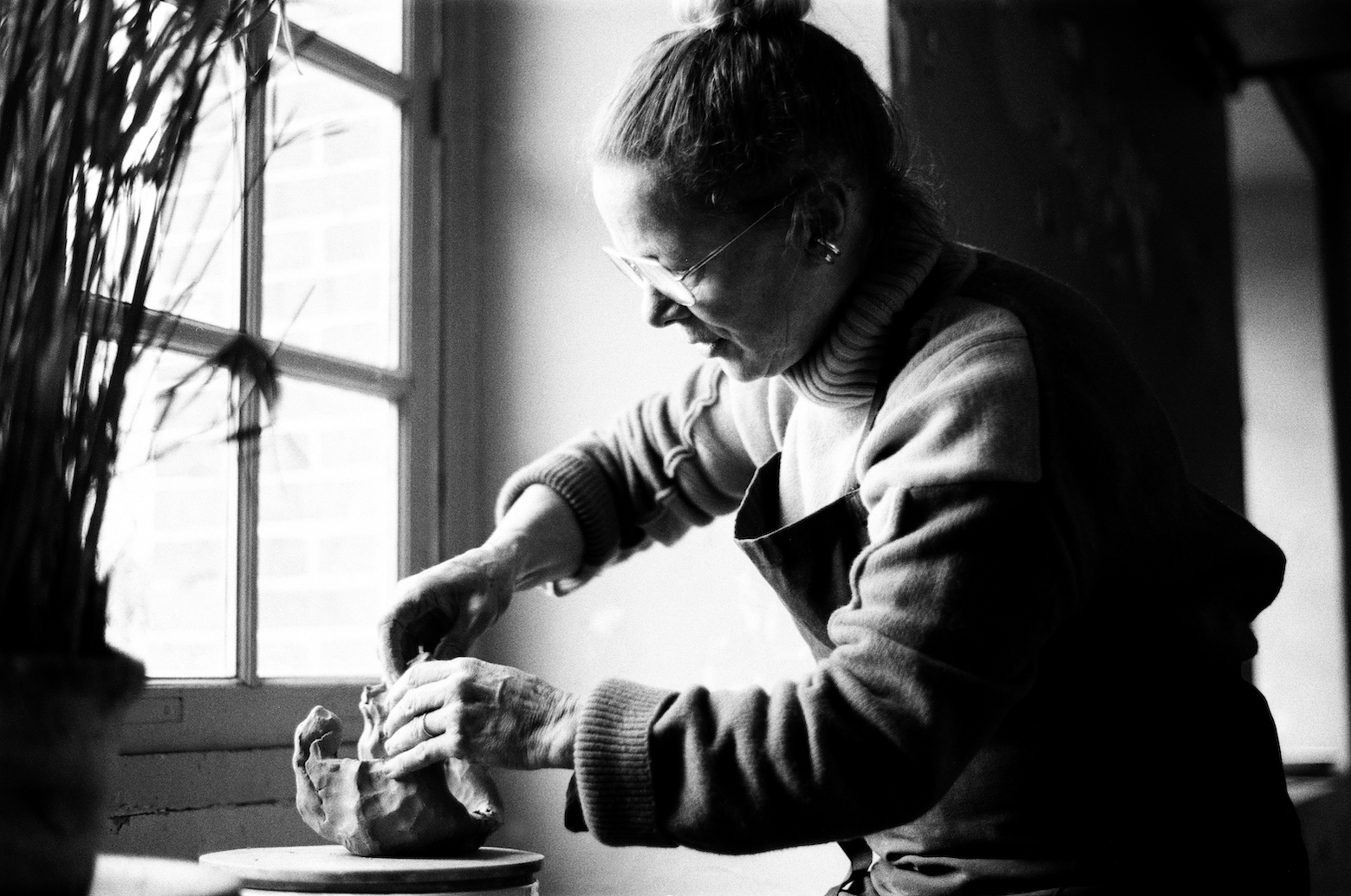
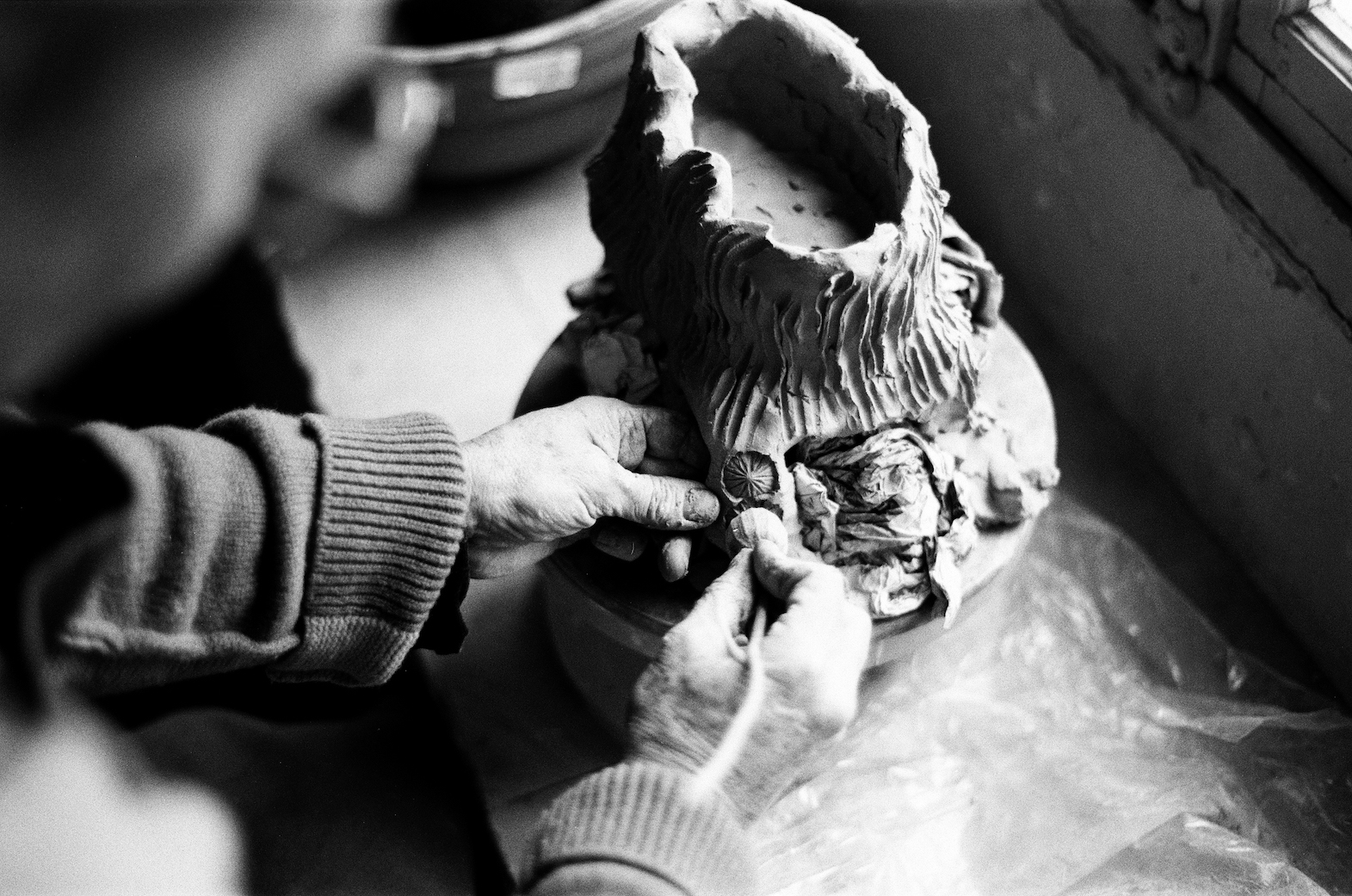
By observing you working, you can literally feel this strong need for manual work.

My mother, who was an artist, took me to a lot of exhibitions. I only went to school from fifth grade on. My mother used the Montessori Method to teach me to read and write, and every day I drew and made up stories. I was also initiated by her into the richness of nature and all kinds of manual activities. She read us stories from all over the world. I still remember and reread the Catalan tales collected by Joan Amades, in particular the one entitled The Daughter of the Sun and the Moon.

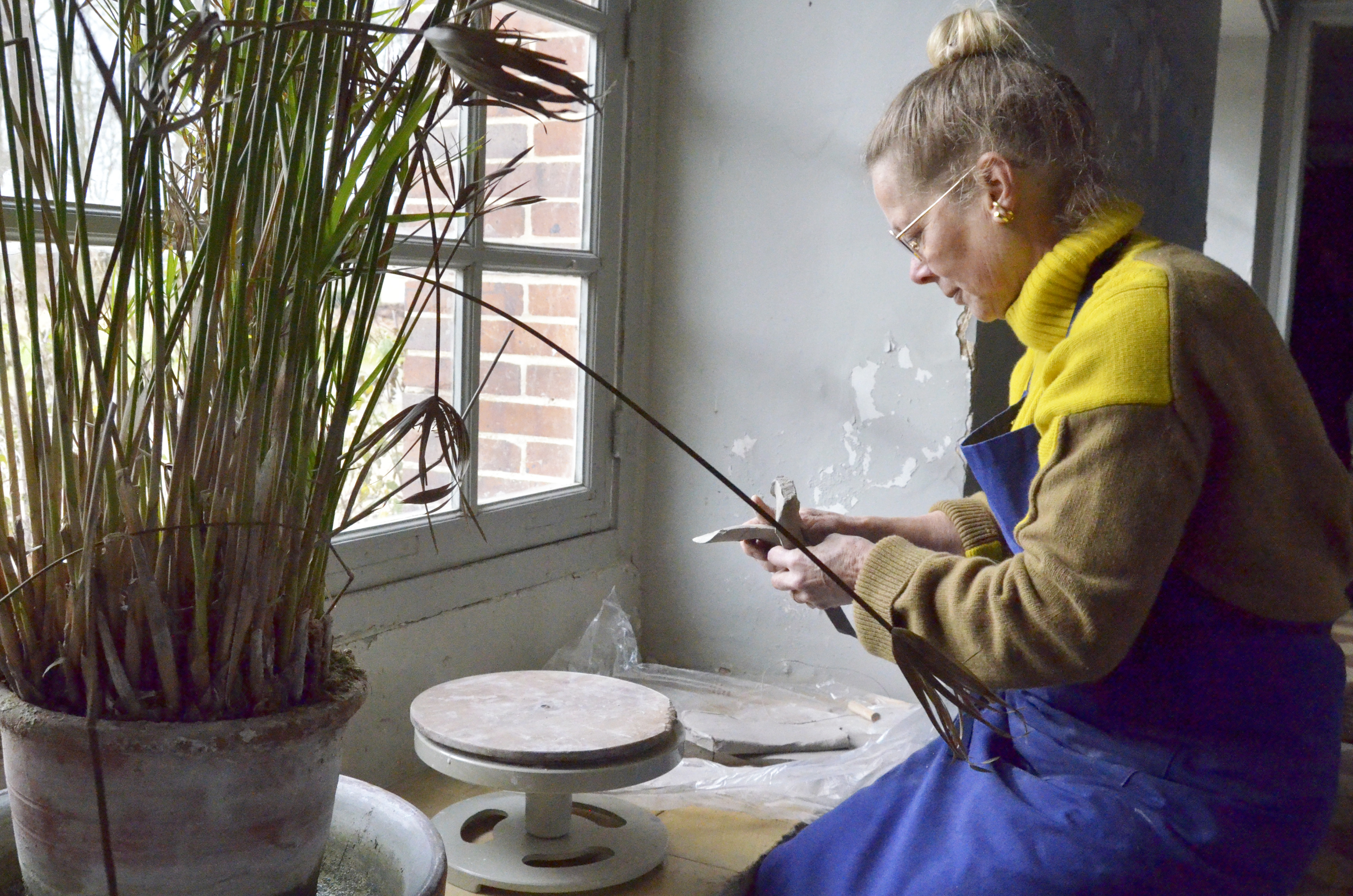
My parents were intellectual but also very manual: at home everyone worked all kinds of materials, we wove, we did mechanics, electricity, carpentry, masonry, weaving, pottery, vegetable dyes, gardening …

This manual work, the gesture, the material, are essential elements for an artist. Brancusi said “It is by carving stone that you discover the spirit of matter, your own measure. The hand thinks and unites thought with matter. … ”
How do you feel when you start creating, facing matter, facing the unknown?

When I am facing matter, I do not feel that I am facing the unknown. I am with matter, I feel in harmony with it, I experience great strength and great joy in this metamorphosis of matter.

I rarely have a preconceived idea of ​​what I’m going to do and if I have one, I happen to do something quite different … I am actually often surprised by what I have just done. Creation is a jubilation, I feel a lot of energy in me when I am in my studio and I find it difficult to stop: I could work day and night.

Francis Bacon used to compare himself to a “concrete mixer” that mixes all kinds of influences, memories, etc. This term suits me.

There is also this very maternal, very protective gesture that you can often see in your work. Is being a mother a source of inspiration for you?

I am the mother of three children and it has taken a big place in my life: I loved carrying them in my arms, taking care of them and I have always really liked the representations of mothers and children, especially in the paintings of the old Italian masters. I like the idea of ​​hugging, protecting. I want to protect a lot of people in the world: children but also animals, plants, etc.
When my kids were little, I didn’t have much time to work in a studio. Thanks to them, I therefore created the “Notebooks of my fantastic daily life” in which they appear a lot: they are collections of paintings and writing. These notebooks have been filling my need for creation for a few years.

And when you’re not in your studio, with your hands full of clay?

When I’m not in my studio, I have a lot of other passions, one is cooking. I love food and I cook since I was very small. When preparing dishes, I feel a bit like in my studio facing a sculpture.

Credits:
Photos : Iza-Menni Laaberki
Text: Anahita Vessier
Saraï Delfendahl Instagram

Share this post

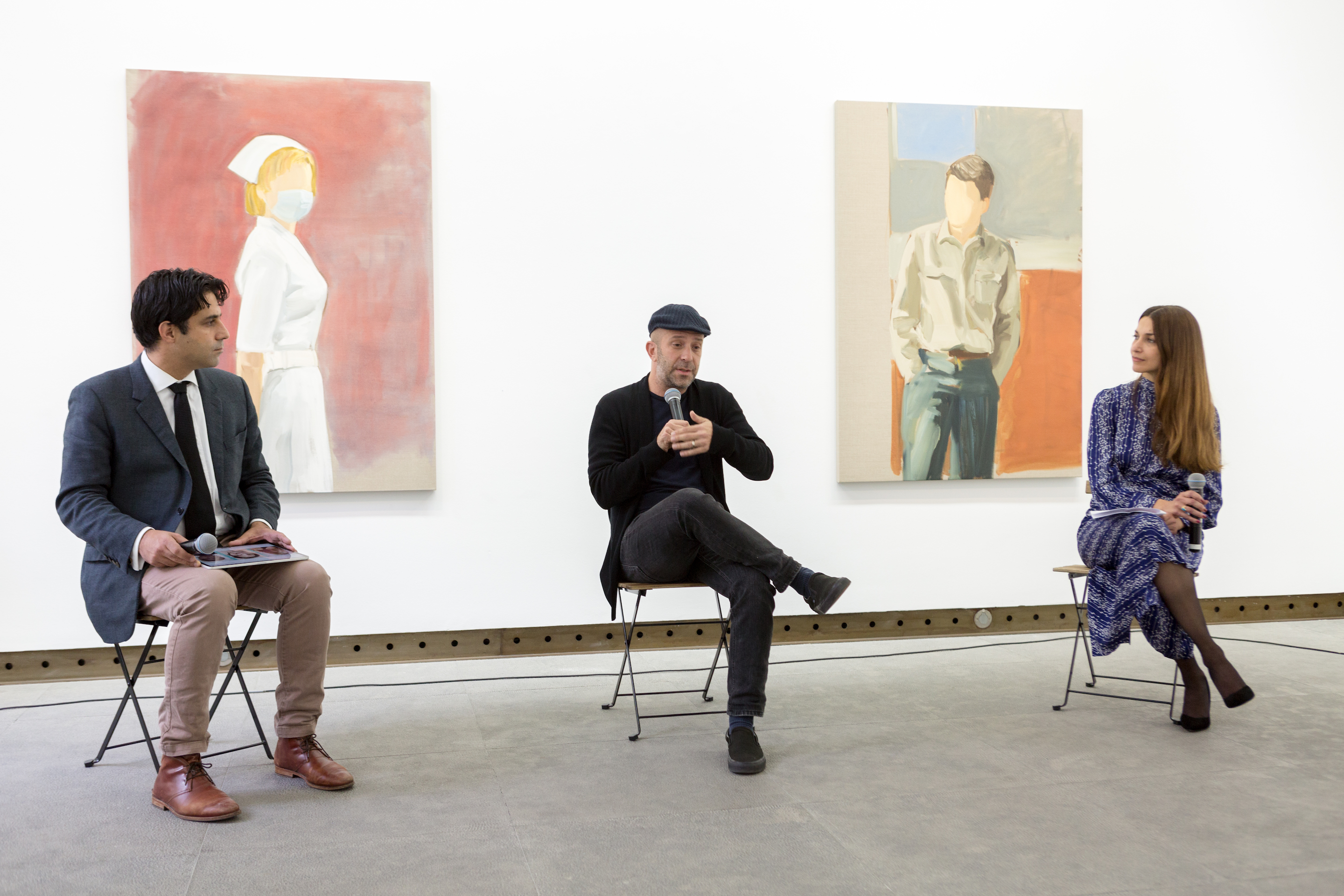
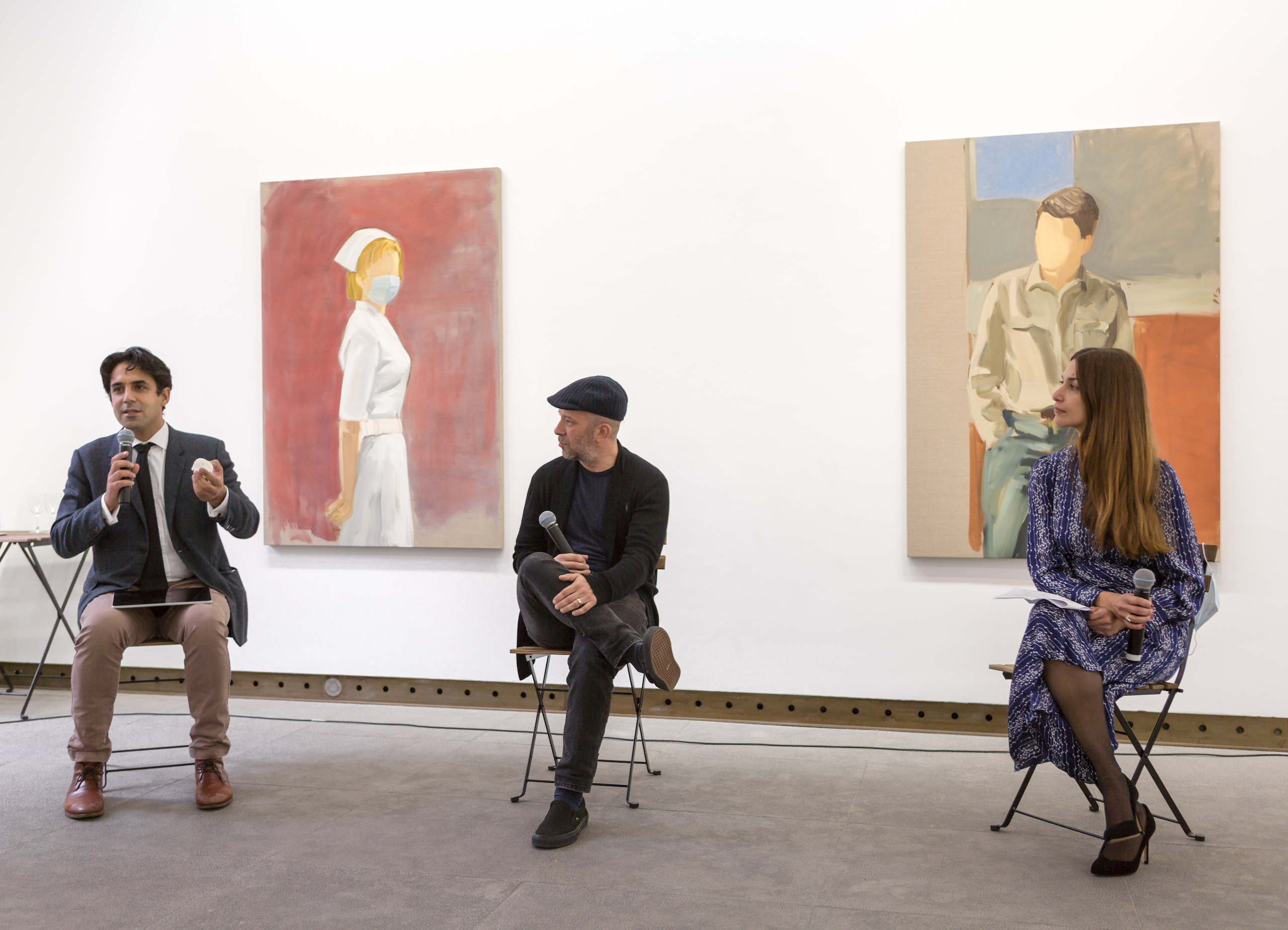
A STRANGER’S HAND, Gideon Rubin in conversation with Roman Hossein Khonsari

A STRANGER’S HAND, Gideon Rubin in conversation with Roman Hossein Khonsari

«…However the face gives priority to the self. You are you. In this sense, you could say that the face is not “seen”. It can only be embraced by your thought processes: it is uncontainable, it takes you beyond… »
(Emmanuel Levinas)

From protesters in Hong Kong to spectators of the film Joker, which features an urban revolt led by a grimacing clown, the face becomes an important issue of political and social commitment, identification and recognition. States and big companies that collect computer data are interested in this facial recognition that some citizens refuse, for whom covering their face with a mask is a way of preserving their freedom. But what remains of their identity behind these hidden faces ?

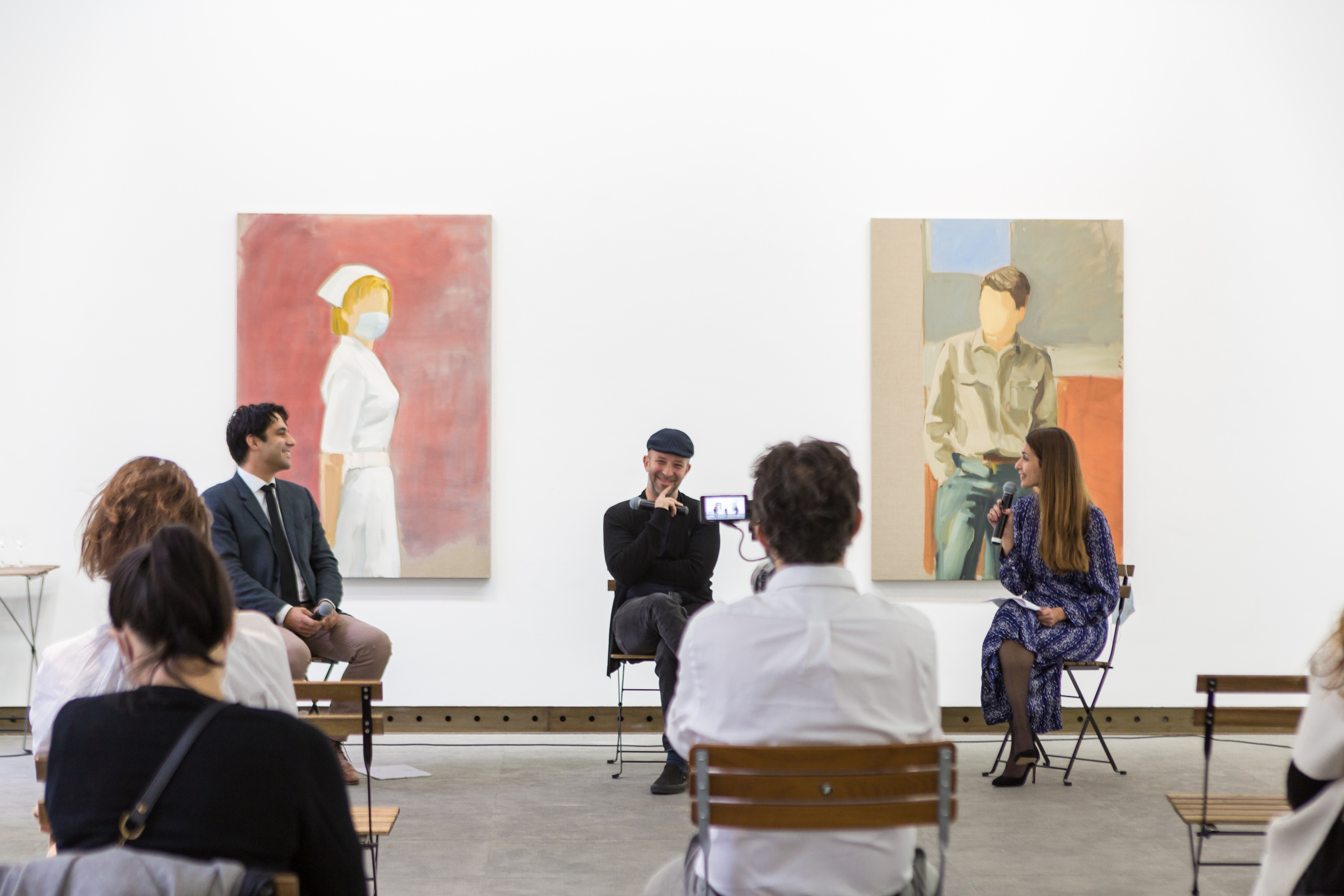
Projecting an identity on deleted faces, is a commun subject in Gideon Rubin’s work as well as in Dr. Roman Hossein Khonsari’s daily practice as a maxillofacial surgeon, reconstructing lost faces due to accidents or diseases. 

Both are craftsmen of faceless memories, mastering exceptional manual skills, one with a brush, the other with a scalpel, and confronting themselves constantly with the question of history, memories, traces of life, identities behind these faces without features.

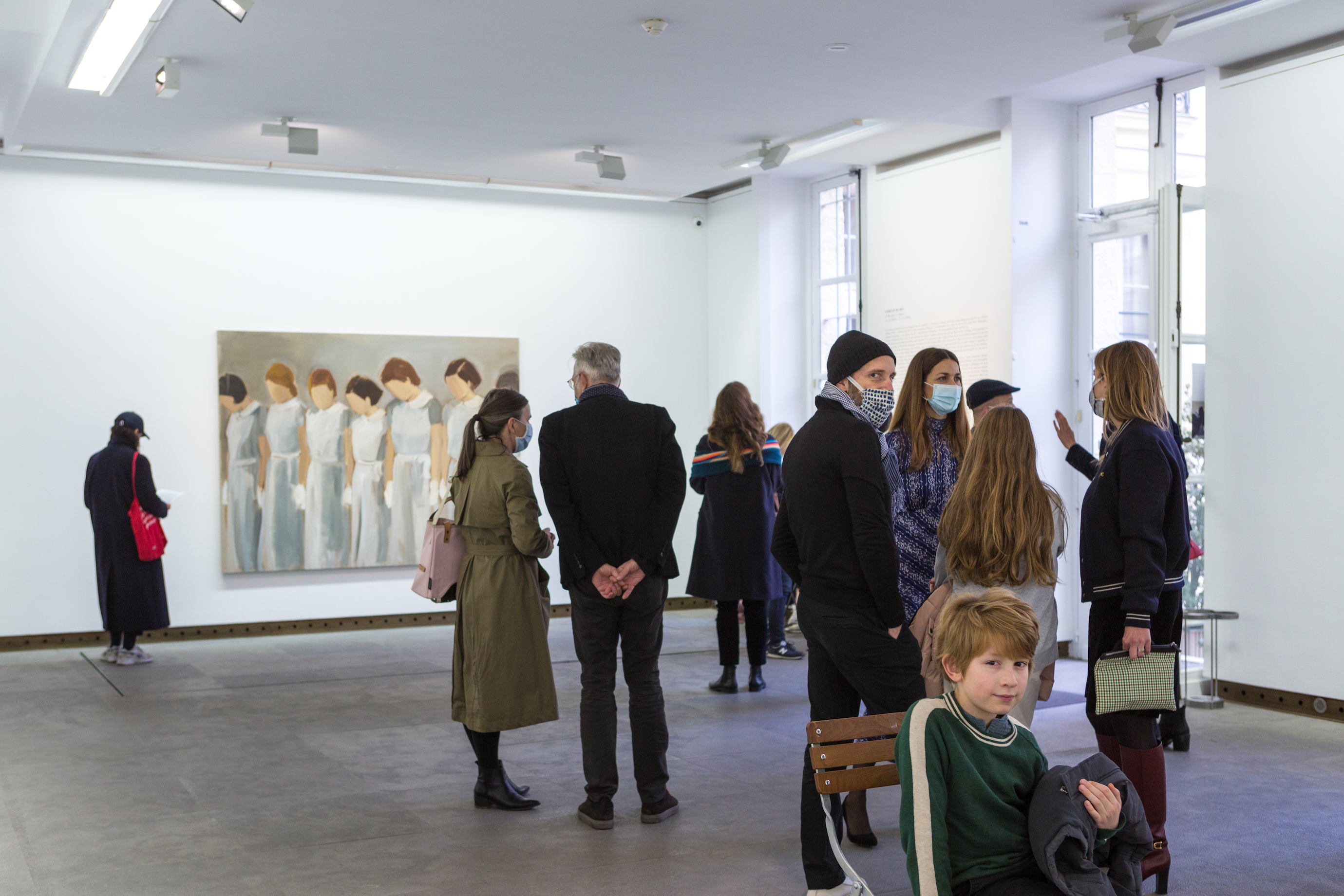
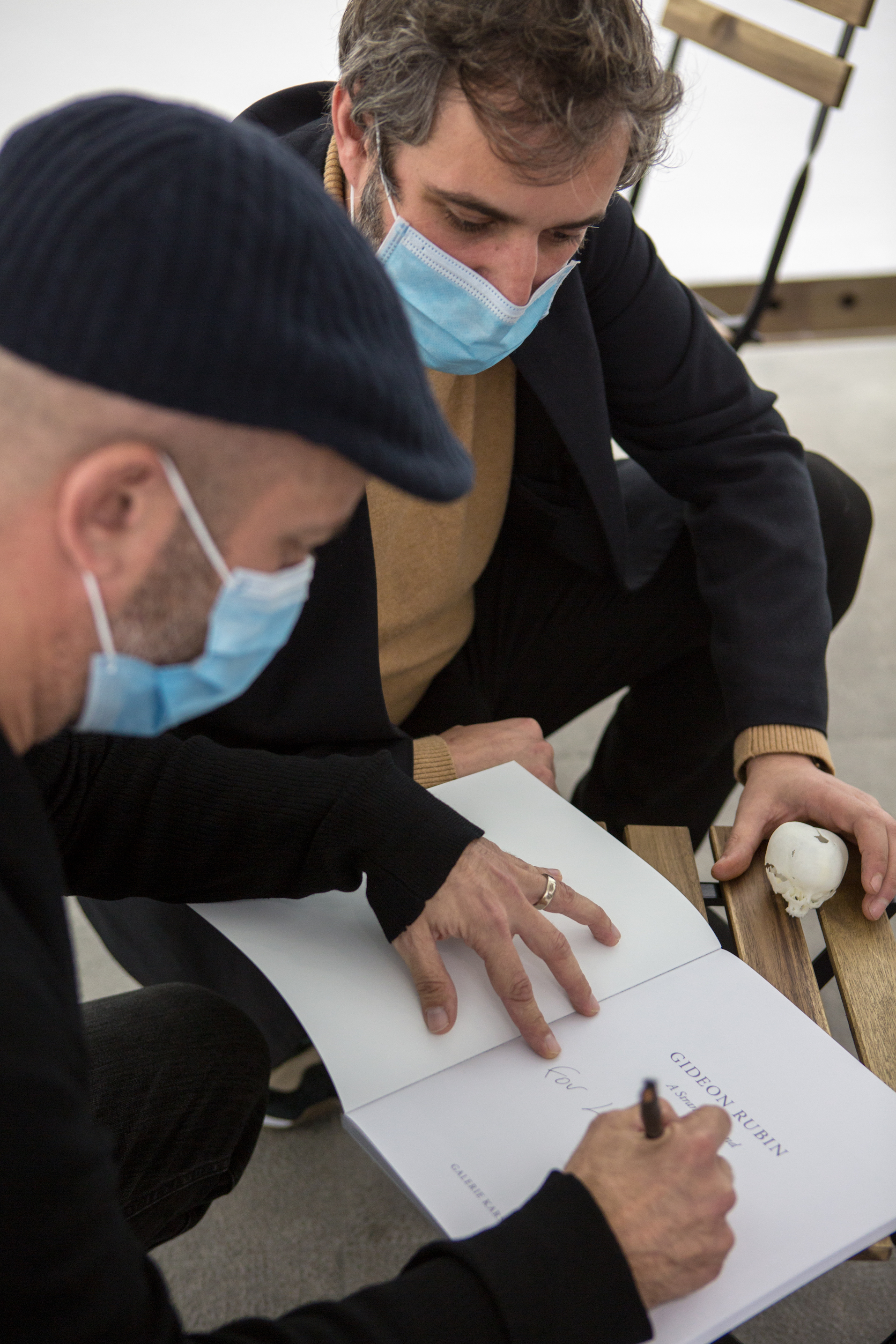
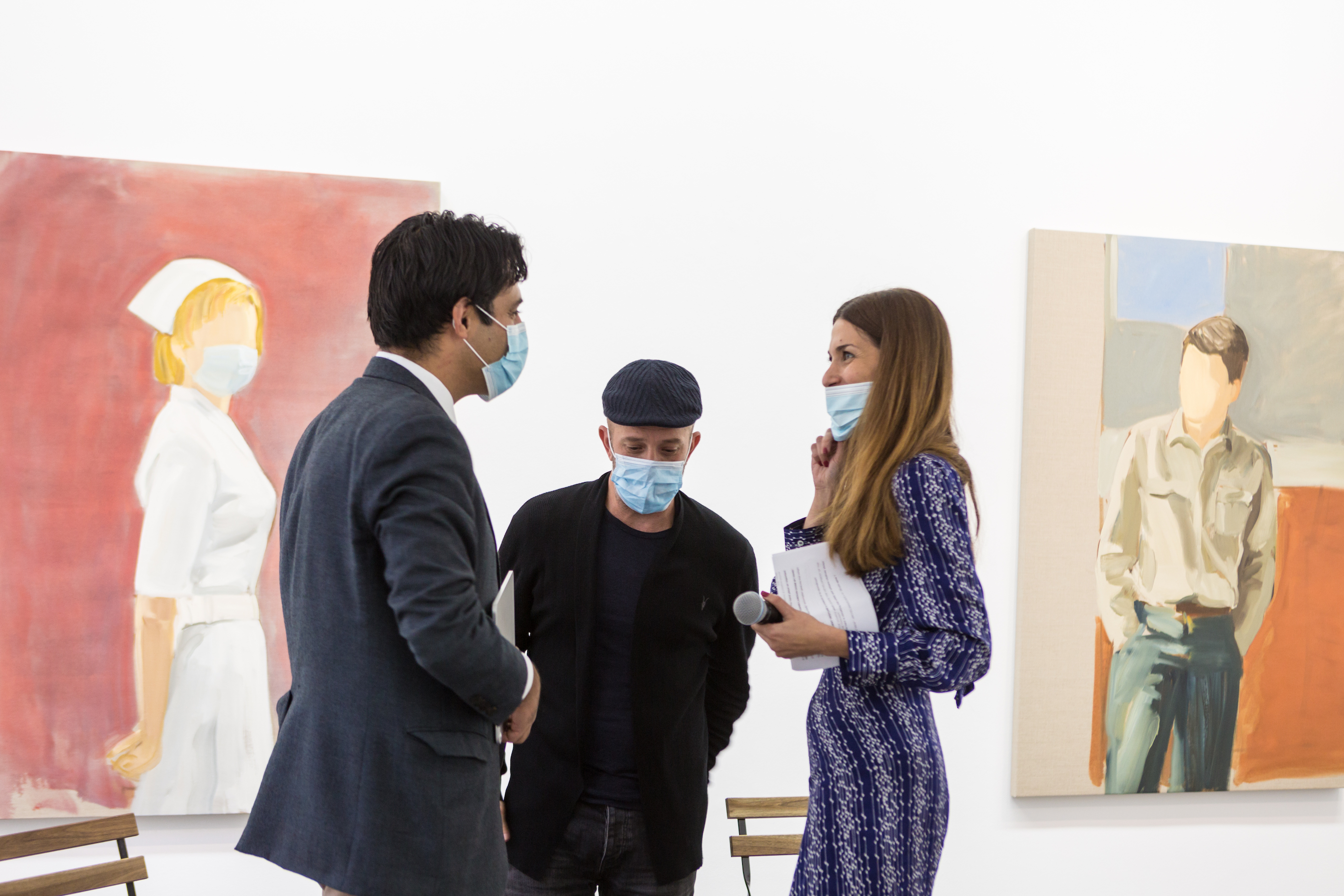
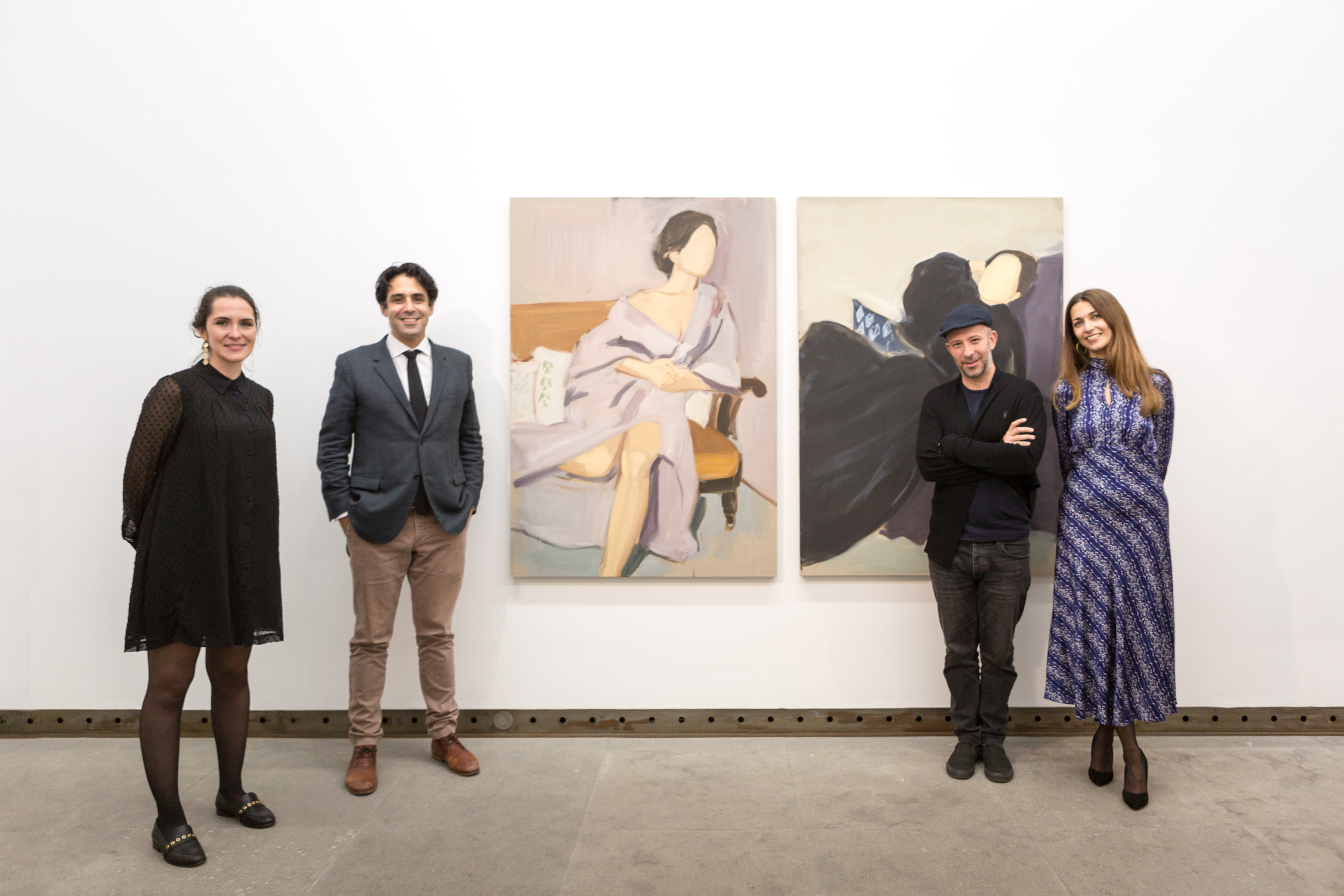
This conversation between the artist and the surgeon, imagined and orchestrated by Anahita Vessier, is an interdisciplinary exchange inviting the audience to dive deeper into Gideon Rubin’s work on the occasion of his exhibition “A Stranger’s Hand” at Galerie Karsten Greve in Paris and to discover still unexplored corners in his artistic universe through Dr. Khonsari’s approach as a scientist of humanities.

Credits :
Photos by Flaminia Reposi
Video by Alban Jadas for Galerie Karsten Greve
Text : Anahita Vessier
hhttps://www.gideonrubin.com

Share this post
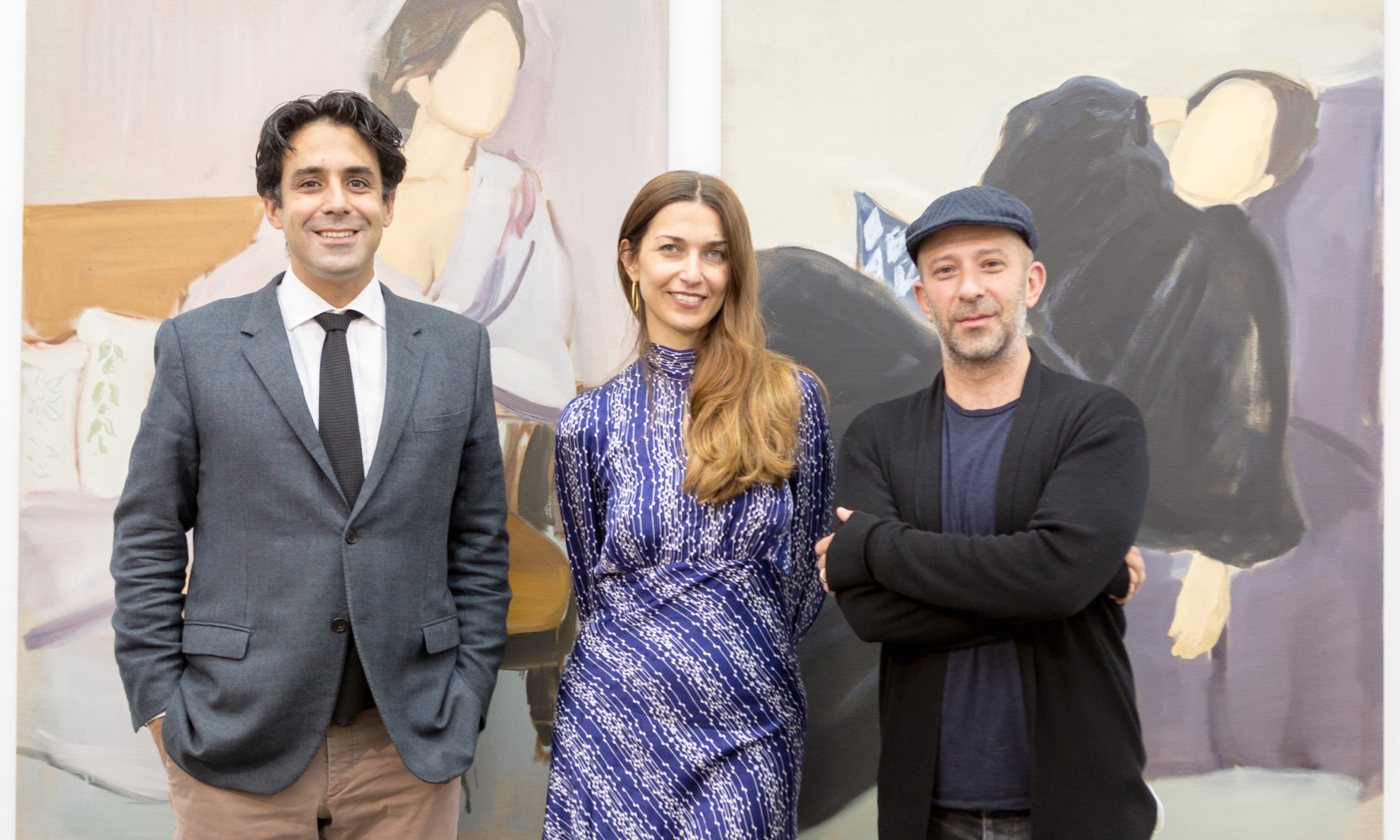
POUREA ALIMIRZAEE, Fragile masculinity

POUREA ALIMIRZAEE, Fragile masculinity

Still in his senior year at the Academy of Fine Arts in Vienna, the name of Pourea Alimirzaee is already circulating among art collectors.

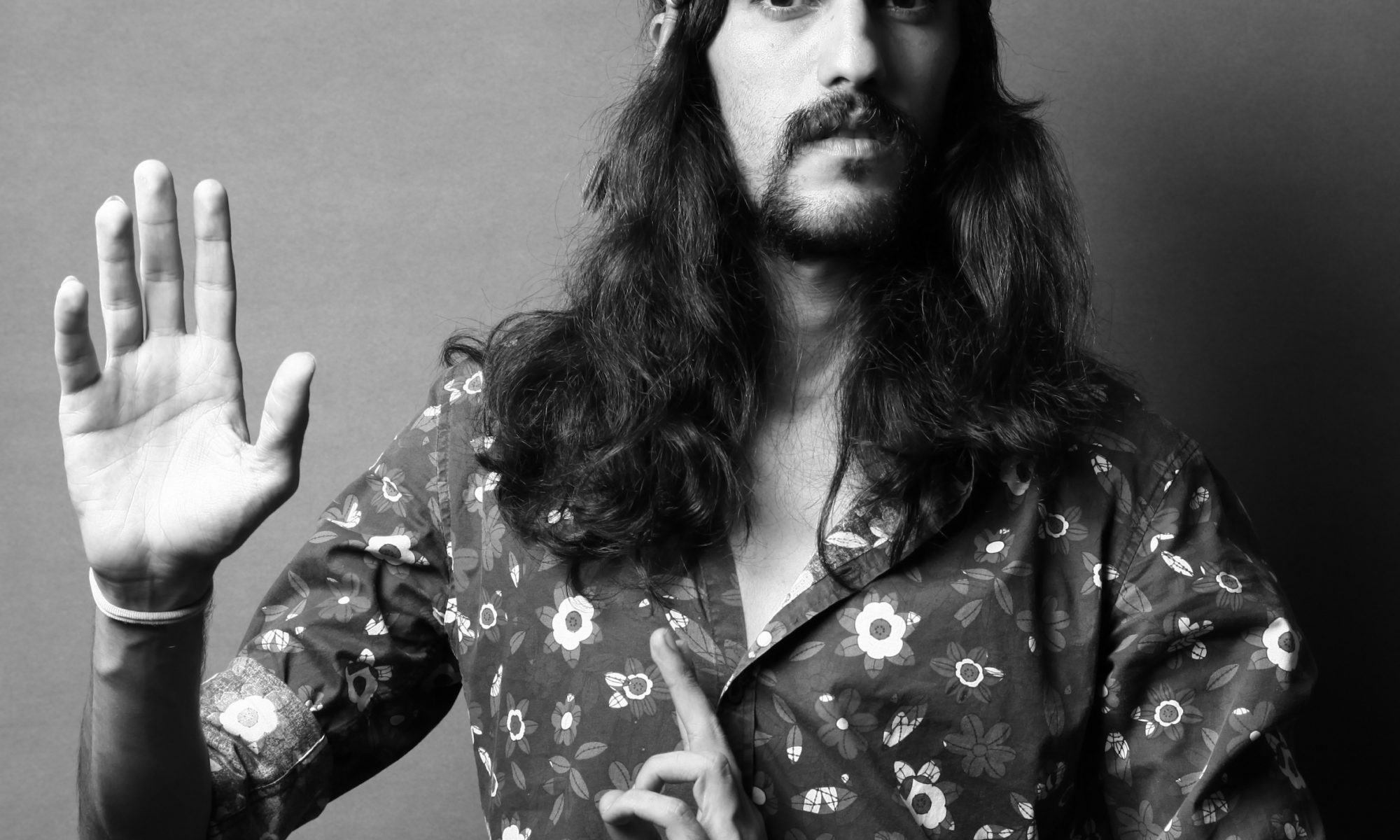
Originally from Iran, Pourea deals in his work exclusively with the subject of fragile masculinity, also called toxic masculinity. He has created this character, a kind of human being between woman and man, who looks very similar to the long-haired young artist. Self portraits? “Yes, of course there are similarities”, he replies with a laugh and self-confidently and adds, “As a viewer you have to deal with it, either it bothers you or you feel attracted”.

How did art come to you?

I’ve initially studied computer engineering in Tehran, but I was always drawing. I just didn’t know at that time that I’ll continue in art.

So how did you come to Vienna to study art?

I needed a change at one point in my life, a new challenge. At that time, I was playing the bass in a band in Iran. So, one day I’ve met a friend of mine on the street who told me to try the admission exam for the Conservatory of Vienna. I’ve done it… and a couple of months later I found myself in Vienna studying bass at the conservatory. But the way they taught music was too conservative for me, so I decided to apply for the Academy of Fine Arts in 2015 in figurative painting with Kirsi Mikkola. And I got in!

Looking at your paintings, there are is always this character with this long hair set in this dreamy environment …

Yes, I’m actually working on the subject of “toxic masculinity” or “fragile masculinity” which refers to certain cultural, traditional and stereotypical masculine norms that can be harmful to men, women and society overall. It also brings up the position of men who behave in a feminine way but are not gay.

I have struggled my whole life with this kind of stereotypes and society that tells you to play this role of being a “real man”.

So, when I came to Vienna, I’ve started to explore more this feeling that I had and to do more research on “toxic / fragile masculinity”. It’s a trend that started around four years ago, so I thought it’s actually time to talk about it.

So, in this case are these portraits in your paintings actually self portraits?

Of course there are similarities!
I’ve created this character where you’re not sure if it’s a man or a woman with long hair. The long hair is normally a very feminine symbol, and here you have this dude standing in this picture trying to be confident, just be. As a viewer you have to deal with it, either you feel disturbed or intrigued.

And as a musician, any music when you paint?

Yes, the movie soundtrack of Kurosawa’s “Rushmon” over and over again. It’s brilliant! It brings me into a kind of spiritual state of mind.

Credits:
Photos : Anahita Vessier
Cover photo : Navid Moaddeb
Text: Anahita Vessier
Pourea Alimirzaee Instagram

Share this post

RANA BEGUM, Light, colour and form

RANA BEGUM, Light, colour and form

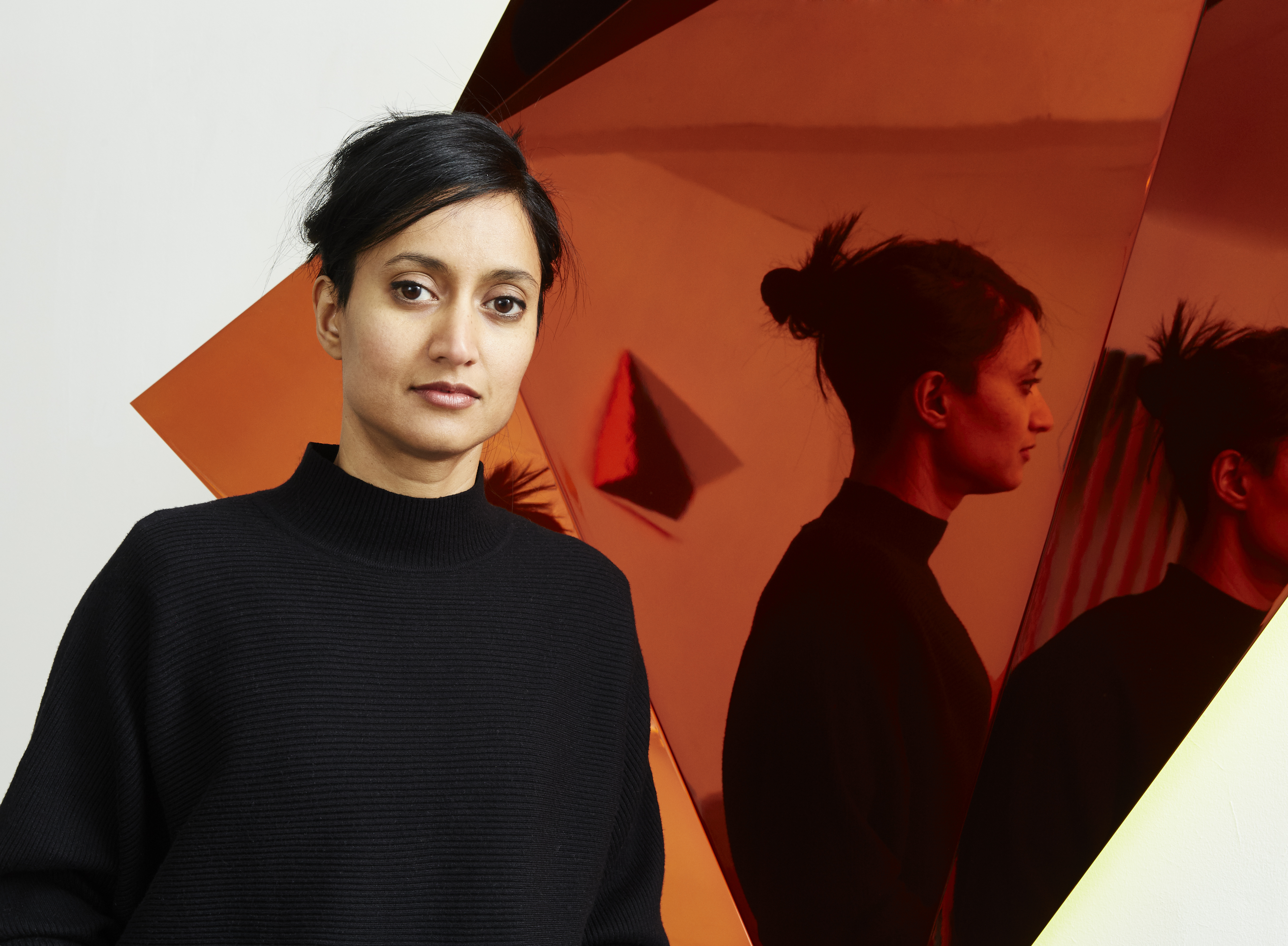
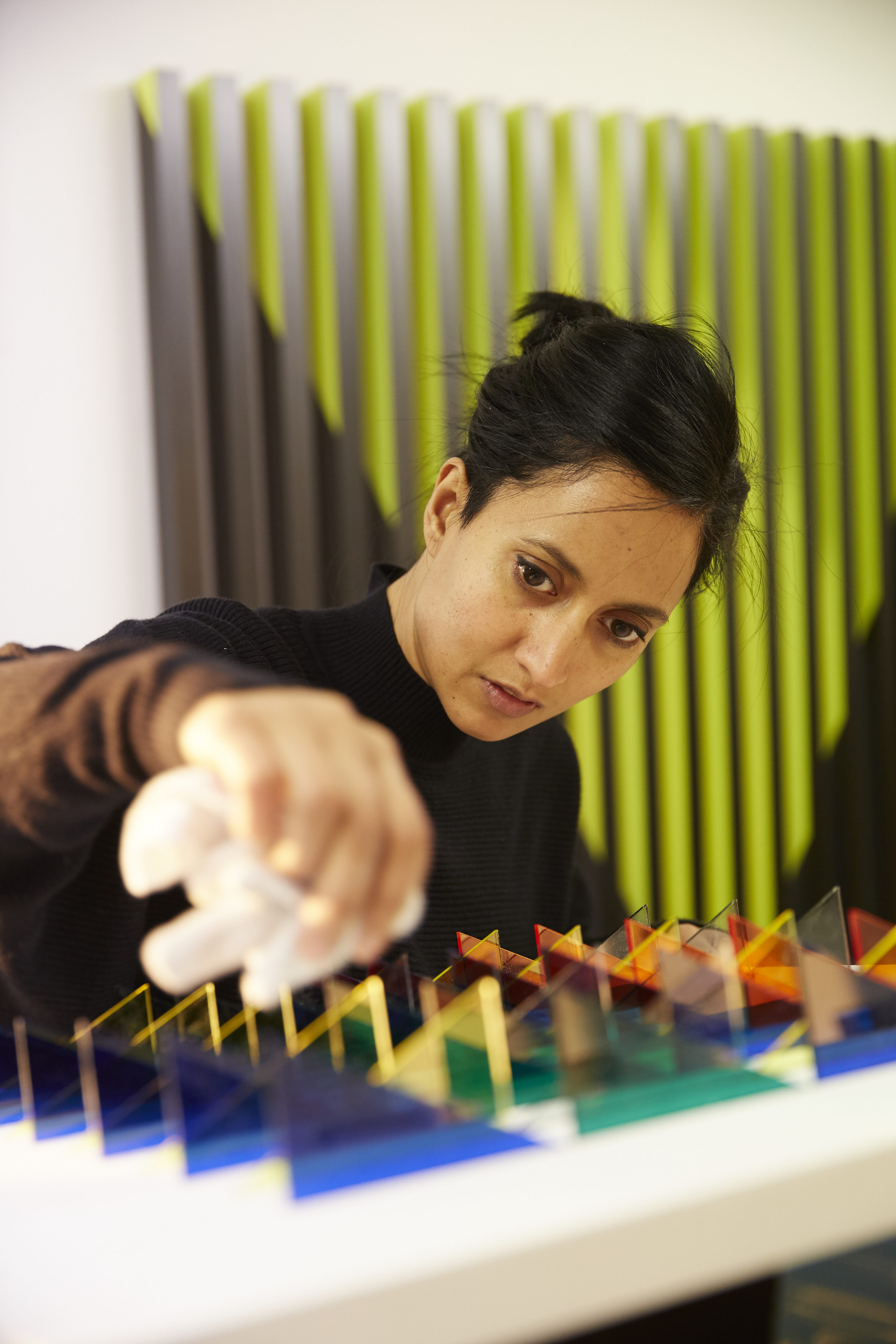
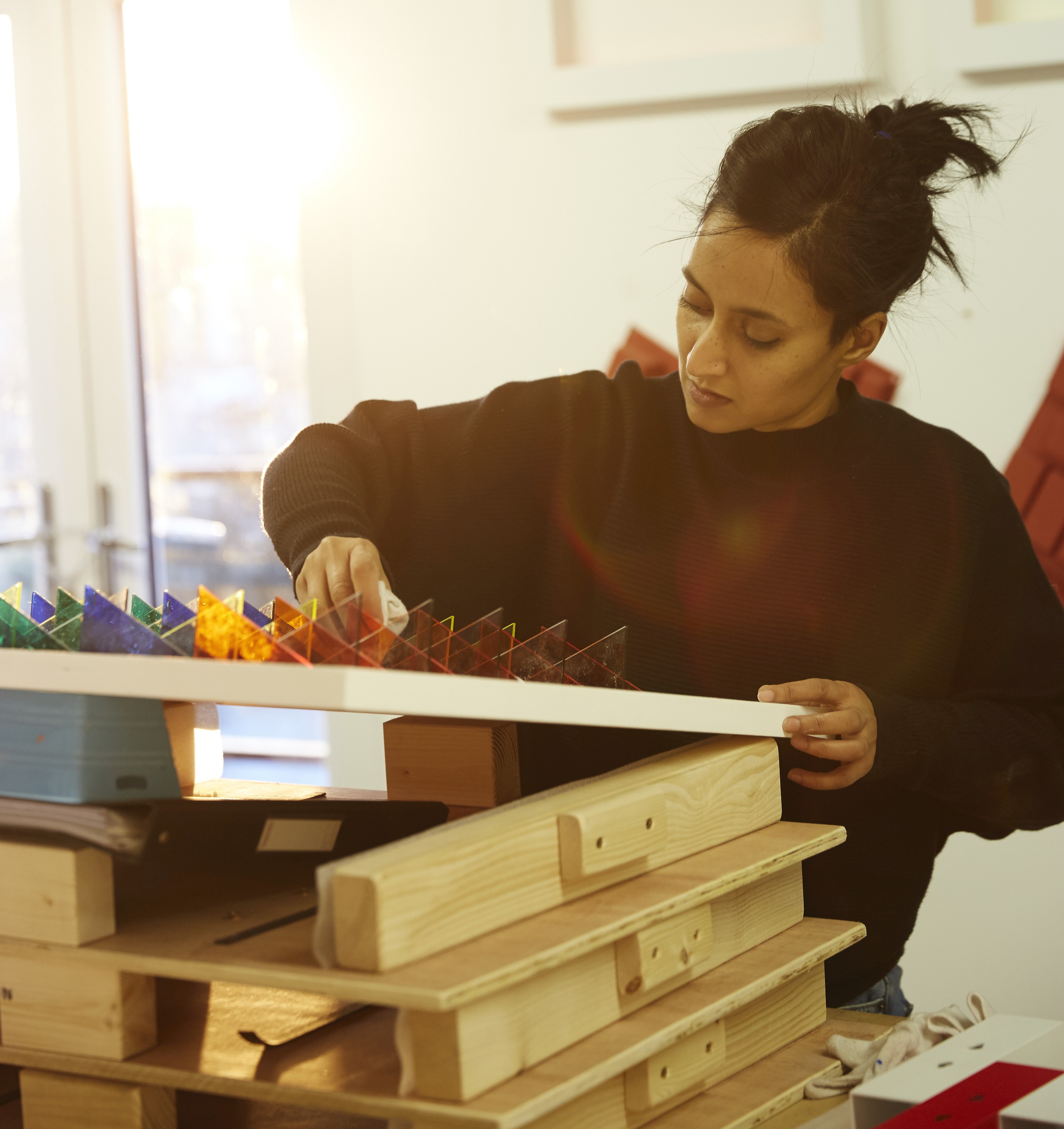
British-Bangladeshi artist Rana Begum has been moving from Bangladesh to England when she was eight, without speaking any word of English. She has chosen from that moment on, art as her mode of communcation. This permanent urge to create has led her to become one of the rising stars in the international art scene.

She once said about her practice “The need to create is always there. I took a visual route. It’s not necessarily one that people always understand, but I am happy with it. Even though sometimes, I may not be sure where I’m going, I feel confident that this road is taking me somewhere.”

How did you get into arts?

I arrived in England in 1985. I didn’t speak a word of English so when I started school it was really hard – I spent most of my first day really bored and trying not to fall asleep! The next day my teacher gave me some colouring pencils and paper. Suddenly I had a way to communicate. I drew constantly and all of my pictures went up on the wall. It gave me such a positive connection with art from a young age.

So becoming an artist was quite a struggle for you. 

Yes, I think that’s fair to say! Being both female and Muslim meant that I had to work very hard not to have either of these things define my work or how it is perceived. I didn’t make things easy for myself though. I started out as a figurative artist which was in conflict with my family’s religious beliefs but, thanks to the support of my headmistress and my uncle, they came around.
It’s all part of the journey that has got me to where I am today.


Light, Colour and repetitivity are very important in your work. Any connection with your childhood in Bangladesh where you grew up until you were eight? 

Yes, it’s quite strange because, for a long time, I didn’t feel at all connected with my experience growing up as a child in Bangladesh.

It was only when I was in cognitive analytic therapy, a means of the rediscovering memories, that I was able to discover why I did certain things as a child in Bangladesh and how they influenced my work later. I really do believe things happen for a reason!

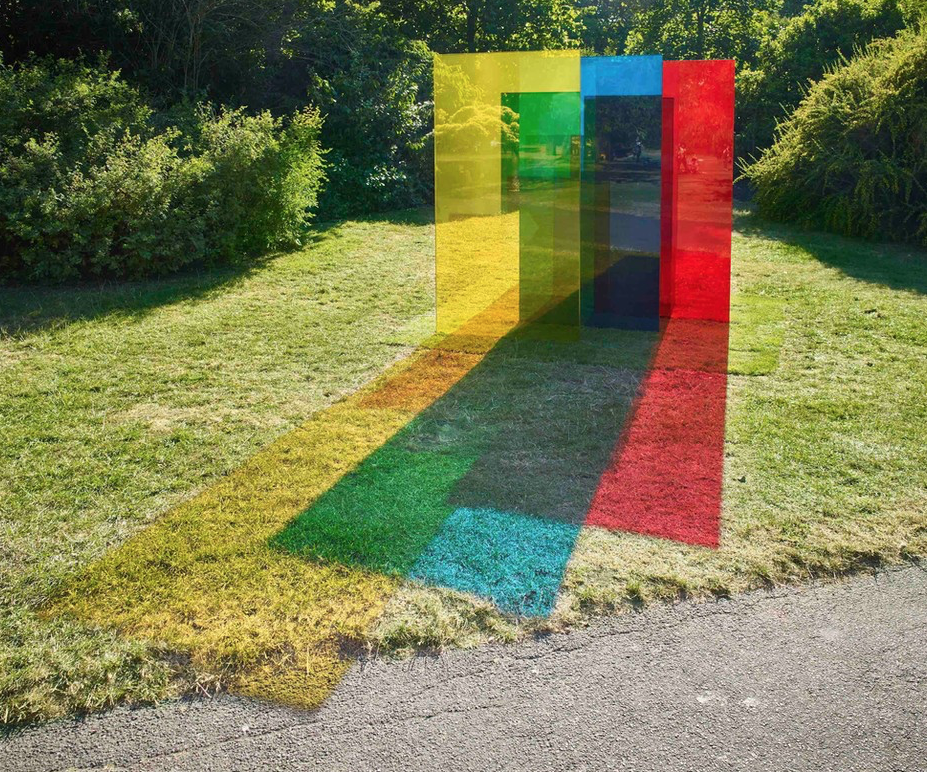
For example, I used to stare into the rice fields and these images are extremely vivid. I remember the repetitiveness, the water, the wind, the movement and the light reflecting on the water. I recall being told off quite a lot for sitting and staring. At the time I don’t know why I was doing it. But now these colours and forms are manifest in my work, as if they somehow imprinted in my mind as a child.

Colours are very important to me. I grew up watching Bollywood movies and I absolutely loved their vibrancy.

Also, my love for repetition derives from my religious upbringing. I grew up reading the Qur’an and praying five times a day. The routine of prayer as well as the movements you do when you pray, instilled this repetition that forever permeates through my work.

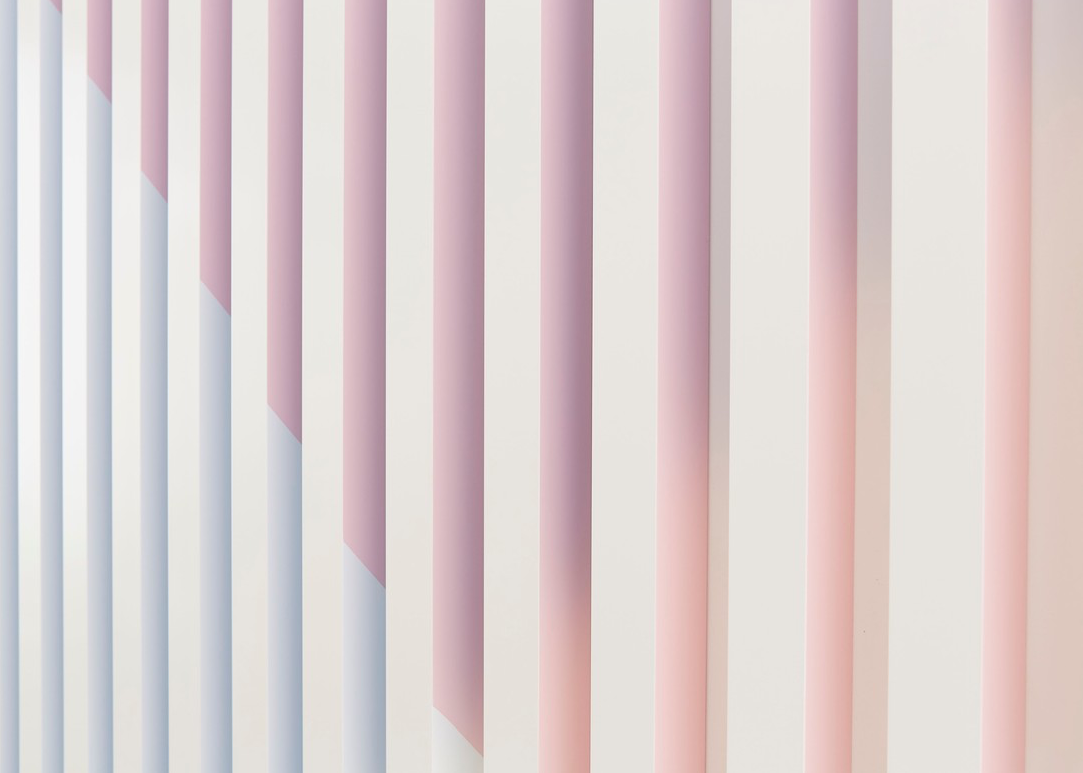
These three things, colours, light and form are like a triangle that have shaped my practice.

And how did it feel to return to Bangladesh as an artist in 2014 to exhibit at the Dhaka Art Summit ?  Have you been nervous? 

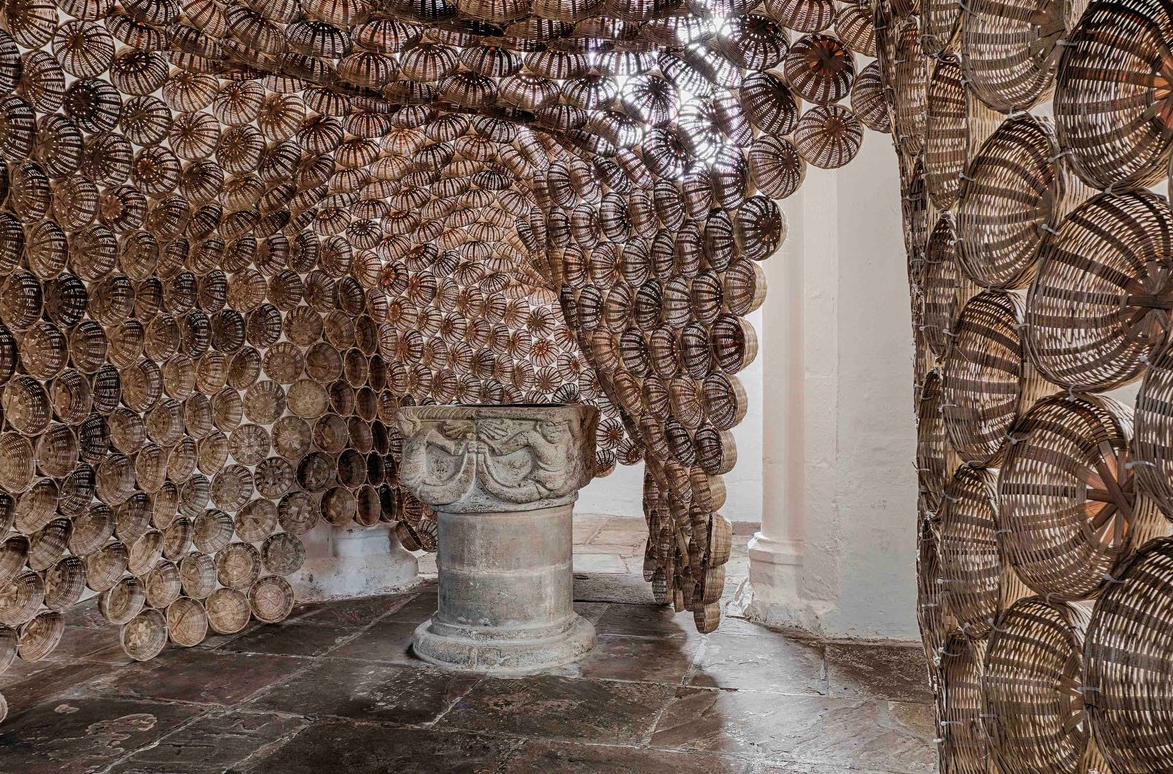
I was really nervous, it felt like a really big deal! I knew that I’d go back to Bangladesh one day but I didn’t think that I’d go back to exhibit. This was around the time I was in therapy and had uncovered some more childhood memories. It felt particularly fitting that the brief was to use materials that were produced locally. While growing up I had a family friend who looked after me and she used to weave baskets. I wanted to incorporate that childhood memory so I thought why not create a structure with a basket formation.

 When I was a kid, I used to go to the mosque early in the morning to read the Qur’an. The mosque itself was very simple with a fountain in front which has since been demolished. I remember the room filled with people reciting the Qur’an. There was the sound of voices alongside that of pages turning with sunlight peeking through the window. It was a strong multi-sensory moment of light and sound. This is what I wanted to recreate at the Dhaka Art Summit, an experience that was intense yet calm and meditative.

 Another highlight from my return to Bangladesh was that I met Ziba from Parasol Unit in Dhaka.

This was a very important encounter in your career.

Meeting Ziba was a very special moment in my career. She gave me an incredible opportunity to have a solo show at Parasol Unit in London.

Through her work as a curator, I was able to create a narrative that helped me to understand where my work comes from, to access where I was at that time and let me know that I was going the right direction. This show truly gave me the confidence that I needed. 

As an artist, do you think it’s important to leave room for accidents and let go sometimes? 

You have to! Otherwise, you’ll produce the same stuff over and over again. Each accident is special and has to lead to something else. It might be the tiniest detail that the next art piece answers. So much of my work stems from chance encounters – the play of light on a wall or from experimenting with a new material. I think it is essential to maintain a level of curiosity and freedom when creating work.

And when you look at a finished art piece, does it happen that you’re unsatisfied with the outcome? 

Sometimes yes and that’s when I leave it alone for a while and will come back to it. There are times when I don’t want to let go of the works. However, to me it’s more important that the work gets out when its finished and can interact with viewers and its environment. Because temporal factors such as light play such a crucial role in my work, you can never really say that a work is finished because it will take on a variety of new and unexpected states depending on the time of day, various densities of light etc. That’s why I love public art. You can push the boundaries you would not be able to tackle while in the studio.

Any public place where you dream to have one of your art pieces? 

Dia Art Foundation!

And what about collaborations?

I love collaborating with people from different disciplines because there are things to explore that you might not have thought of.

For me, its vital to be open to conversations and criticism. That’s the only way to continue growing and learning.

Was it always easy for you to talk about Islam?

That was one of the things that was really difficult to me for a long time because I did not want to be pigeonholed, to be pushed into a certain direction. I did not want my gender, my religion or my culture to be an issue. It was imperative for me not to focus on those things and painting offered me the freedom that I needed. Now I don’t have an issue talking about the influences.

What is your first thought when you think of Iran?

That is a place I would love to go to…geometry, colour and delicious food comes to mind!

Credits:
All photos of Rana Begum at her studio by Philip White
Cover picture by Josh Murffit
Text: Anahita Vessier
https://www.ranabegum.com

Share this post
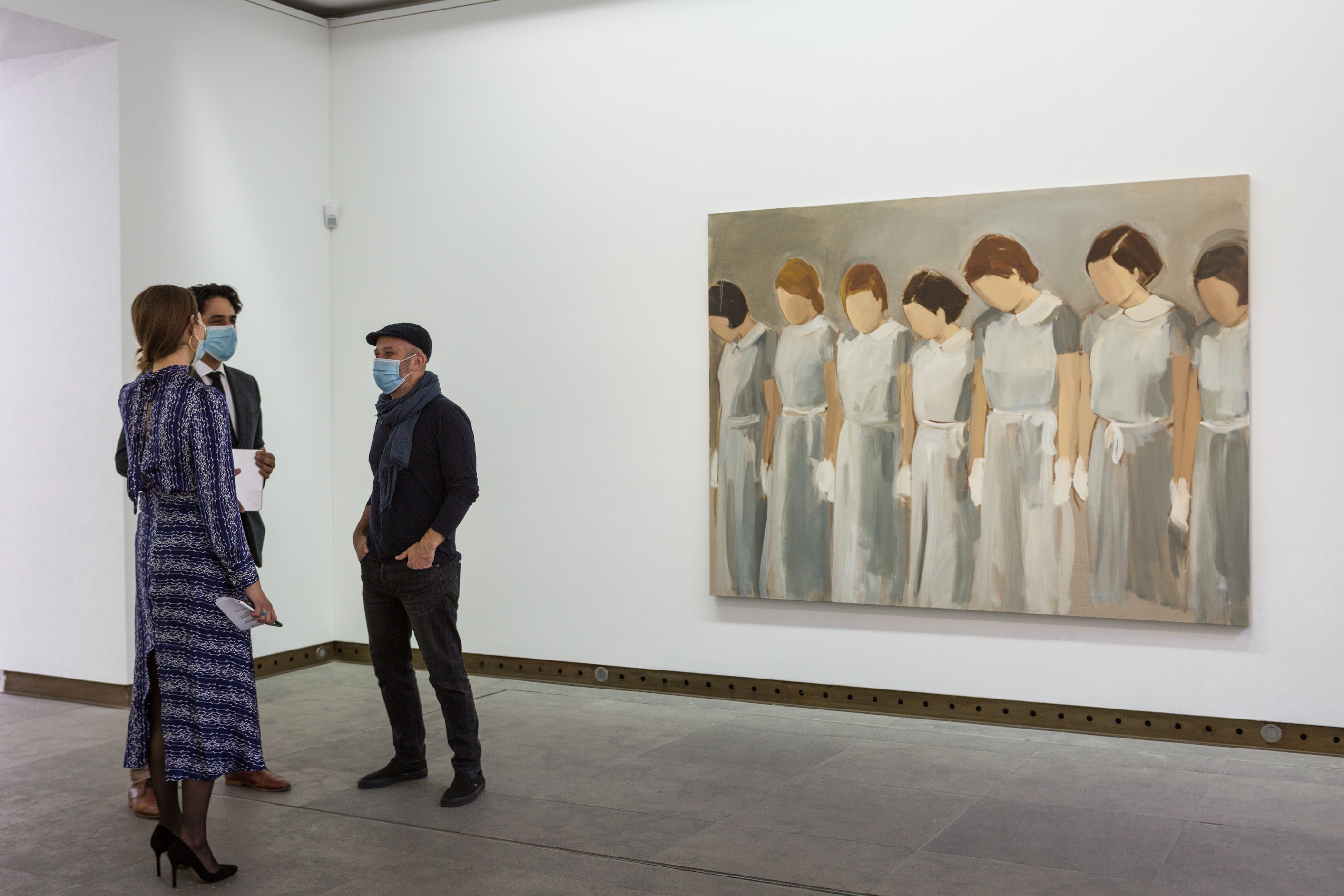
ESTELLE HANANIA, The ambiguity of beauty

ESTELLE HANANIA, The ambiguity of beauty

Estelle Hanania is constantly playing with an intriguing ambiguity in her photos mixing de raw with the soft, the magic with the realistic, the ordinary with the extravagant.

She has won the photo prize at the Hyères Festival in 2006 and since then her work can be seen in the most renowned fashion magazines and prestigious clients such as Hermès have collaborated with her giving her carte blanche.

Graduated from the School of Fine Arts in Paris you won the photo prize at the Hyères Festival in 2006. Why did you finally choose photography as your means of expression?

During my studies of Applied Arts and at the School of Fine Arts I always used a lot photography. But the real turning point was when I meet the french photographer Camille Vivier. She’s a fantastic person and her fashion photography has something free and independent. Her work encouraged me to become a photographer without renouncing my artistic freedom and requirement.

I’m someone rather instinctive, my photos are some kind of visions of different shapes composed within a certain frame. I love the flatness of the light that was used in old Eastern European movies.
There is also the psychological dimension in my work. Who is the person that I’m shooting? What in particular do I want to reveal in my picture?

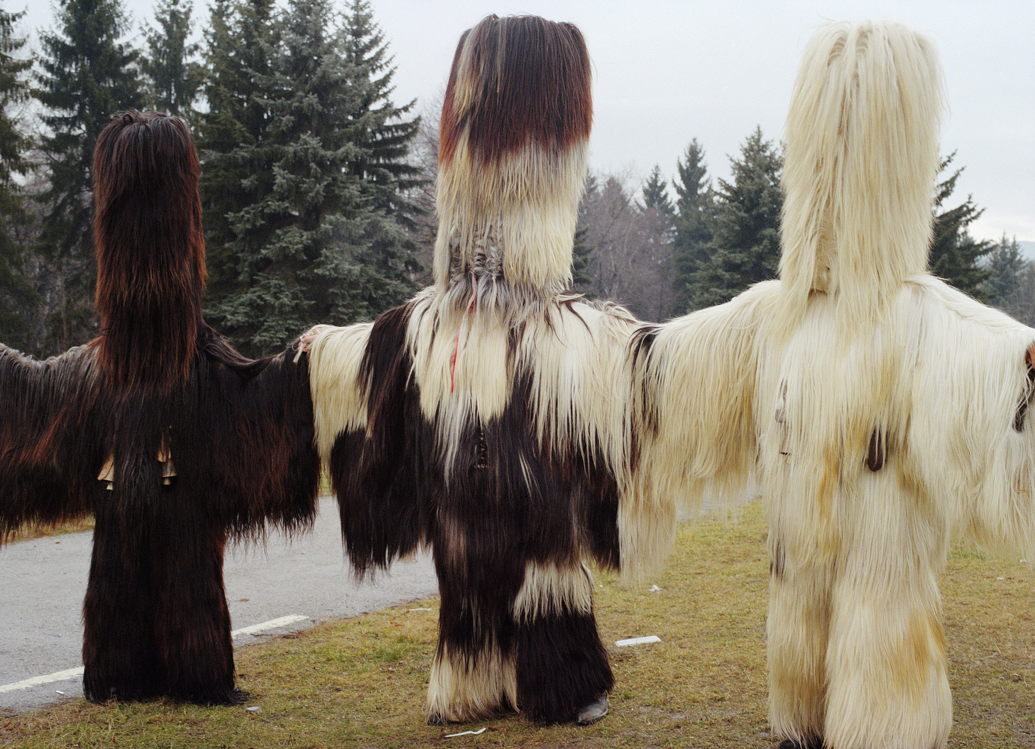
In your book “Glacial Jubilé” you’ve gathered 6 years of work focusing on Eastern European pagan cultures and winter rituals. What is so fascinating and interesting for you in those ancestral rituals?

I’m a huge fan of Folk Art, art made by self-taught artists or even untrained people. There is something very spontaneous in these kind of creations, something utilitarian, decorative, naive.
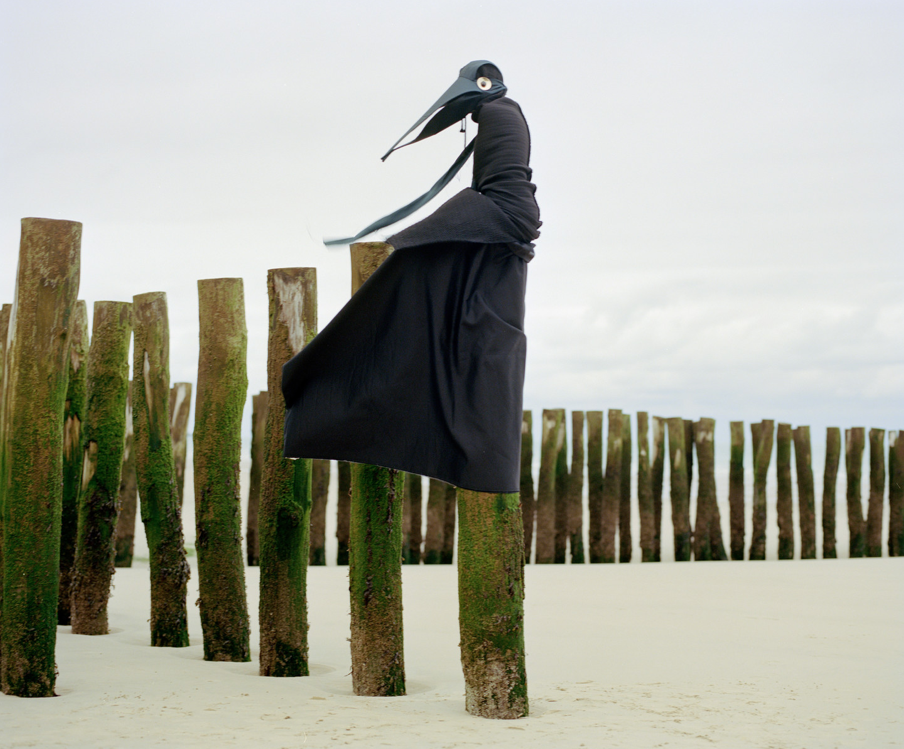
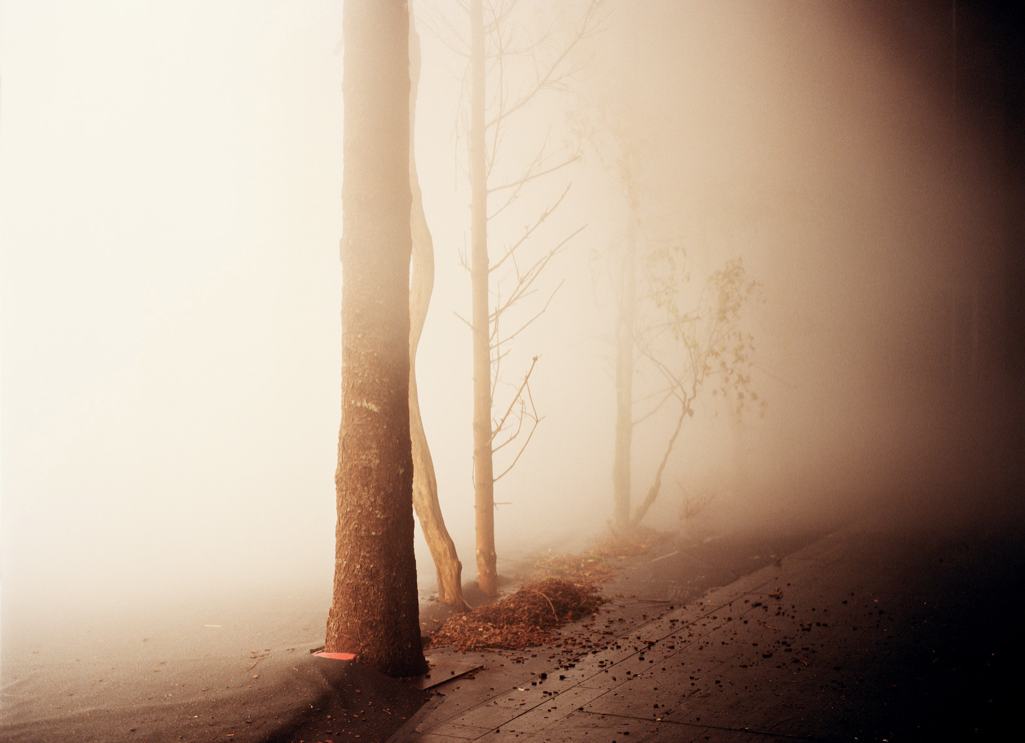
10 years ago I saw the exhibition ” L’Esprit de la Forêt” an there was this image of a mask in the catalogue that in particular intrigued me. I’ve made some research and I finally managed to find the tiny village in Switzerland where it came from. I decided to go there and take photos during their winter solstice celebration. Since then I haven’t stopped taking photos of these kind of winter rituals in Bulgaria, Austria, Switzerland, Basque Country.

“What is fascinating to me in this subject is that during this winter celebration ordinary people become performers, become somebody else, get out of themselves in order to come back calmer and purified.
It’s a kind of exorcism.”

However my photos are less precise than an anthropological research. I like to keep a certain kind of mystery.

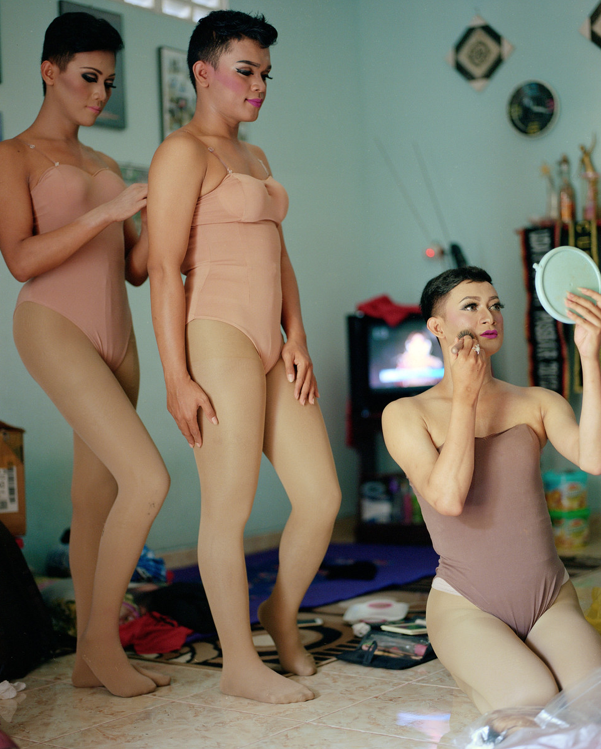
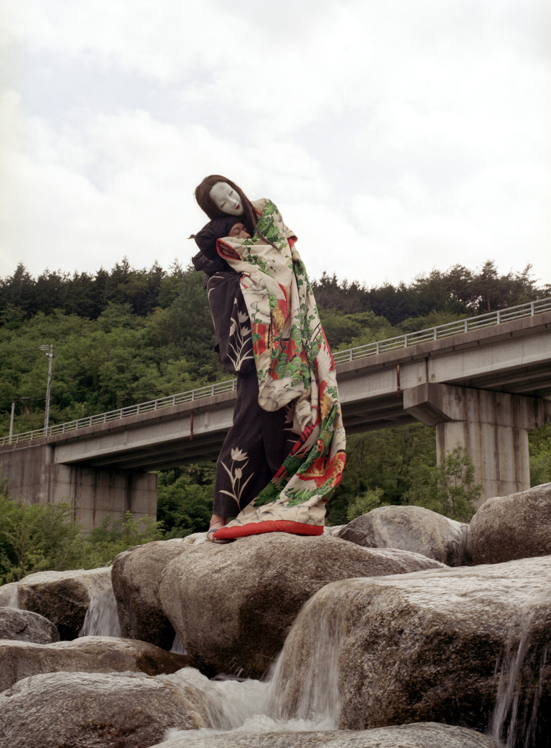
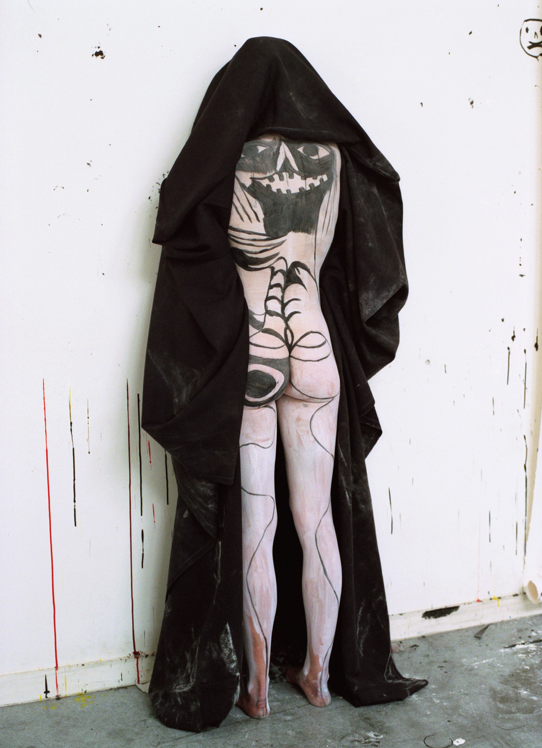
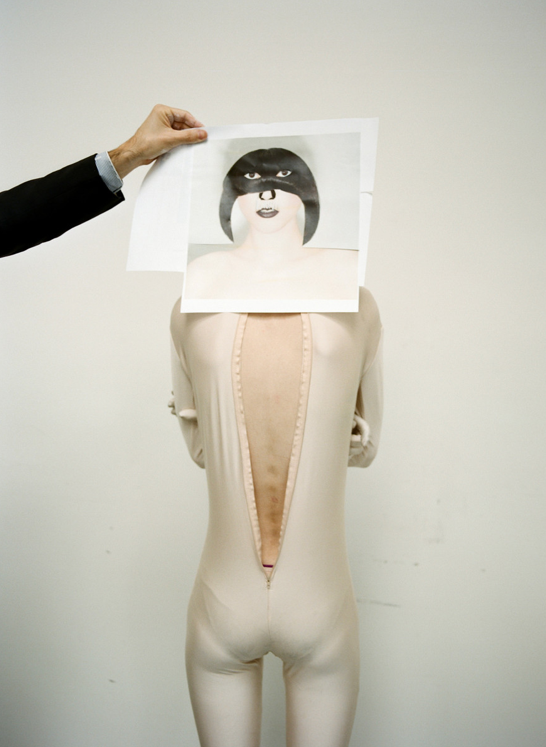
Masks, costumes, drawings on bodies, painted faces are themes that are constantly returning in your work. In your book “Happy Purim” you’ve shot children dressed up in costumes celebrating this Jewish holiday.
Why this obsession for disguising, masking?

I’ve shot the “Happy Purim” series in Stamford Hill, an orthodox Jewish headquarter in the North of London. I’ve been there several times to take photos of those kids celebrating “Purim” and dressing up in the weirdest costumes.

These photos combine not only my fascination for masking, disguising yourself, to get out of yourself, but also the “siblings” theme, my other subject that I’m fascinated about.
I have a twin sister, so there is also a very personal approach and background behind my fascination for sisters and brothers who look the same and dress the same. This kind of resemblance can be perceived as something creepy or as something funny, depending on the each person’s personal perception.

Besides your anthropological approach in your photography, you’re working also on fashion shoots for magazines such as M magazine, Another Magazine, Wallstreet Journal, Pop, Dazed and Confused or clients such as Martin Margiela, Miyake or Hermès. Does fashion inspire you?

With my sister Marion, we were always interested in fashion. We bought all the fashion magazines and knew everything about every designer and fashion photographer.
Our mother was drawing and painting a lot, and transmitted us this passion for art and being creative. My grand-mother was sewing a lot and passed us on her love for doing manual work.

“To me fashion is something very inspiring, clothes and accessories are like objects. It allows you to create characters, tell a story.”

I’m also interested in the human body and the way it can be presented. So fashion photography is a great opportunity to express all this.

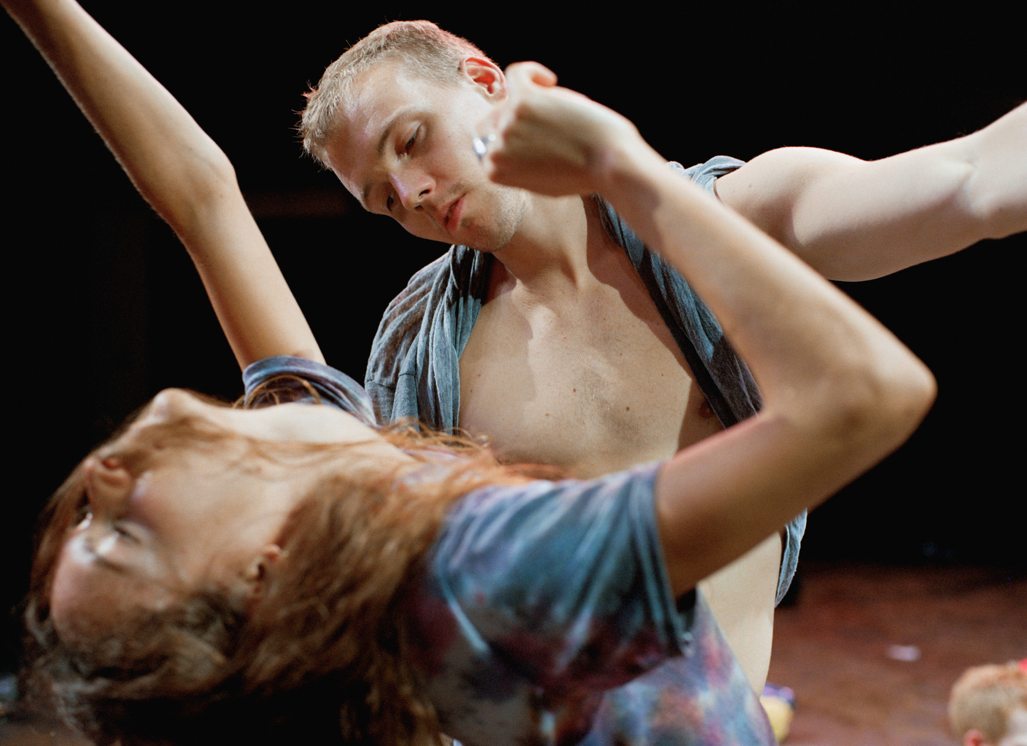
Do you prefer to work alone or do you like to collaborate with other artists and blend different means of artistic expressions? A good example for pushing the boundaries was your collaboration with the French artist Christophe Brunnquell.

I love to work with Christophe. We’ve met in Berlin and have organized a working session together for the magazine “Sang Bleu” casting several dancers. During 8 or 9 hours we were improvising and creating.

“Collaborating with Christophe Brunnquell is extraordinary, almost like a performance.”

It’s a fusion of his work and my work, leaving behind all the constraints of our usual creative process and creating something new together, without knowing which result we’ll achieve. He is constantly pushing the limits, breaking boundaries, I’m more attentive, focused on the model that I’m shooting.

But there are also other artiste that I admire and that I’d Iike to collaborate with such as the Czech filmmaker Jan Svankmajer, the artist Corentin Grossmann or the florist Thierry Boutemy.

You’re constantly playing with a certain kind of ambiguity in your photos which creates a very strong and intriguing ambiance and can sometimes be also even quite disturbing. Is this the feeling that you’re trying to evoke with your work?

I aways hated being categorized, the blond, sweet, gentle girl. We all have also our dark side. Even though we represent a certain image on the outside, there is so much more behind.

“In my photos of the winter solstice rituals I show this dark side that in the end leads to purification, to cleansing your spirit.”

Are there any films from your childhood that have influenced your artistic vision?

There are many, “The Wizard of Oz”, “Sound Of Music”, “The Never-ending Story”.

In “The Sound Of Music” I like the story around the siblings that dress the same.

In “The Wizard of Oz” and “The Never-ending Story” both stories start in an ordinary world and suddenly at one point switch into a strange and fantastical world.

That’s what I also try to obtain in my photos. So these films have definitely influenced my work.

What comes to your mind when you think about Iran?

I think of my friend Payam and his art collective “Slavs and Tatars”. He introduced me to Iranian culture.

Credits:
All photos by Estelle Hanania
Text: Anahita Vessier
Translation: Anahita Vessier
http://www.estellehanania.com/

Share this post

GEORGIA RUSSELL, Windows onto untamed nature

GEORGIA RUSSELL, Window onto untamed nature

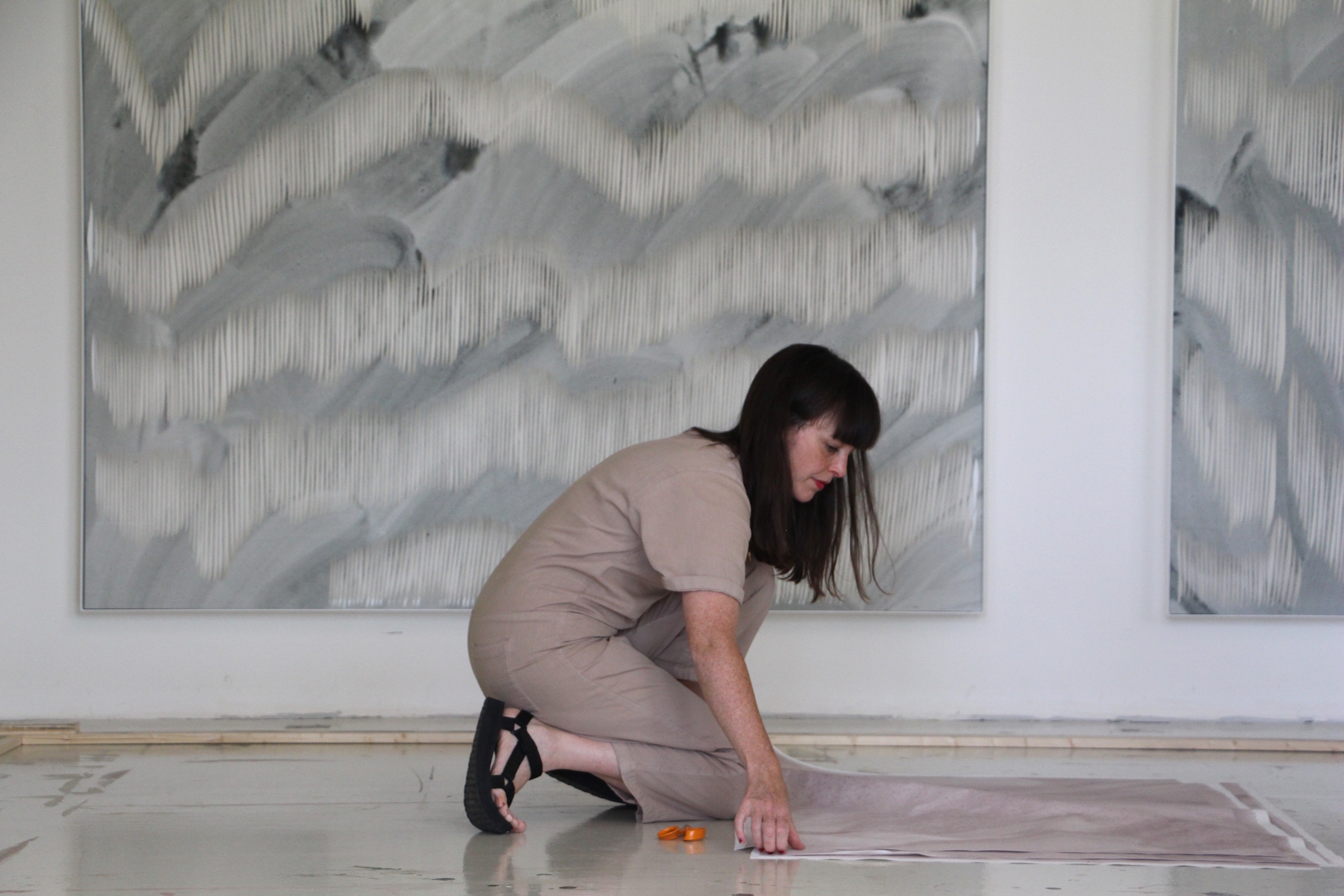
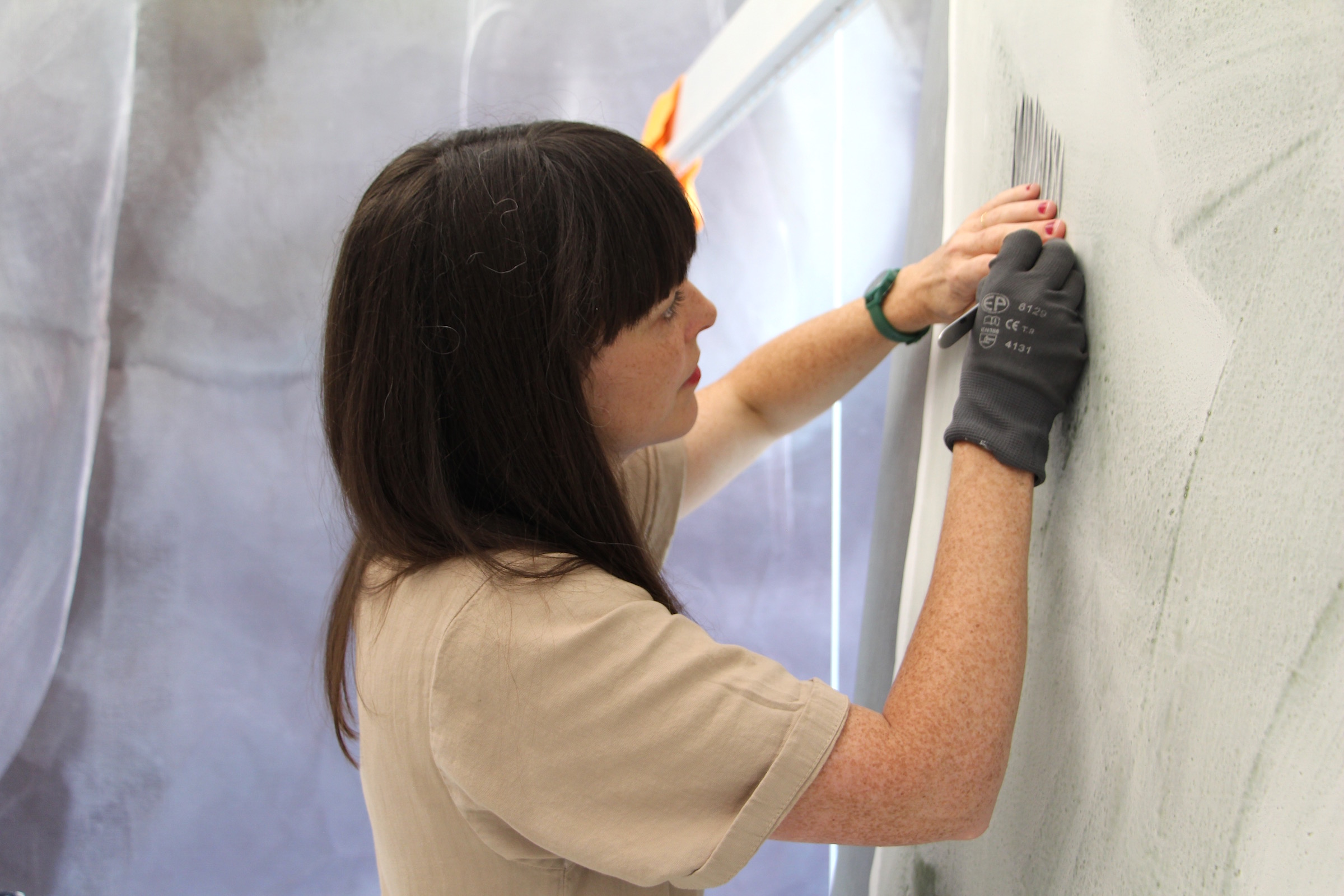
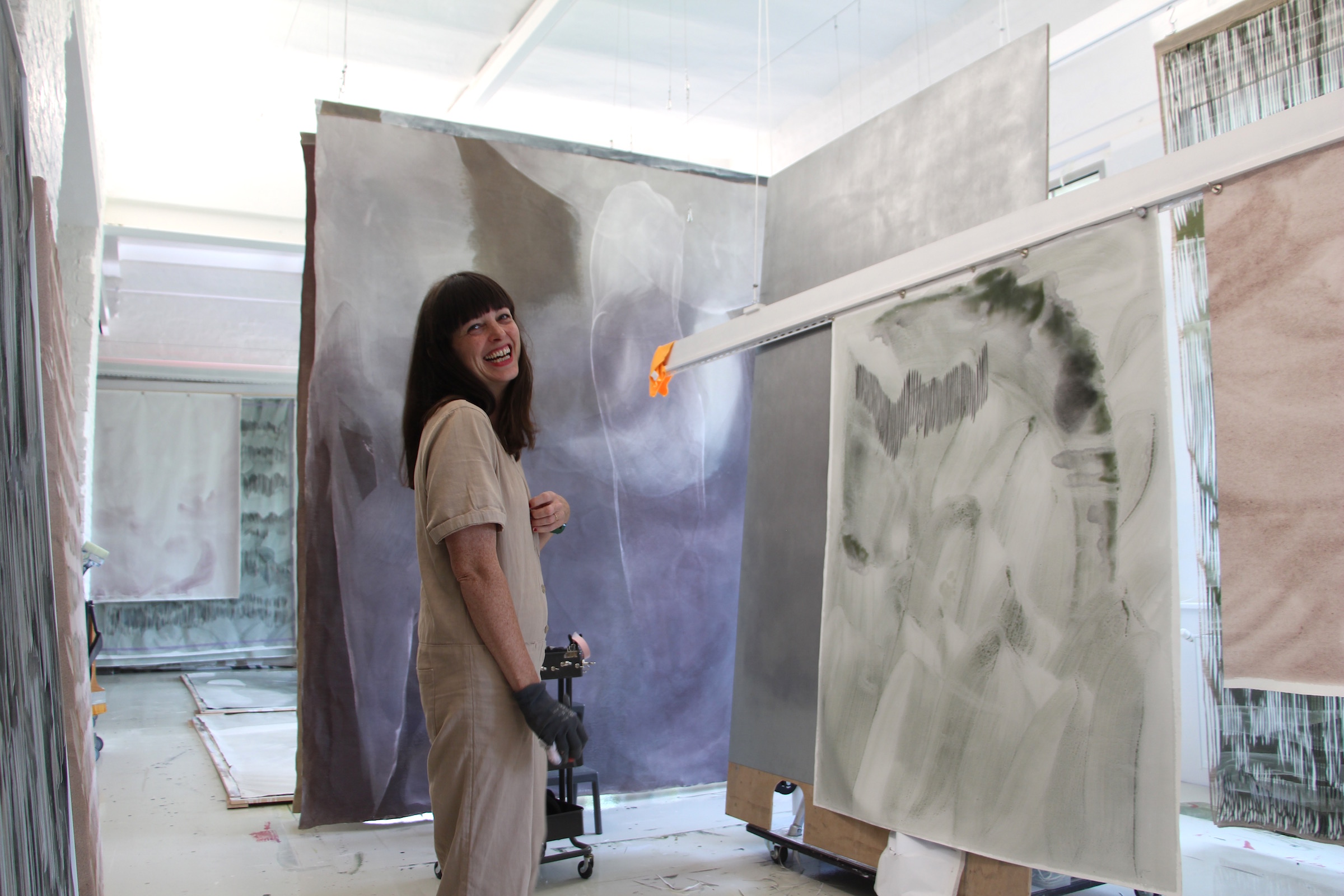
To observe Georgia Russell working on her paintings is just fascinating. Originally from Elgin in Scotland, Georgia creates these impressive paintings that remind of the wide and wild grassland of the Highlands moving in the wind with all its colors and luminosity. By cutting out stripes and ornaments on several layers of paper and canvas with a scalpel, she creates these tridimensional effects and her artwork becomes plant-like windows, with light filtering through and offering glimpses of architecture.

Today Georgia lives and works with her husband, the Venezuelan artist Raul Illarramendi, and their two kids next to Paris. Her extraordinary artwork can be seen in shows all round the world as well as in private and public collections, including the Centre Georges Pompidou in Paris.

You’re living and working next to Paris, in Méru. What made you move to Paris after graduating from the Royal College of Art In London ? 

During my studies at the Royal College I had been selected for a residency at the Cité des Arts Internationale in Paris. During this time I had started my work on cut books and was sourcing my new material there so it made sense to return once I had obtained my Masters in London.

That was quite a while ago! Since then you became a successful artist. Currently you’re showing your new work at Gallery Karsten Greve in Paris. What was the inspiration behind this  exhibition called “Paintings” ? 

My most recent exhibition shows a leap from contained artworks in plexiglass to painting on the canvas.

I wanted to work larger scale and see what it was to make actual “paintings”.

Recently I have been inspired by Helen Frankenthaler and her use of both sides of the canvas and Clyfford Still’s vertical compositions.

These new large scale paintings become almost sculptures. You’re cutting out ornaments and fine lines with a sharp scalpel and then you reconstruct them by inlacing them which creates a very interesting tridimensional effect with a very particular movement. Could you explain a little bit more this concept of « creative destruction » ?

I am interested in negative space and how it changes a material. I don’t see it as a destruction but more like a reconstruction.

I am curious about the idea that something has been changed and cannot go back to its original state. Something emotional happens when we realise something is absent. This does not have to be about loss but can evoke feelings of freedom or release.

There is this repetative gesture that you apply meticulously on your paintings. How does it feel do be concentrated for hours, for days, for weeks on one piece doing the same movement over and over again? 

It doesn’t seem repetative to me, there are so many differences in every stroke. I love being concentrated on a composition. The world around disappears and all I think about are the effects of shapes on other shapes, recto versus verso, colours against other colours, negatives beside positives, movement.

This movement in your work is like a choreography of lines and shapes that remind me of Isadora Duncan’s modern dance ballets and her words about being an artist « You are once wild, don’t let them tame you ». What do you think about this quote? 

That’s a great quote, I should remember it every day!

Your husband is the Venezuelan artist Raul Illarramendi. Do you sometimes ask him for his advice?

Yes, when we have time! Life is pretty busy and speeds past. If I have a real problem or I am not quite sure I always like to talk it through with him.

In your busy schedule as an artist and also as a mother you probably find some time to go to museums and other exhibitions. And what if you were locked up at the Louvre Museum for one night! Which sections would you go to and spend your night? 

I normally head to the painting department but recently I went to see the near eastern antiquities where I found the winged human headed bulls called Lamassu or Shedu. Their symbolism and story in history is amazing.

What comes to your mind when you think of Iran ? 

I think mainly of the artist Shirin Neshat.

Credits:
Photos by Anahita Vessier
Text: Anahita Vessier

Share this post

RAUL ILLARRAMENDI, Drawing the traces of time

RAUL ILLARRAMENDI, Drawing the traces of time

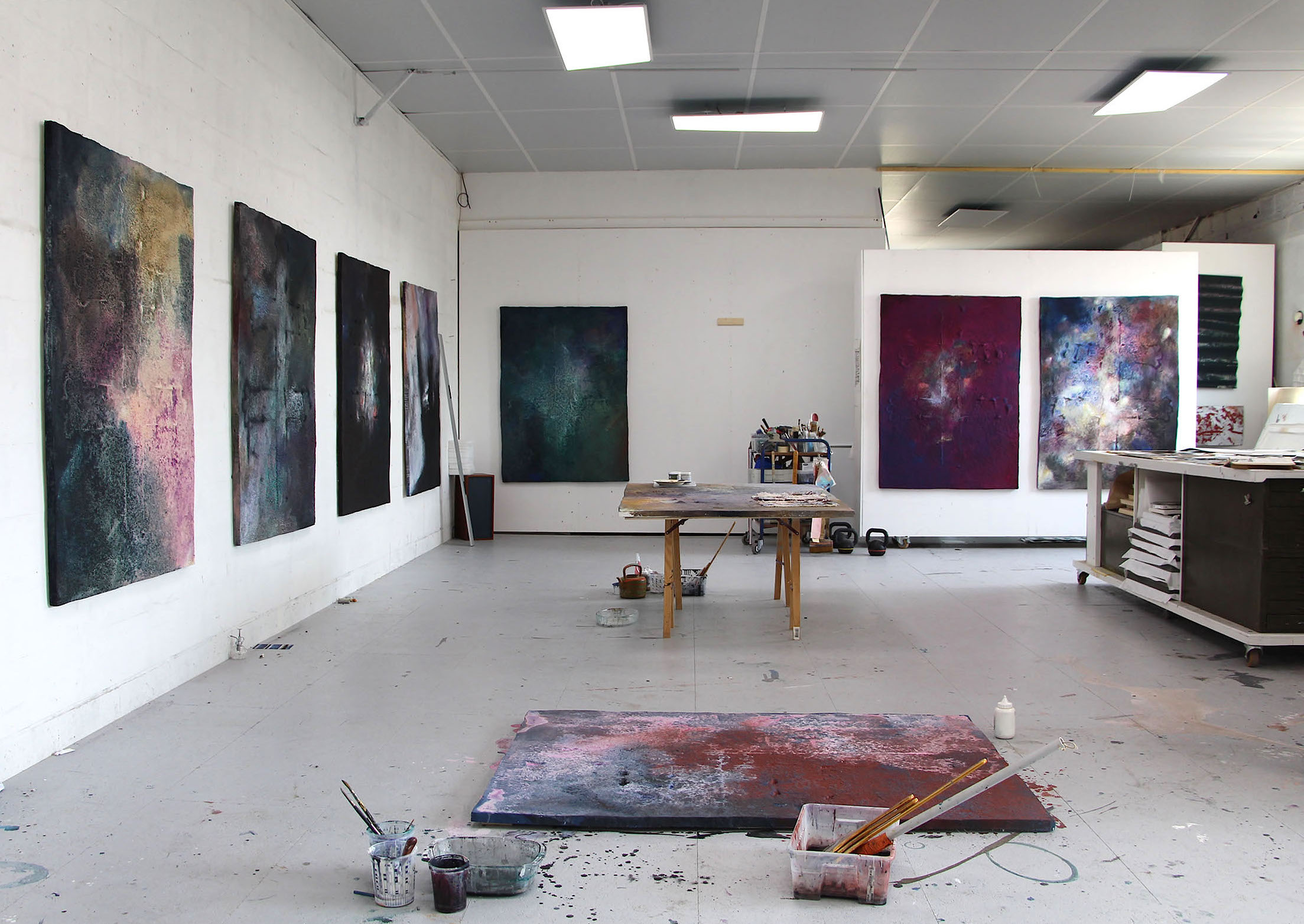
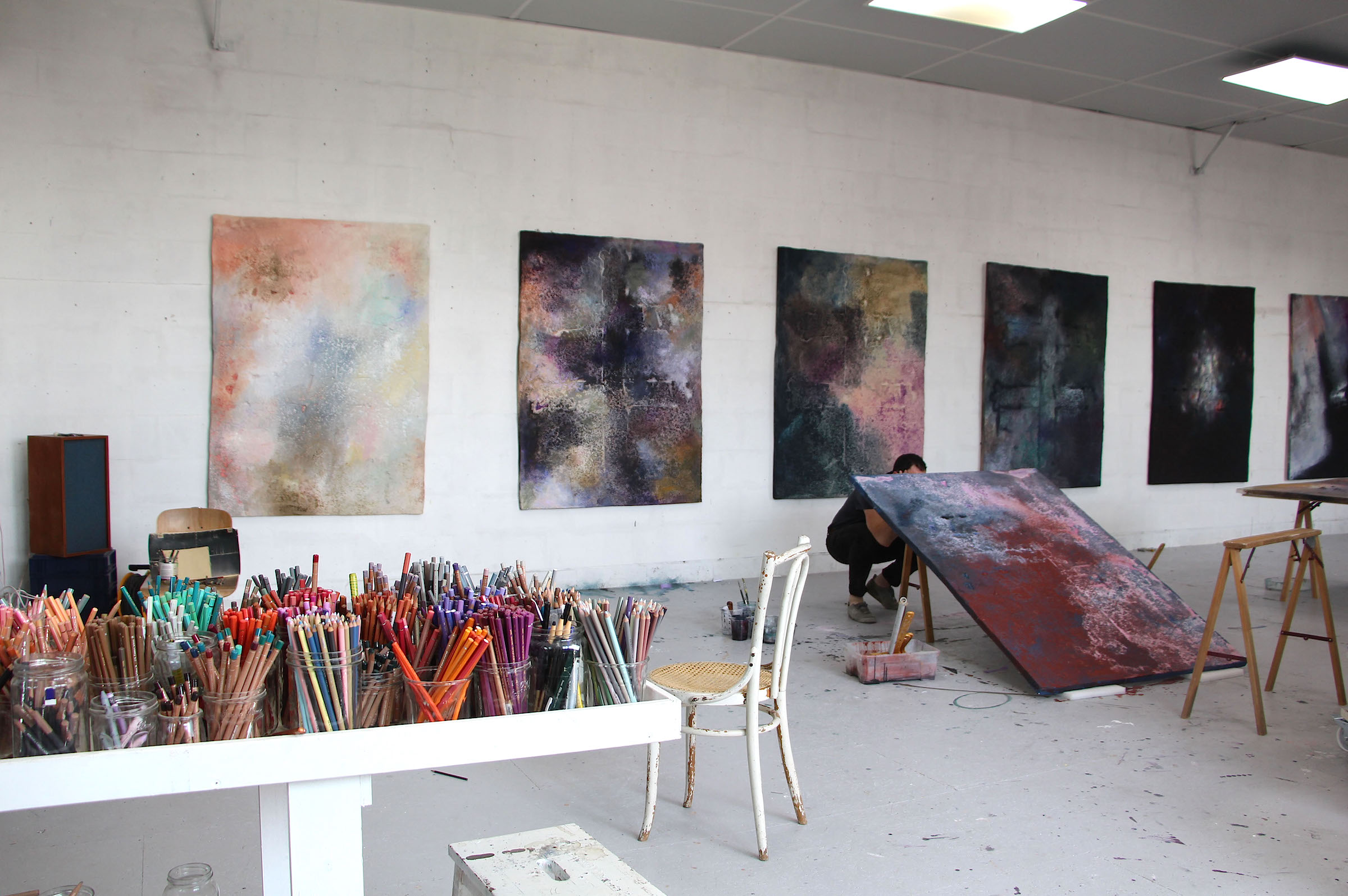
As soon as you enter Raul Illarramendi’s studio, you feel the dynamic creative energy of this Venezuelan artist. Having left Venezuela 18 years ago, he reconnects with his origins in his latest work. Fascinated by the traces of time and their identity, he investigates in his new exhibition “Offerings” the story of the double cross that feel off the roof of Caracas Cathedral during the earthquake in 1967. He reproduced the imprint of the cross silhouette on the asphalt with high-precision and impresses the spectator with his large size pencil-paintings by applying a technique that employs drawing in an unusual way.

Raul Illarramendi  lives and works with his wife, the artist Georgia Russell, and their two children next to Paris. His work is regularly shown in solo and groupe shows in Europe, Latin America and the United States.


You’re from Venezuela where you began your artistic training in Caracas as the  assistant of the painter Felix Perdomo. You continued then your studies in Evansville in the United States before moving to France and doing an MA of visuel arts at the University Jean Monnet in Saint Etienne.
Now you live and work next to Paris, in Méru, with your wife, the Scottish artist Georgia Russell, and your two kids. 

What a journey driven by your passion for art !
What did you learn in each country in terms of art and the way of approaching it as a painter?

Even though I’ve lived in these countries for long periods of time, I don’t consider myself as a well-traveled individual. Now don’t get me wrong, I’ve been to places, but my work has always anchored me down. I like absorbing the identity of the place I’m in, and that takes time. I think that artists look inwards before they look outwards. In my case I need to know where I am and what the context is in order to create. Every place, every studio has brought a different experience, taught a different lesson and left traces that have shaped my identity as a painter.

These traces of life are a very important subject in your work, expressed through traces of dust, dirt, scratches or fingerprints on walls, on doors, in an urban environment that usually people like to erase or clean up. You however reproduce them by showing every single detail in your very own style.  

Yes, but to me the whole picture is as important as the detail. Perhaps it is my fault, that the physicality of that new surface lures the viewer towards the detail. Every trace represents an individual event, identity, intentionality, an accident that I construct, compose and control. Then there is the composition.

“I really think more of the traces of history rather then the history of traces.”

Since the beginning of abstraction, many artists have looked into these stains, willingly or not, like a throw of dice, searching for a Gestalt.

Talking about accidents and control, do you like to let go sometimes and accept unpredictable accidents while working on a new painting? Or are you an absolute control freak ? 

I don’t control everything, no.
It is true that I like pushing drawing as far as I can into its technical frontiers. There are remarkable artists that push much further, to the point of erasing the hand. I know my limits and have learned to use those limitations as yet another tool. If you solve all the problems technically, then there is nothing left to solve. And painting is about solving problems.

And if you’re not finding a solution, do you ask your wife, the Scottish artist Georgia Russell, for her advice or opinion when you feel stuck with a painting?

We do visit each others studios to give our opinions, specially at the most critical moments, when we are hating and doubting everything before a show. We encourage what’s good and call out the bad choices. Even though I would agree to being less accepting when it comes to criticism, we both come out stronger at the end.

Right now you’re showing your latest exhibition “Offerings” at Gallery Karsten Greve in Cologne that is about the traces of the cross of the Cathedral in Caracas that feel from the rooftop during the big earthquake in 1967 that hit the city.
Was it important for you to reconnect again through your recent work with Venezuela that you’ve left 18 years ago?

Yes, distance and time became catalysts for this series. Like many of my subjects this project came to me without looking for it. The premise was very simple. A spiritual event that sits on a historic account full of wholes, a symbolic metaphor to the current state of crisis in the country, a personal connection and a painting challenge.

“It has been two years since I started the project and in that time you encounter a great amount of meaningful connections to life, to history, to people and to yourself. It has definitely brought me back to the place where I was born.”

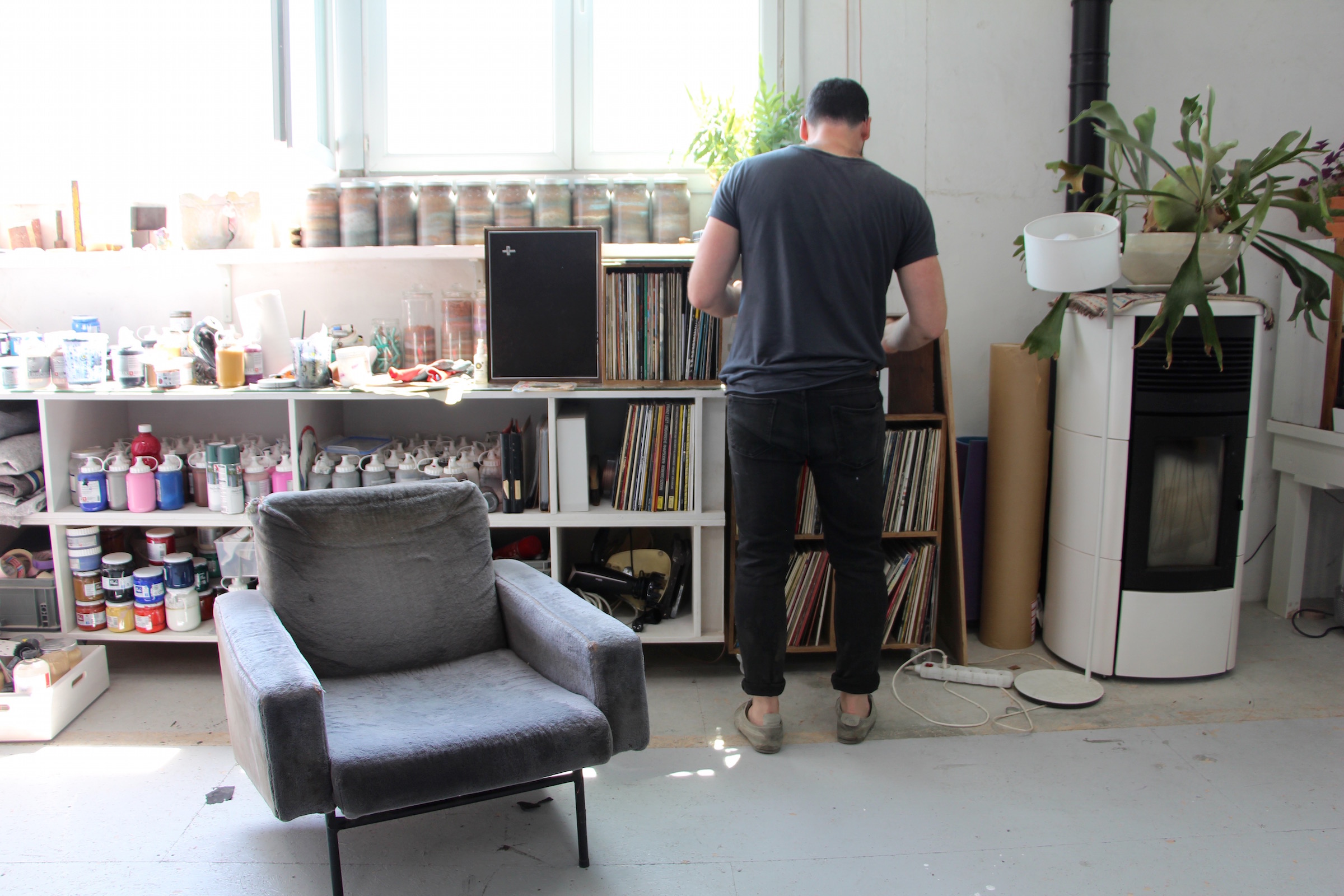
When I was visiting your studio, first thing you did, before starting to work on your paintings, was to put on a record. Is music important for you ? 

Yes, I’m very much attached to my music. There is almost always some sound coming from my stereo. When I’m not listening to my records, I am on the radio or an audiobook, the only literature I have time to consume now. I like my records because my siblings, who are much older than me, had a record player that I love but was not allowed to touch. Now I have my own and love the sound and can play with it.
I’ve been listening lately to “Cantos Campesinos” from Isaac Sasson, who plays many instruments from Venezuela, and mixes folk and traditional sounds. Also this fun Turkish band Altin Gün, it get’s me dancing.

What comes to your mind when you think of Iran? 

My perception of Iran is very limited but I can think of rosewater and safran, the prince of Persia (the game that occupied much of my screen-time during the nineties), good friends, beautiful people.

With very different histories, there is a real connection between Venezuela and Iran that I can only wish would go beyond geopolitics and special interests, and focus more in culture and fraternity.

Iran, a place I would very much like to visit.

Credits:
Photos by Anahita Vessier
Text: Anahita Vessier
Raul Illarramendi Instagram

Share this post
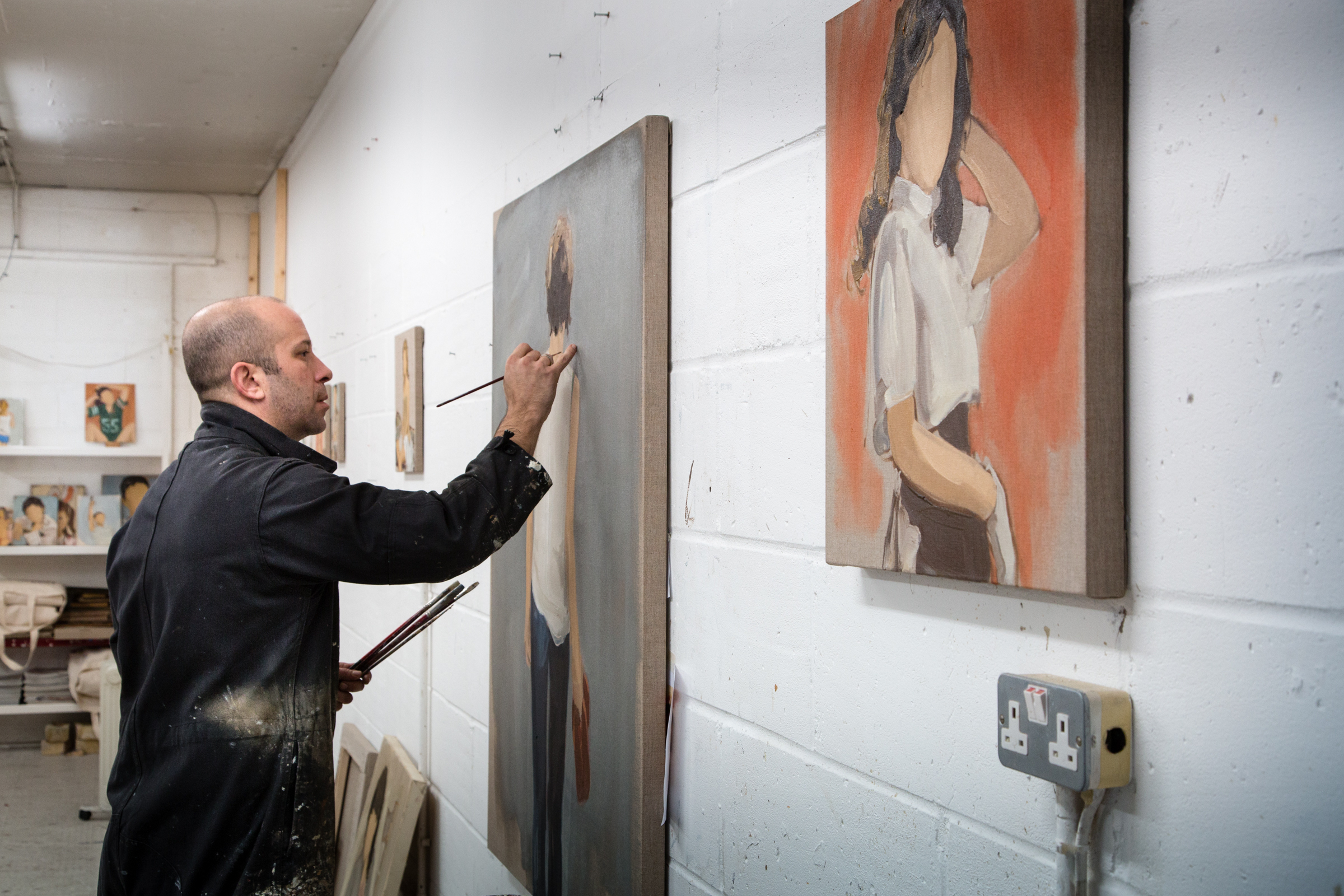
GIDEON RUBIN, Craftsman of faceless memories

GIDEON RUBIN, Craftsman of faceless memories

Gideon Rubin is a contemporary Israeli artist and a rising star in the international art scene.

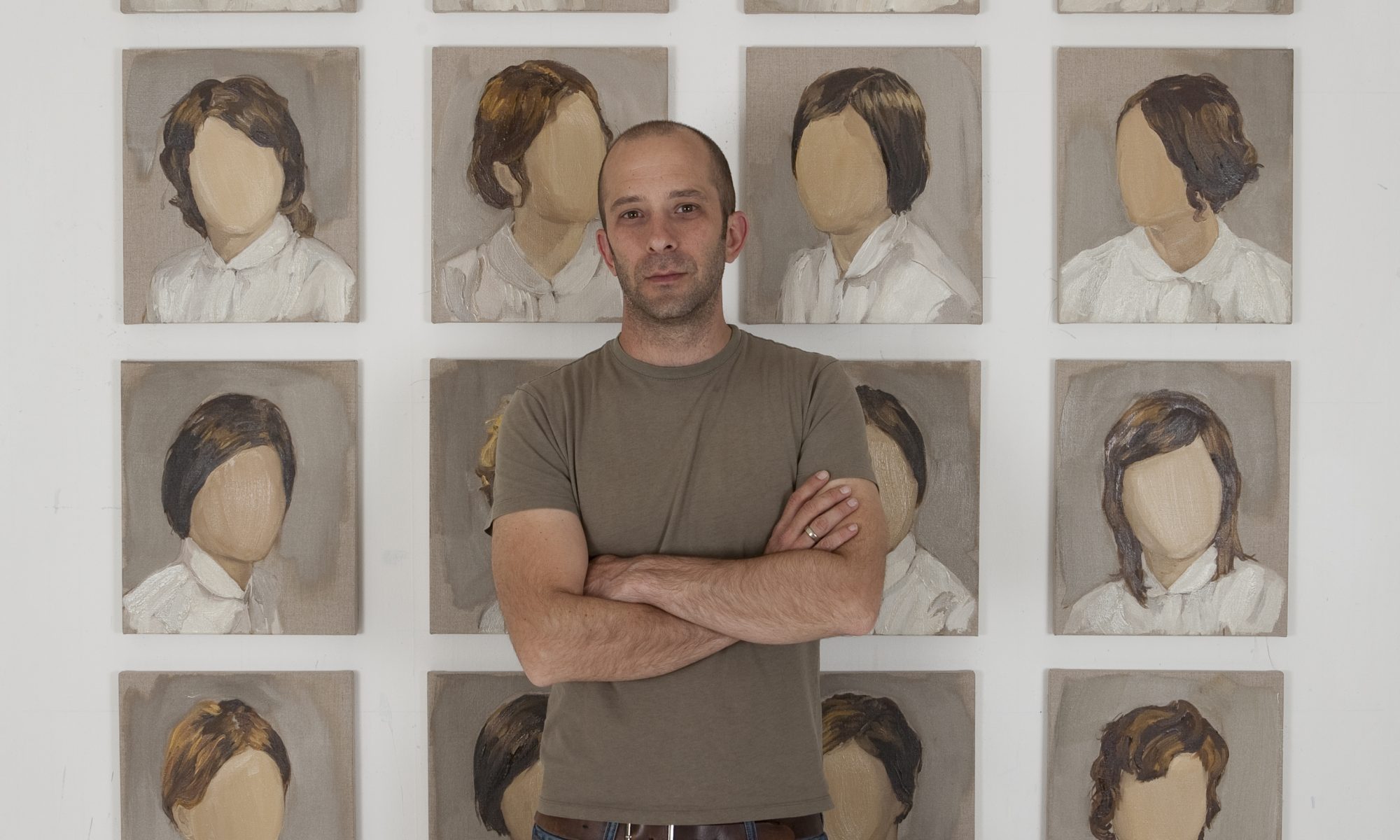
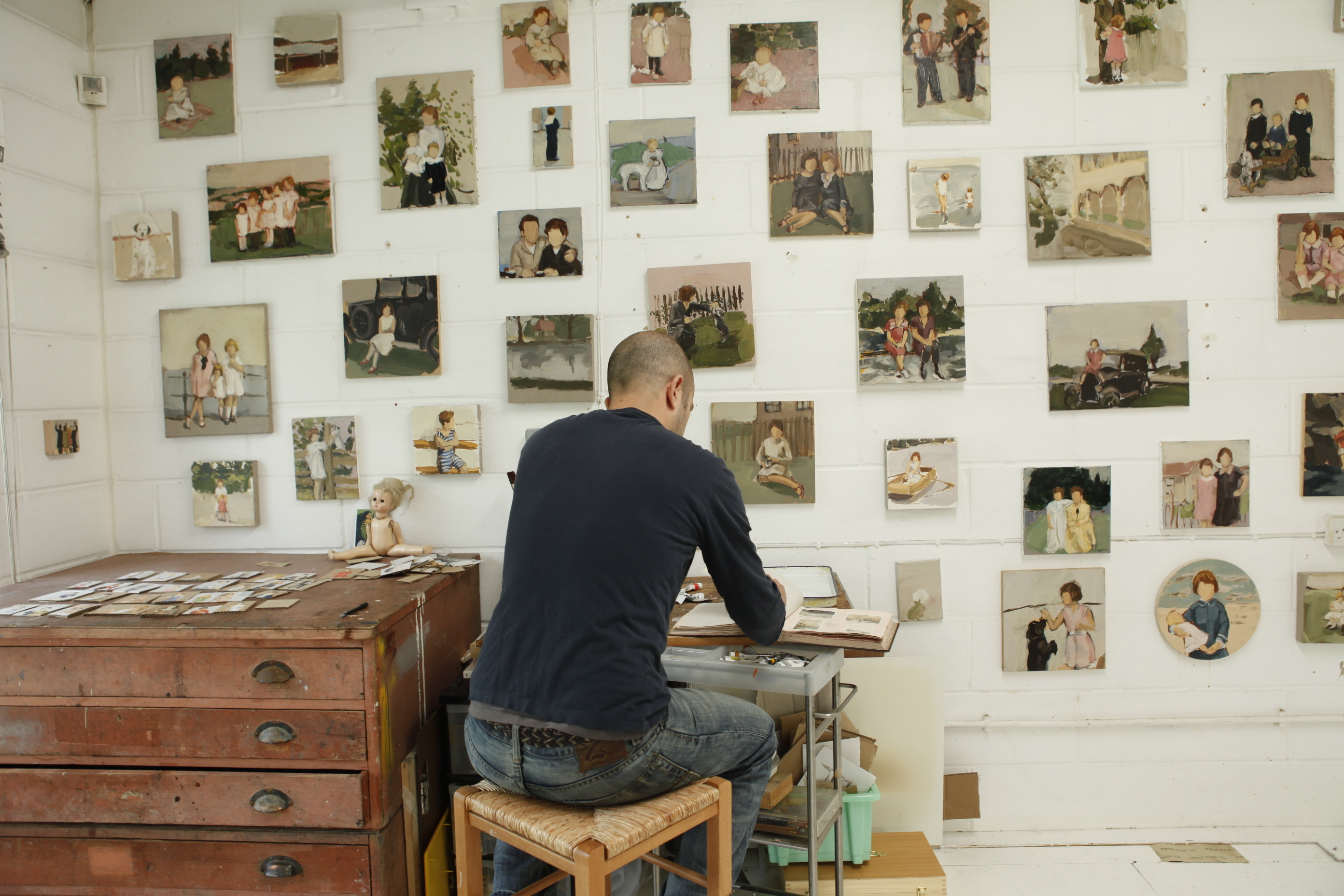
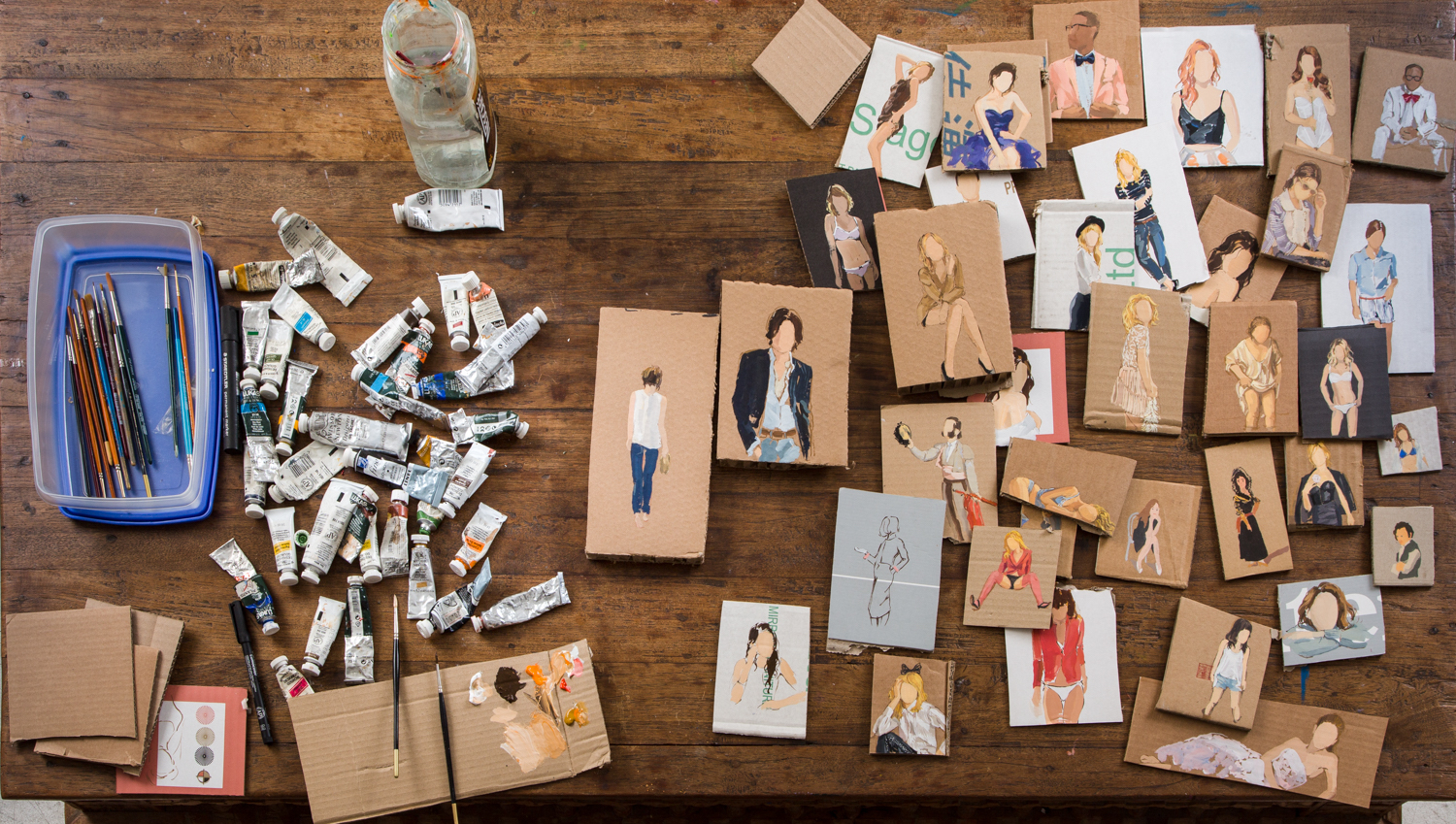
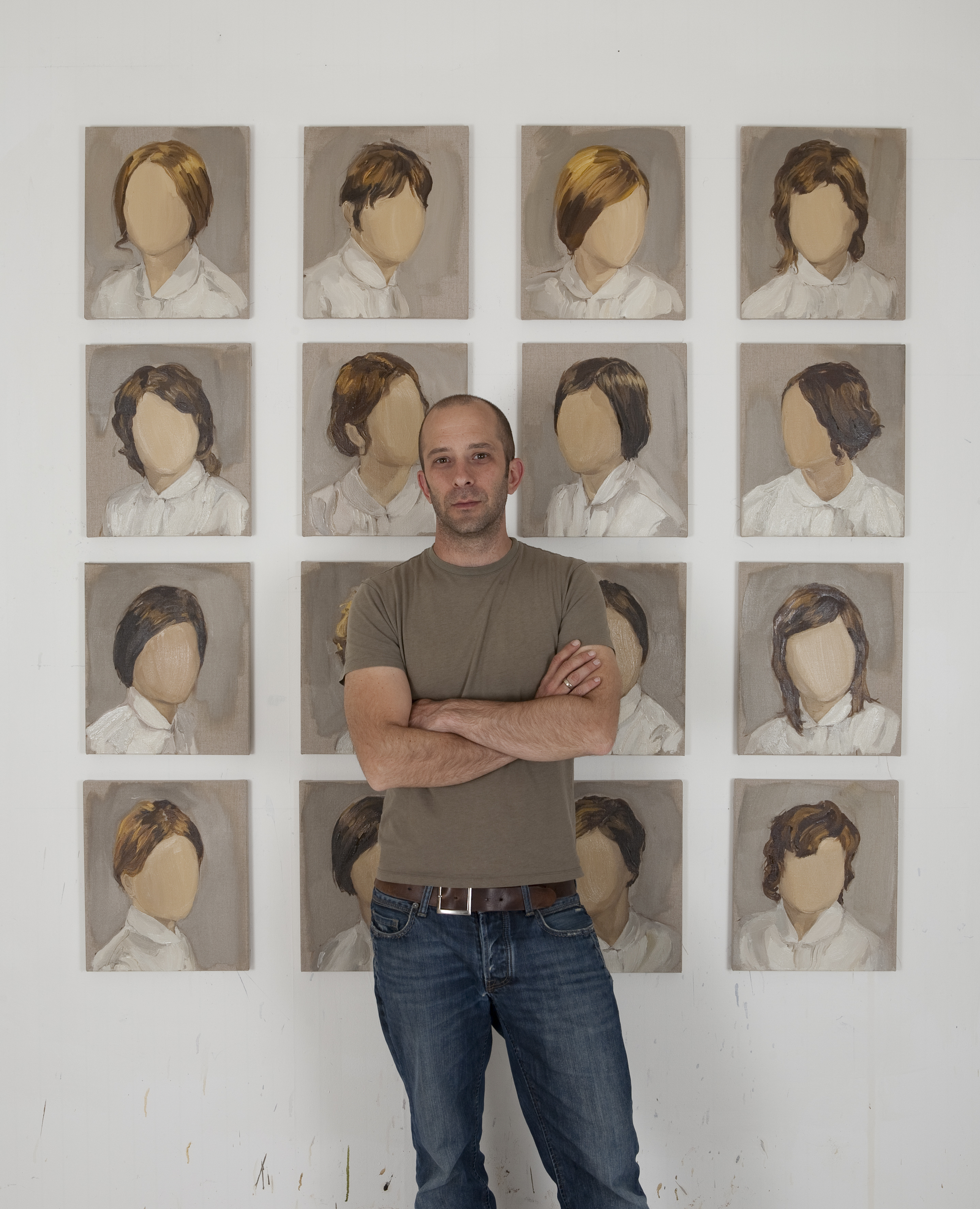
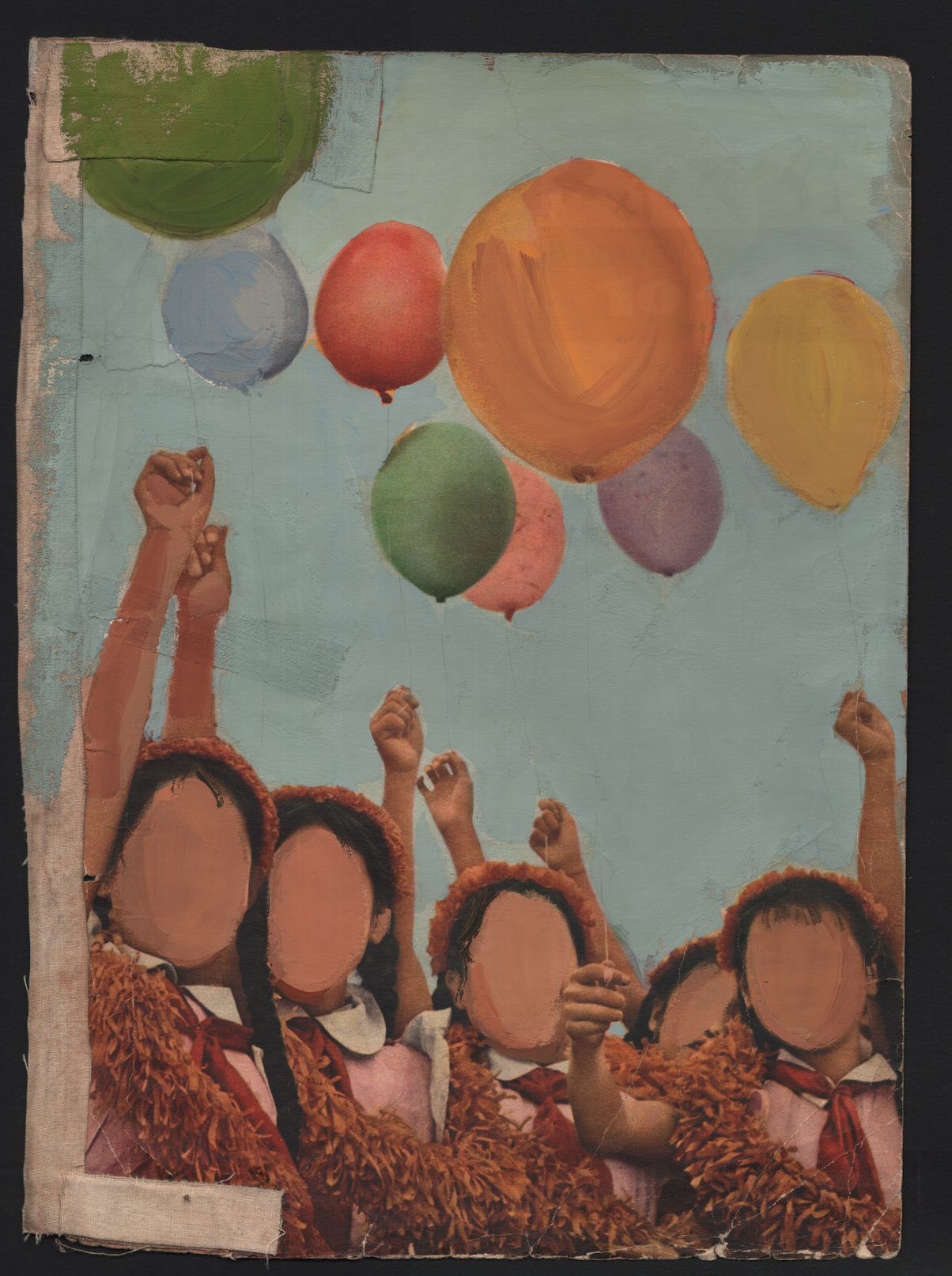
His work is about the memory of something that is at the point of fading away. By blurring identifying details, erasing the facial features of human beings, he invites the viewer to complete these unexisting details by using his very own memories. This “dialogue” creates a very personal relationship between the artwork and the audience and evokes a feeling of intimacy and nostalgia.

Being the grandson of Reuven Rubin, the famous Israeli painter, did this influence your decision to become a painter?

Looking back obviously it did but it took a long time for it to come out.

I was about 22 years old when I started painting and if you’d ask me before what’s the least possible career or job prospect, painter would have probably topped the list, mainly because of my grandfather and the position he occupies within the canon of Israeli art. For years, for me, viewing his work was actually tainted by the fame his work carries with it back home.

“It was not just a flower, a house or a portrait, it was a “Rubin” first.”

I guess this was probably the main reason that when I finally did find ‘painting’, a life long commitment, I chose to do it outside my home. It was only then that I discovered so much of his work; sensitivities, paint application, tonality and how much of it actually filtered to my DNA.

You were in New York on September 11th, 2001. Did this experience have an influence on your work?

It changed my life so it definitely changed my work as well.
Before 9/11 I used to paint from observation, focusing on full figure self-portraits that took months to finish.

When I got back to London on the first commercial flight to leave NY, it felt as if I escaped hell. I was so happy to land in London, I wanted to kiss the ground but I just couldn’t paint like before. I couldn’t look at myself in the mirror anymore so I began making these small toy still-life paintings.
Instead of one portrait, painted for three months, I painted now three paintings a day. It felt as if I was unloading a huge burden. As artists we are lucky, we have our work in order to deal with all the shit that happens around us.

Being a sort of « craftsman of memories », each of your paintings has this incomplete detail of faceless human beings. What is the reason, the intention behind these portraits without features?

More than anything it’s an abstraction tool, a way I enjoy directing and dissecting what I see and the surface of the painting. Simplifying it.
Growing up I was fascinated by the little figures in my grandfather’s landscape paintings; just little blobs of paint to describe a face, limbs or body. In my work I try to strike a balance between the general and the specific, the ‘public’ and the ‘individual’, which I find fascinating.

When I began erasing the facial features it was something altogether different. Painting old toys I was reacting to the physical erasure of the doll features after years of being handled and played with kids. As my work shifted back to portraiture, I found out fairly quickly that I can describe what I need without the features.

“I was and still am fascinated by how much information we gather between us that is outside the face.”

Our mannerism, style, the way we dress, walk etc. We ‘read’ each other and any human portrait, by first and for-most our facial features and then everything else. I’m interested in reversing this process, everything else comes first and then leave an opening, a question mark. an untold story. For me the act of erasing is as important and positive as a mark making.
While working on your paintings, how do you perceive time in these very intense and creative moments?

It’s difficult to put these moments in words, especially, if words are not your thing and you don’t want to sound cheesy.
But if I have to I can say that I learned not to look for these moments. Just work and work. When they come, it’s great, you are in the action itself and there is nothing else, but as soon as you begin to think about it, acknowledging you are or were in “it”, it is gone.

Is there an author, an artist, a musician that has changed your perception of art and inspired you in your process of creating?

Velasquez, Goya, Rembrandt, Chardin, Soutine, Guston, Manet, Bacon, Freud, Morandi, Alys, Richter, Rotheko, Matisse, Picasso, Diebenkorn, Hemingway, Kerouac, Camus, David Grossman, Primo Levy, Leonard Cohen, Bowie, Dylan, Allen, Tarantino, Almodovar, Nina Simone I can go on and on…

What do you feel when you’ve just finished a painting and you look at it?

Disappointment, as if I could have done it better. Sometimes it’s true, luckily sometimes not.

Is there a quote, a proverb that guides you through life?

“Inspiration exists, but it has to find you working.” (Pablo Picasso)

“An intellectual says a simple thing in a complex way. An artist says a complex thing in a simple way.” (Charles Bukowski)

Do you work with music? What’s your favourite musician that you listen to at the moment in your studio?

It shifts, at the moment I’m listening to a bit of soul like Erica Badu, Lauren Hill and my usual outdated Jazz, Nina Simone, Coltrane, Miles Davis to a bit of Bowie and Leonard Cohen. Lately, I find I listen more to classical music. Piano, a lot of piano…

You were recently invited by the Museum of Contemporary Art of Chengdu in China to a group exhibition under the title “Memory Goes As Far As This Morning”. This invitation also gave you the opportunity to visit the province of Xinjiang which is home of the Uyghur, an ethnic minority that primarily practices Islam. How was this experience for you?

It was really quite remarkable, a once in the life time experience. I was specifically interested, as my wife, although mainland Chinese, was born in Xinjiang, in Korla and I have heard much about the Turkic peoples where she was born. Their look is closer to Israeli than Chinese she used to tell me and that I would like the food.

“She was right in many aspects and I could find quite a few similarities between the Uyghur people and people from the Middle East.”

It was a very different experience than traveling in China, mainly due to very tight security, a result of years of political unrest, which I have to say added to an uneasy feeling throughout but this huge area has so much more to offer, a unique history of the ancient silk road which is incredibly preserved due to the dry weather conditions, to the highest snow peaked mountains that look as if they were taken from the Swiss alps.

From the vibrant markets full of spices to the beautifully hand crafted artifacts, and the beautiful scarfed women, it all seemed to belong to a different time and a magical place.

What comes to your mind when you think of Iran?

Generally I always think of how I enjoy meeting Iranians since I moved to NY and then London. I find so much in common and much to appreciate, from my point
of view, food and cinema come first to mind. ‘A Separation’, ‘About Elly’…
I also think it’s a shame that I can’t visit.
I see the meeting points, the dialogue, the art.

Credits:
Portray by Shira Klasmer
All other photos by Richard Ivey
Paintings:
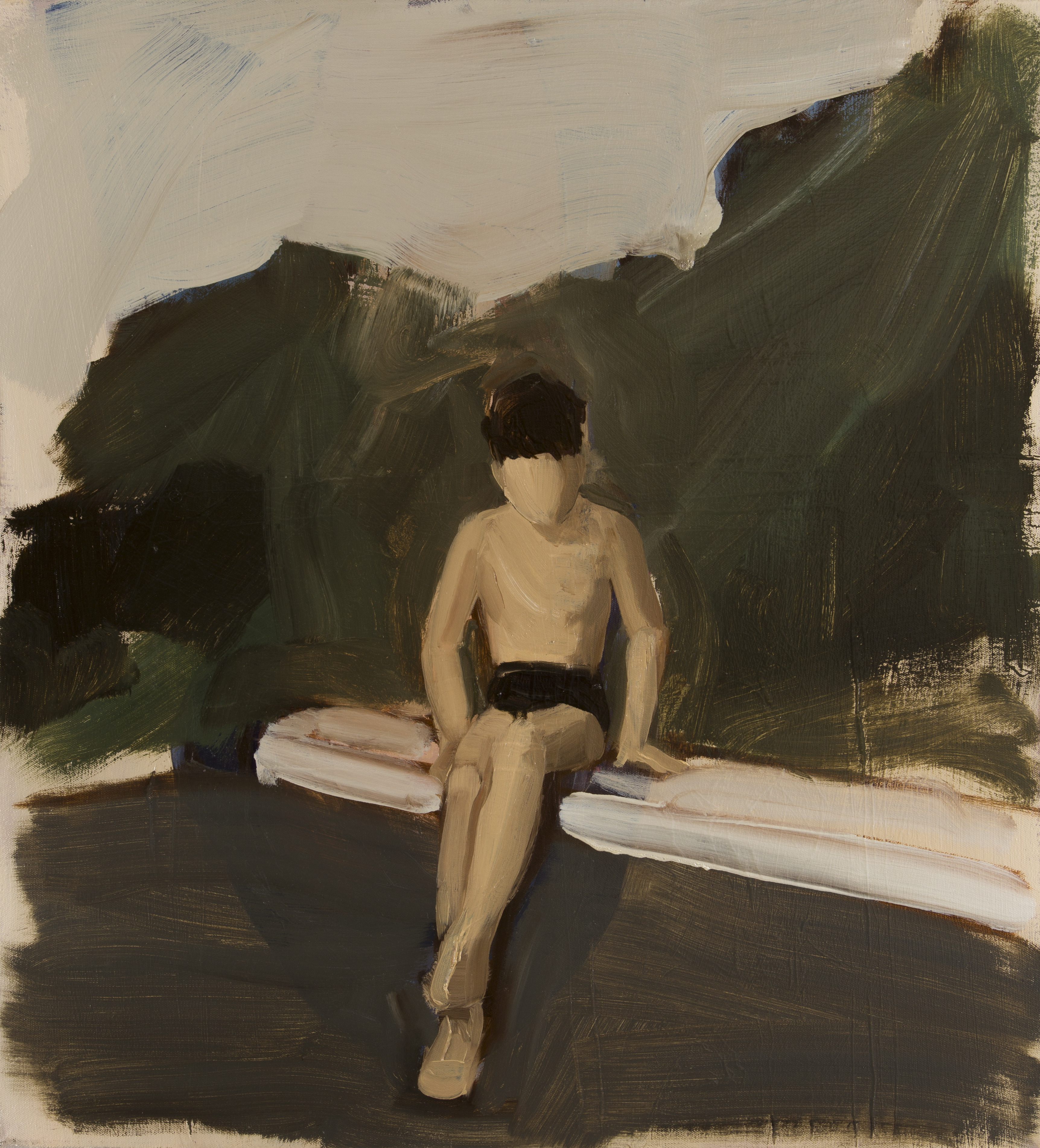
“Boy”, 56x51cm, oil on canvas, 2011
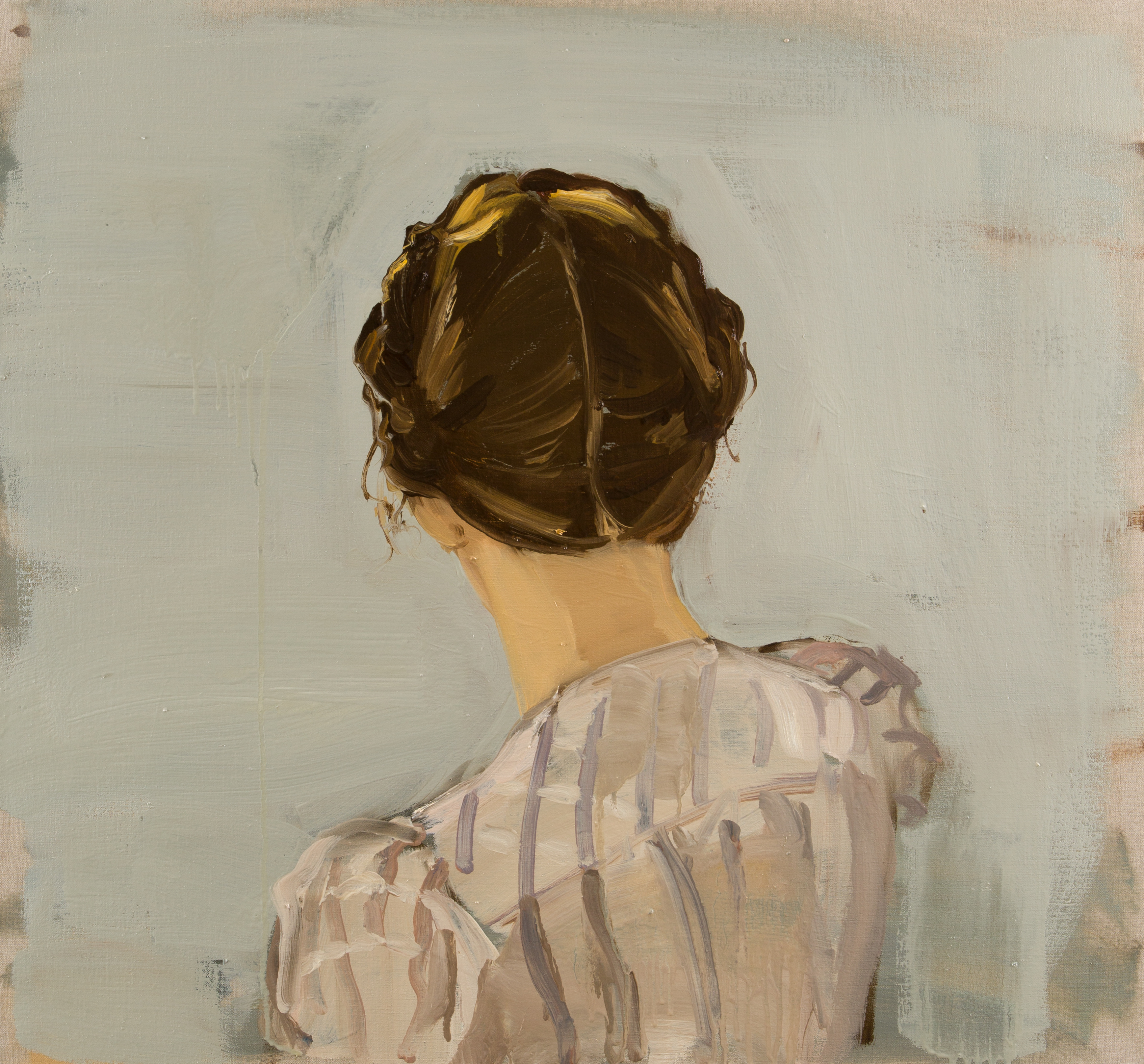
“Untitled”, 66x71cm, oil on linen, 2012
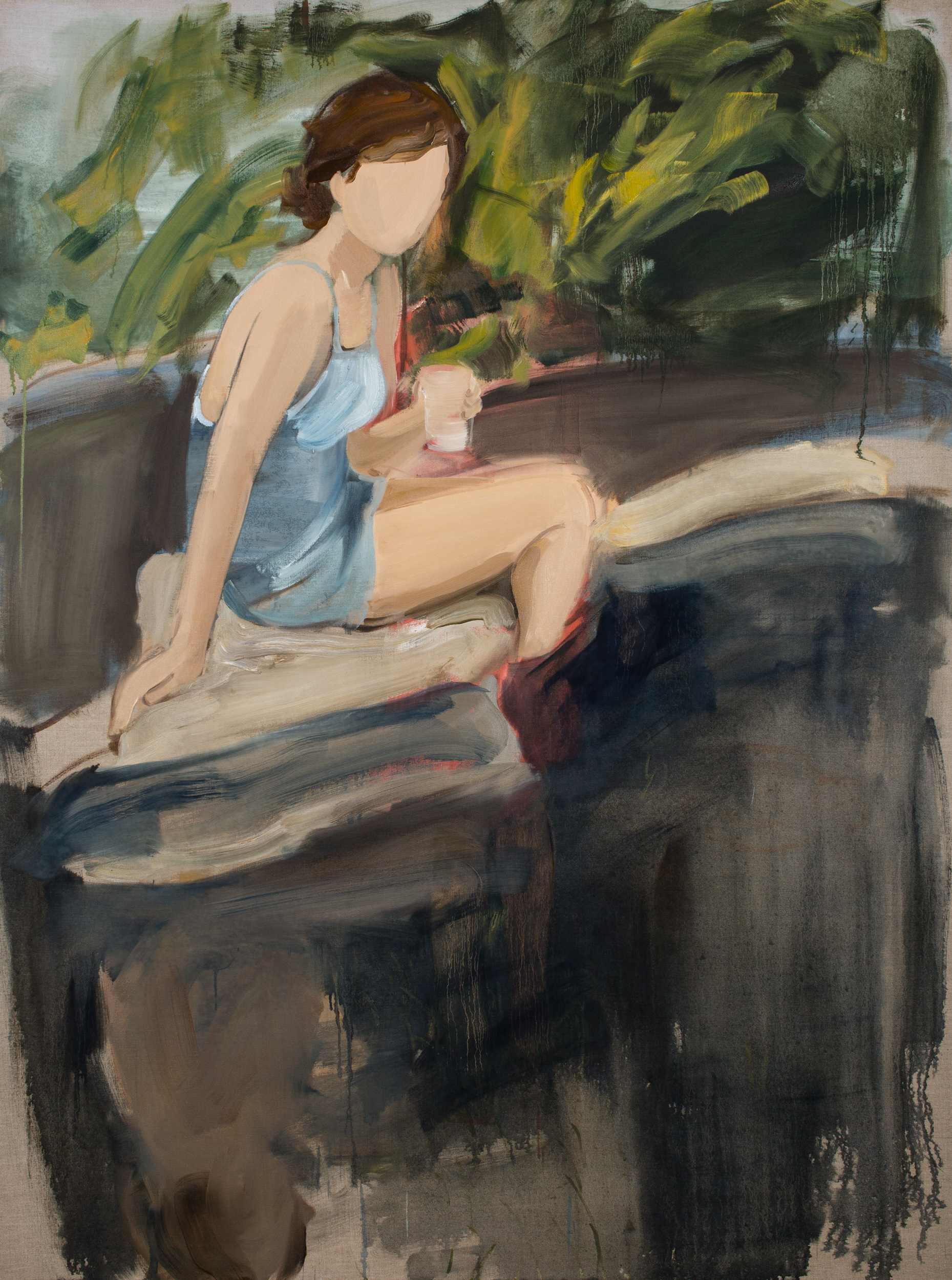
“Pond”, 200x150cm, oil on linen, 2016
“Class of 1947 (Prom)”, 12 paintings each 25x20cm, oil on linen, 2012
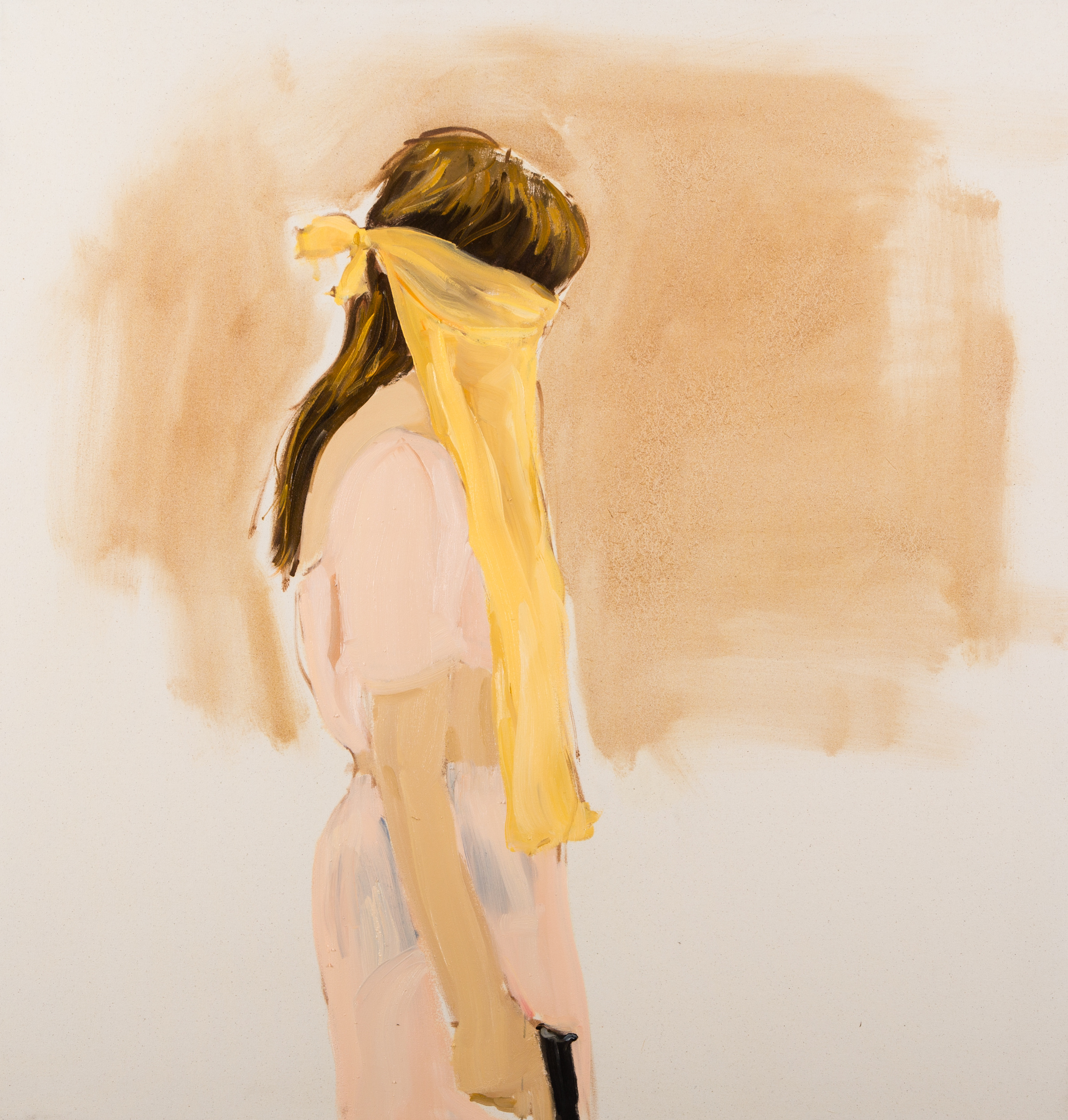
“Yellow Blindfold”, 107x102cm, oil on canvas, 2015
“Policemen”, 35.5×30.5cm, oil on linen, 2015
“Untitled”, 26x19cm, gouache on paper, 2015
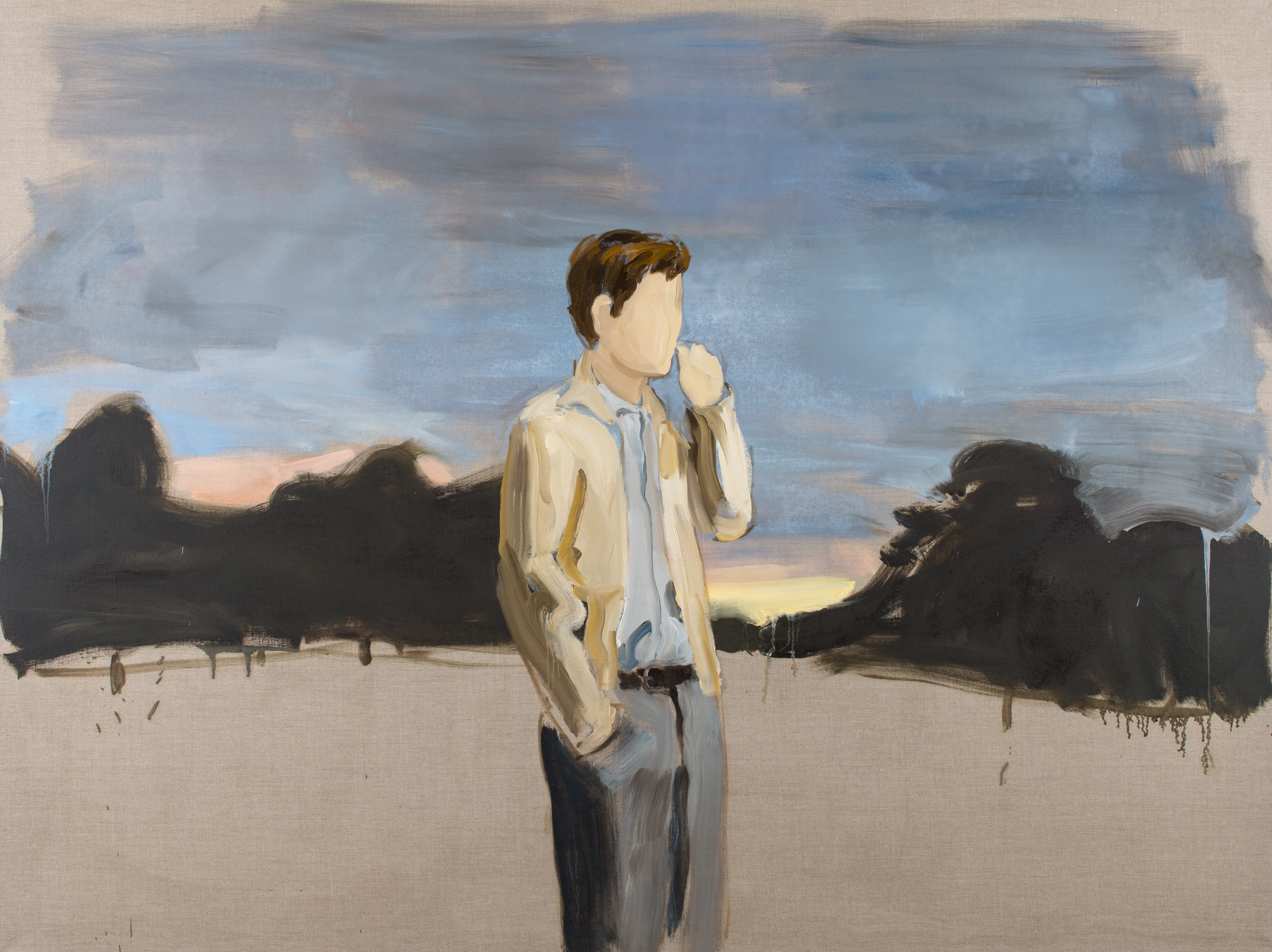
“Sunset”, 150x200cm, oil on linen, 2016
Text: Anahita Vessier
http://www.gideonrubin.com/

Share this post